

Mirae Asset Raises SK Hynix Target on Broadening HBM Demand


- Mirae Asset raises SK Hynix target price by 10.7% to 3.1 million won
- HBM demand diversifies beyond Nvidia to include Meta, Microsoft, and AMD
- Roundhill Memory ETF holds 25.14% Samsung, 23% SK Hynix, 25% Micron
- SMH and SOXX ETFs gained 58% and 74% year-to-date respectively
- SK Hynix DRAM ASPs expected to rise 15.8% sequentially in Q3

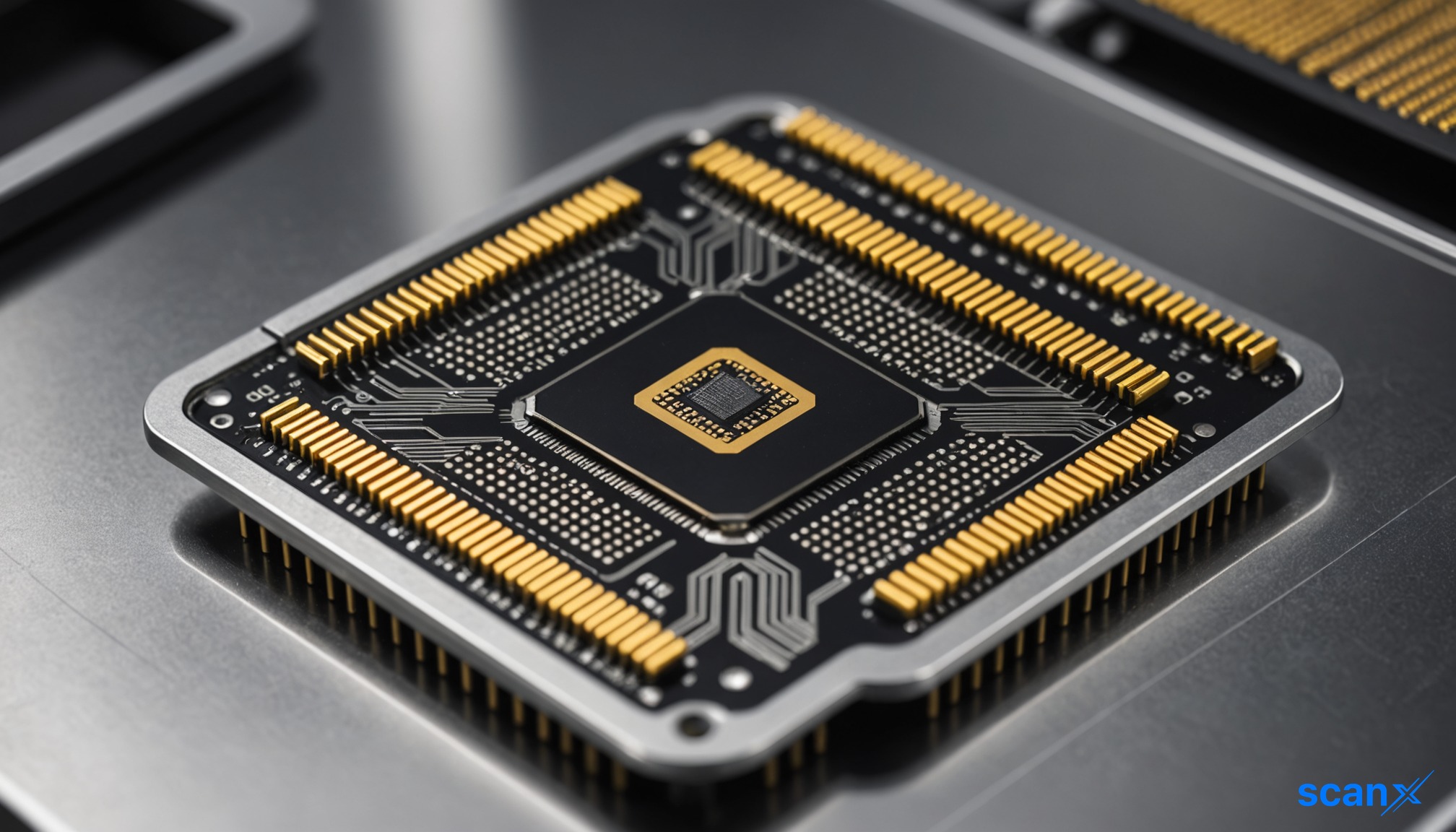

*this image is generated using AI for illustrative purposes only.
Mirae Asset Securities raised its target price for SK Hynix Inc (NASDAQ: SKHY) by 10.7% to 3.1 million won. The brokerage cites strengthening high-bandwidth memory (HBM) demand as major technology firms deploy custom AI accelerators.
The analyst note highlights a shift in customer diversification beyond Nvidia Corp (NASDAQ: NVDA). Meta Platforms Inc (NASDAQ: META) and Microsoft Corp (NASDAQ: MSFT) are increasing HBM capacity in their proprietary chips. AMD (NASDAQ: AMD) is also expected to feature higher memory stacks in upcoming processors.
HBM Capacity Trends
GPU makers are moving toward HBM4 standards with increased memory per accelerator. The report outlines specific capacity expectations for key platforms:
| Platform | Company | HBM Configuration | Memory Capacity |
|---|---|---|---|
| MI455X | AMD | 12 HBM4 stacks | 432GB |
| Rubin | Nvidia | HBM4 | 288GB |
Mirae Asset expects this trend to accelerate as proprietary AI accelerator usage expands. This diversification broadens the investment opportunity for memory-chip focused exchange-traded funds.
ETF Exposure Routes
Investors can access the memory theme through several ETF structures. The Roundhill Memory ETF (BATS: DRAM) offers targeted exposure to global memory companies. Its top holdings include Samsung Electronics (25.14%), SK Hynix (23%), and Micron Technology Inc (NASDAQ: MU) (25%).
Broader semiconductor exposure is available via the VanEck Semiconductor ETF (NASDAQ: SMH) and iShares Semiconductor ETF (NASDAQ: SOXX). SMH has gained about 58% year-to-date, while SOXX has gained over 74% year-to-date. Both hold significant positions in Nvidia, Micron, and AMD.
Geographic exposure is possible through the iShares MSCI South Korea ETF (NYSE: EWY). SK Hynix and Samsung Electronics account for 25% and 23% of the fund respectively. This concentration means nearly half of EWY is tied to South Korean memory giants.
Leveraged Options
New leveraged ETFs provide amplified exposure to SK Hynix. The Direxion Daily SK Hynix Bull 2X ETF (NYSE: SKHL) and ProShares Ultra SK Hynix ETF (NYSE: SKHU) seek 200% of the daily performance of the stock. These instruments launched after SK Hynix ADR trading began, offering U.S. investors easier access. They are designed for short-term strategies due to daily compounding effects.
What the Numbers Show
Mirae Asset projects significant sequential growth in SK Hynix DRAM average selling prices. The forecast indicates a 15.8% rise in Q3, followed by 7.2% in Q4. This pricing momentum supports an operating profit projection of 386 trillion won for 2027. The divergence between sequential ASP growth rates suggests varying intensity in pricing power across quarters.

How might the shift toward customer diversification beyond Nvidia impact SK Hynix's revenue stability and margin resilience in the event of a cyclical downturn in AI chip demand?
What are the potential supply chain risks for SK Hynix as it scales production to meet the significantly higher memory capacity requirements of upcoming HBM4 standards?
Given the 15.8% projected Q3 ASP growth, how likely is it that competitors like Samsung and Micron will engage in aggressive pricing strategies to capture market share, potentially dampening industry-wide profitability?
 17
17













 Access Market Heat-map & Insights
  Create, Save & Share your Screener
  Use 200+ Screening Filters





