

Trump Declares Strait of Hormuz Open to All, Warns Oman of Consequences


Trump declared the Strait of Hormuz will be open to everybody and that no entity will be permitted to control it. He stated the United States will watch over the strait. A direct warning was issued to Oman, with Trump stating it must behave or face being blown up.



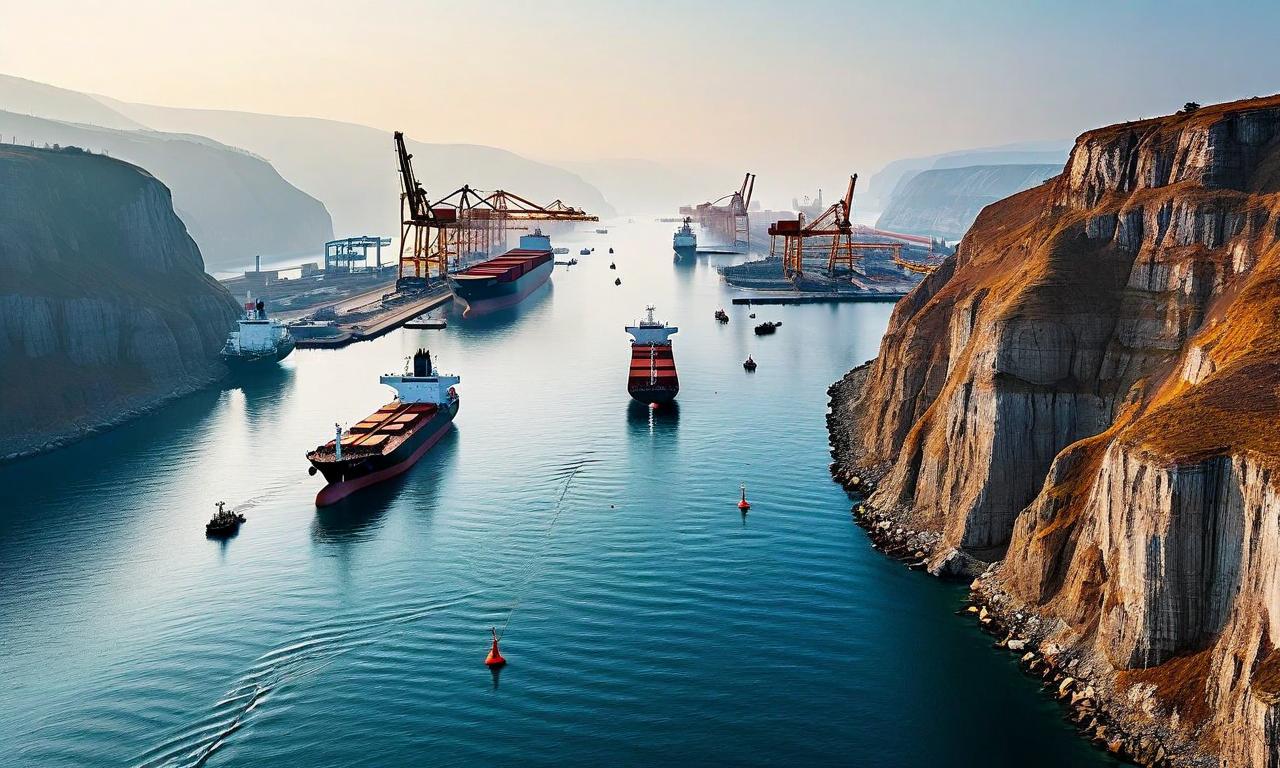
*this image is generated using AI for illustrative purposes only.
Trump has declared that the Strait of Hormuz will remain open to all nations, asserting that no party will be allowed to exert control over the critical waterway. He stated unequivocally that the United States will take on the role of overseeing the strait.
US Asserts Control Over Strategic Waterway
Trump emphasized that the US will watch over the Strait of Hormuz, positioning the country as the guarantor of free passage through one of the world's most strategically significant maritime routes. His remarks underscored a firm stance against any attempt by any party to restrict or dominate access to the strait.
Warning Issued to Oman
In a pointed statement, Trump issued a direct warning to Oman, declaring that the country "will behave" or the US will "have to blow them up." The remarks signal a hardened posture toward any regional actor that may seek to interfere with navigation through the Strait of Hormuz.
The following table summarizes the key statements made by Trump regarding the Strait of Hormuz:
| Statement: | Details |
|---|---|
| Strait Access: | Will be open to everybody |
| Control: | Nobody is going to control Hormuz |
| US Role: | US will watch over the Strait of Hormuz |
| Warning to Oman: | Oman will behave or the US will have to blow them up |
The statements reflect a clear US position on maintaining freedom of navigation through the Strait of Hormuz, with Trump directly naming Oman in the context of potential consequences for non-compliance.

How will Iran and other regional powers respond to the US assertion of control over the Strait of Hormuz?
What impact will this强硬 stance have on global oil prices and maritime trade routes?
Could this escalation lead to increased military tensions or conflicts in the region?
 18
18



 Access 50+ Readymade Screeners
  Use 200+ Custom Filters
  Get Full Market Insights





