

NVIDIA Unveils DGX Spark: World's Smallest AI Supercomputer


NVIDIA has launched the DGX Spark, a compact AI supercomputer weighing 1.20 kg with 128GB unified CPU-GPU memory. It can handle AI models up to 200 billion parameters and delivers ~1 petaflop of AI performance. The system integrates NVIDIA GPUs, CPUs, networking, CUDA libraries, and AI software stack. Major tech companies like Acer, ASUS, Dell, and others are shipping DGX Spark systems. NVIDIA CEO Jensen Huang personally delivered the first unit to Elon Musk at SpaceX.

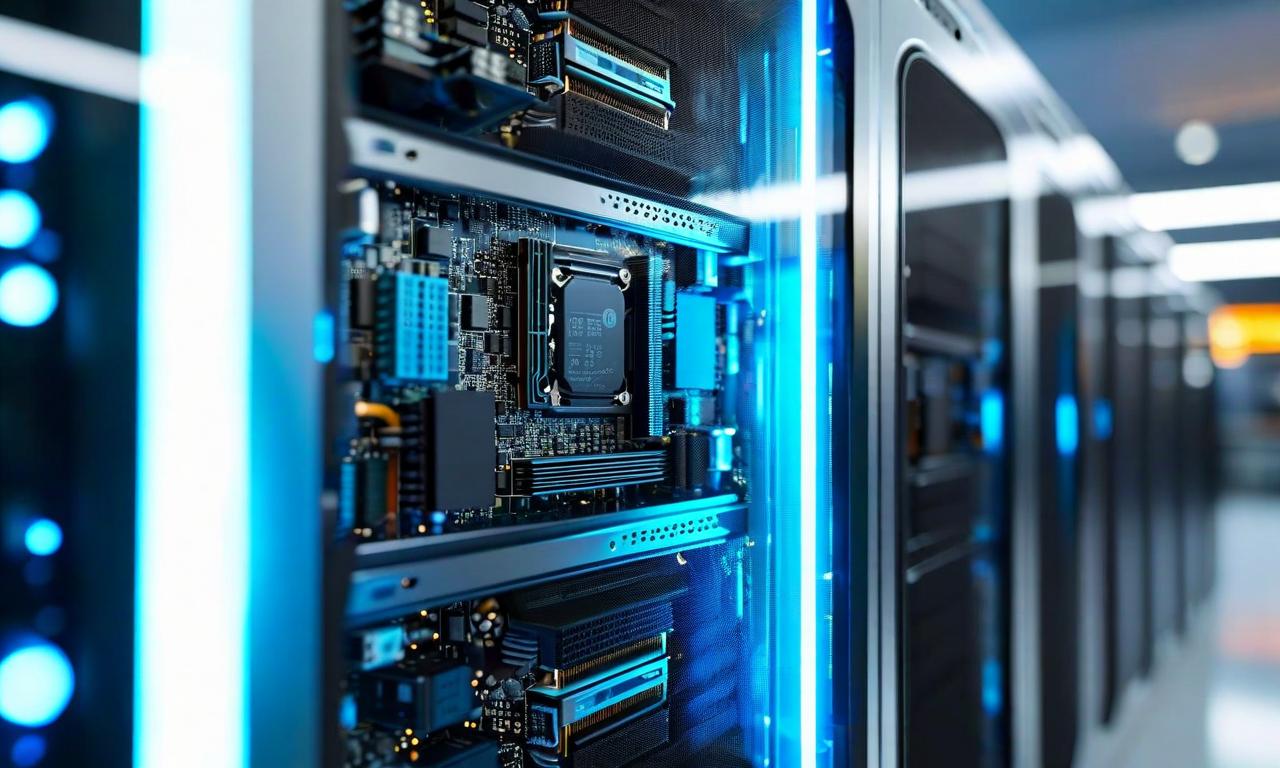

*this image is generated using AI for illustrative purposes only.
NVIDIA, a leader in AI and computing technology, has made a significant leap in the world of artificial intelligence with the launch of its latest innovation, the DGX Spark. Touted as the world's smallest AI supercomputer, this compact powerhouse is set to revolutionize the accessibility and deployment of AI technologies.
Key Features of DGX Spark
The DGX Spark packs an impressive array of features into its compact form factor:
| Feature | Specification |
|---|---|
| Weight | 1.20 kg |
| Memory | 128GB unified CPU-GPU memory |
| AI Model Capacity | Up to 200 billion parameters |
| Performance | ~1 petaflop of AI performance |
| Processor | NVIDIA GB10 Grace Blackwell Superchip |
Technological Advancements
NVIDIA has integrated its cutting-edge technologies into the DGX Spark, combining:
- NVIDIA GPUs and CPUs
- Advanced networking capabilities
- CUDA libraries
- Comprehensive AI software stack
This integration allows users to perform complex AI tasks such as fine-tuning image models, building vision search agents, and creating chatbots without relying on extensive data center infrastructure.
Industry Impact and Availability
The launch of DGX Spark marks a significant milestone in making AI supercomputing more accessible. NVIDIA has partnered with leading technology companies to ensure wide availability of the system:
| Partner Companies |
|---|
| Acer |
| ASUS |
| Dell Technologies |
| GIGABYTE |
| HPI |
| Lenovo |
| MSI |
These partners are now shipping DGX Spark systems, potentially accelerating AI adoption across various industries.
Notable Delivery
In a symbolic gesture highlighting the importance of this launch, NVIDIA CEO Jensen Huang personally delivered the first DGX Spark unit to Elon Musk at SpaceX on October 13. This delivery underscores the potential applications of the DGX Spark in advanced technology sectors, including aerospace.
Implications for AI Development
The introduction of DGX Spark represents a significant step towards democratizing AI technology. By offering a compact, powerful, and fully-equipped AI supercomputer, NVIDIA is enabling a wider range of businesses and researchers to engage in advanced AI development without the need for extensive infrastructure investments.
The ability to run complex AI models locally on a desktop device could accelerate innovation in various fields, from scientific research to product development. It also addresses concerns about data privacy and latency by allowing sensitive computations to be performed on-premises rather than in the cloud.
As AI continues to play an increasingly crucial role in technological advancement, tools like the DGX Spark are likely to be pivotal in shaping the future of AI applications across industries.
 17
17



 Create Custom Screeners
  Access 200+ Pre-built Filters
  Use 50+ Readymade Screener





