Krugman warns China wins from US Iran quagmire as oil falls 2.77%

scanx
Reviewed by
Shraddha JScanX News Team
Key Highlights
  • Paul Krugman claims China gains from US Iran strategy he calls a self-inflicted quagmire
  • Iran lost roughly $45 billion in 2025 revenue from blocked exports, equal to 0.2% of China GDP
  • Brent Crude Oil Futures fell 2.77% to $88.04 per barrel amid geopolitical tensions
  • S&P 500 ETF (SPY) dropped 0.29% while Dow tracker (DIA) rose 0.27%
  • Krugman argues US sanctions lack credibility and will fail to isolate Iran
powered bylight_fuzz_icon
49205679

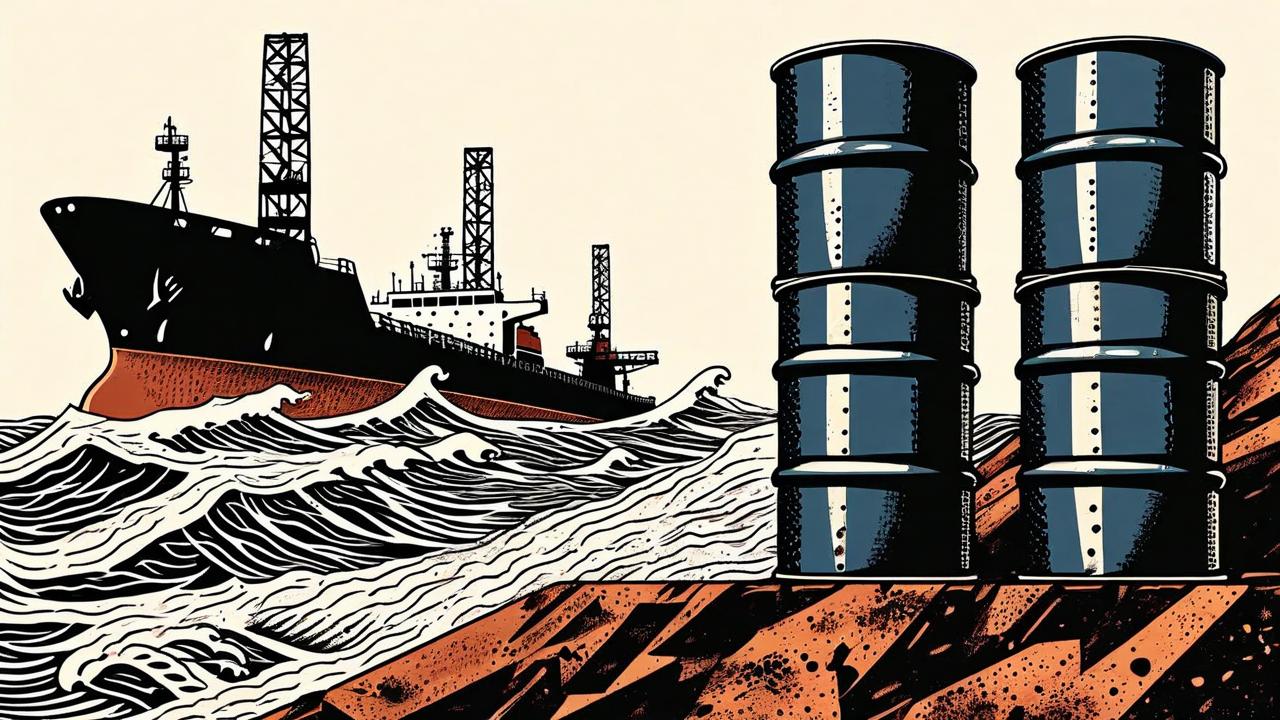
*this image is generated using AI for illustrative purposes only.

Economist Paul Krugman argues China is gaining strategic advantages from the ongoing conflict in Iran, which he describes as a self-inflicted quagmire for the Donald Trump administration. He asserts that US sanctions will fail to isolate Tehran while boosting Beijing's geopolitical standing.

Krugman criticized Treasury Secretary Scott Bessent's proposed economic D-Day strategy against Iran. He warned that the campaign will fail as thoroughly as the military effort, citing abandoned US bases and a strained Navy in the Persian Gulf. These factors make maintaining an effective blockade on Iranian exports increasingly difficult.

China's Geopolitical Windfall

Despite US efforts blocking some Iranian oil exports, stripping Tehran of roughly $45 billion in 2025 revenue, Krugman emphasized this sum is negligible to China. It represents merely 0.2% of China's GDP. He noted that financing Iran's essential imports would cost Beijing very little, ensuring the regime's survival while tying down the US.

Market Reaction

Brent Crude Oil Futures fell 2.77% to $88.04 per barrel. WTI Crude Futures declined 3.09% to $82.36 per barrel. The United States Oil Fund, LP (NYSE: USO) tracker was up 89.58% year-to-date but down 3.28% over the last month.

Equity markets showed mixed performance. The S&P 500 index advanced 11.58% YTD. The SPDR S&P 500 ETF Trust (NYSE: SPY) closed lower by 0.29% to $763.47. The Invesco QQQ Trust ETF (NASDAQ: QQQ) declined 1.00% to $706.32. Meanwhile, the State Street SPDR Dow Jones Industrial Average ETF Trust (NYSE: DIA) ended 0.27% higher at $533.65.

What the Numbers Show

The divergence between the massive $45 billion revenue loss for Iran and its negligible 0.2% impact on China's GDP highlights the asymmetry in economic leverage. This data supports Krugman's view that Beijing can sustain Iran with minimal cost relative to its own economy, undermining the effectiveness of US sanctions designed to isolate Tehran.

How might China's increased financial support for Iran accelerate the de-dollarization of oil trade and impact the US dollar's global reserve status?

What specific countermeasures could the US Treasury implement to enforce sanctions if naval blockades in the Persian Gulf prove ineffective due to resource constraints?

Could the perceived failure of the 'economic D-Day' strategy lead to a broader reassessment of US foreign policy reliance on financial sanctions versus diplomatic engagement?

like17
dislike

China sets proactive fiscal tone and 800 billion yuan push for H2 2026

scanx
Reviewed by
Ritika DScanX News Team
Key Highlights
  • CPC outlines eight-point economic plan for H2 2026 focusing on proactive fiscal policy
  • Fixed-asset investment fell 5.7% in H1, prompting 800 billion yuan financial instrument deployment
  • Summer grain output exceeded 150.75 million tons; college graduate count hit 12.7 million
  • Strategy targets AI-driven industrial upgrades and rectification of disorderly market competition
powered bylight_fuzz_icon
49188549

*this image is generated using AI for illustrative purposes only.

China’s Political Bureau of the Communist Party of China (CPC) Central Committee has outlined an eight-point economic roadmap for the second half of 2026. The plan emphasizes proactive fiscal policy, moderately loose monetary measures, and targeted support for domestic demand to ensure a strong start to the 15th Five-Year Plan period (2026-30).

Policy Framework and Fiscal Execution

The directive calls for accelerating the execution of fiscal expenditures and bond funds to translate available resources into physical workload. With treasury cash balances remaining relatively high in the first half of the year, authorities aim to strengthen monitoring of fiscal operations. This ensures the "three guarantees"—basic living needs, salary payments, and government functioning—are safeguarded at the grassroots level.

Monetary policy will focus on maintaining adequate liquidity and unblocking transmission mechanisms to lower social financing costs. Structural tools will target key areas including domestic demand expansion, scientific innovation, and micro, small, and medium-sized enterprises.

Domestic Demand and Investment

To counter a 5.7% decline in fixed-asset investment during the first half of the year, the plan prioritizes stabilizing investment through coordinated project funding. A total of 800 billion yuan ($119 billion) in new policy-backed financial instruments has been deployed this year to supplement capital for major projects.

Key infrastructure initiatives include the construction of "six major networks":

  • Water networks
  • New-type power grids
  • Computing power networks
  • Next-generation communication networks
  • Urban underground pipeline networks
  • Logistics networks

Industrial Innovation and Market Regulation

The strategy highlights the "AI+" initiative to drive smart economy development. Rapid growth in AI computing power demand since early 2026 is accelerating semiconductor industry development, though authorities warn against uncoordinated project rushes.

Market reforms aim to establish a unified national market using positive and negative lists. Efforts will continue to rectify "involutionary" competition characterized by low-price rivalry. Additionally, normalized resolution of outstanding payments addresses persistent issues with extended average collection periods for enterprises.

Sectoral Highlights

Sector Key Metric / Action Detail
Agriculture Summer grain output Exceeded 150.75 million tons
Labor College graduates 12.7 million (new high)
Employment Flexible workers Approximately 200 million

The agricultural sector aims for a bumper autumn harvest while stabilizing live pig prices. In labor markets, protections for the large cohort of flexible employees will be strengthened alongside analysis of AI’s impact on employment.

Risk Management and External Trade

Financial risk prevention includes stabilizing the real estate market and mitigating local government debt risks through comprehensive resolution packages. Capital market reforms seek to channel medium- and long-term funds into the market.

Internationally, China plans to expand trade in intermediate goods, cross-border e-commerce, digital trade, and green trade. Import expansion remains a priority, supported by improved management systems for outbound investment.

How might the deployment of 800 billion yuan in policy-backed financial instruments impact the valuation and growth trajectory of companies involved in the 'six major networks' infrastructure projects?

What are the potential risks to global supply chains if China successfully expands its dominance in intermediate goods and digital trade as outlined in the new roadmap?

Could the regulatory crackdown on 'involutionary' low-price competition lead to higher consumer prices or reduced market entry for smaller competitors in key domestic sectors?

like15
dislike