

Iran warns of heavier retaliation as Brent crude rises to $96.79


- Iran warns of faster, heavier military response to further US attacks
- Brent crude rises 0.53% to $96.79 per barrel on Strait of Hormuz tensions
- Dow futures fall 0.28% while Asian markets trade higher
- US strikes three Iranian tankers after missile launch on Navy ships
- Iran plans restricted zone outside Strait of Hormuz for vessels

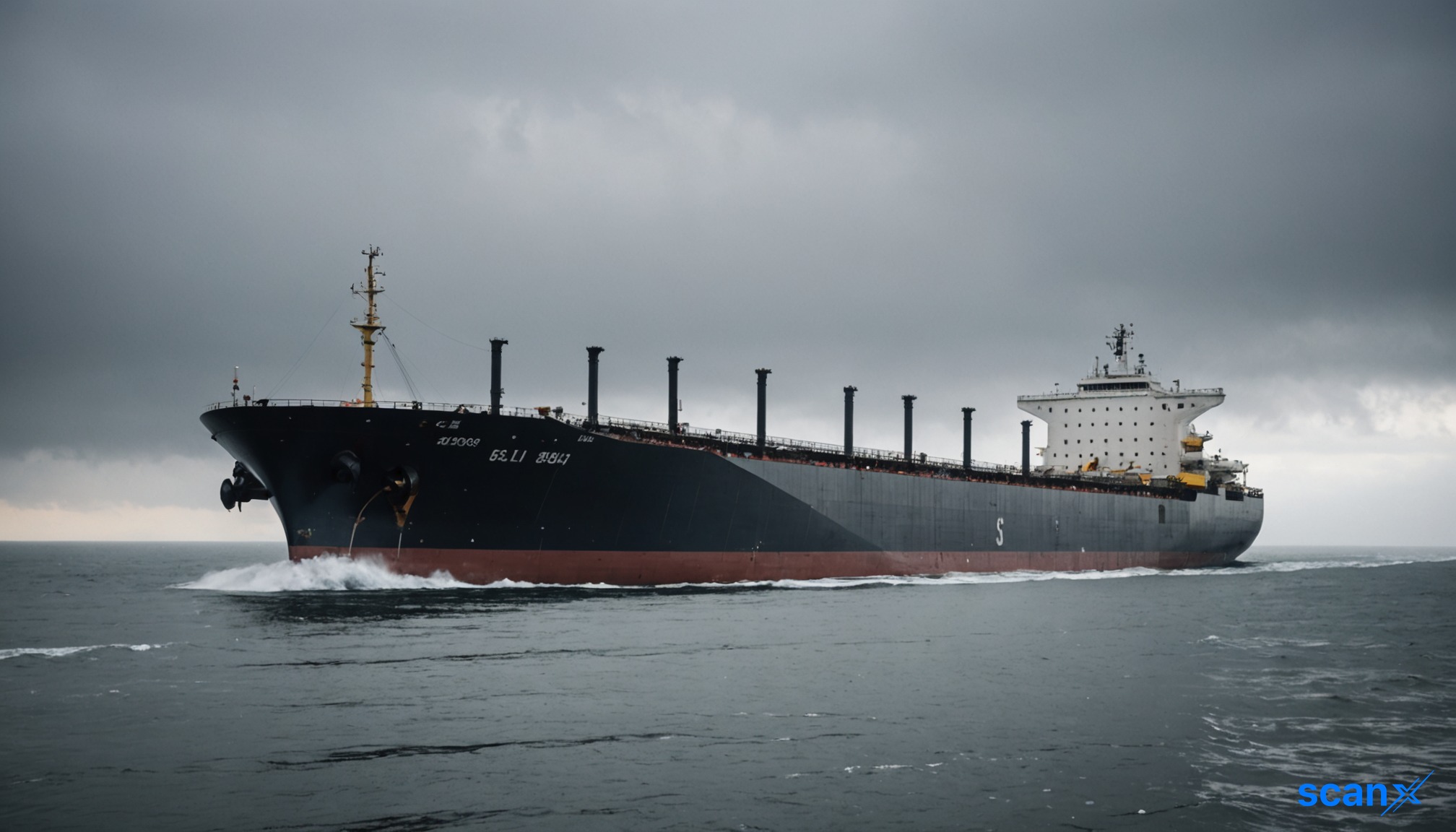

*this image is generated using AI for illustrative purposes only.
Iran has warned of a faster and more painful military response to any further US attacks as sanctions and an oil blockade intensify pressure on its economy. Renewed tensions around the Strait of Hormuz have pushed Brent crude prices above $96.
Market Reaction
US equity futures traded lower late in the day as oil prices rose. Dow futures fell 147 points, or 0.28%, to 53,293.00. S&P 500 futures slipped 2 points, or 0.03%, to 7,720.00. Nasdaq 100 futures rose 37 points, or 0.13%, to 29,602.25 as of around 10:49 pm EDT.
In commodities, WTI crude oil rose 0.59% to $92.02 per barrel. Brent crude advanced 0.53% to $96.79 per barrel. Natural gas futures fell 1.78% to $2.922 per MMBtu. The US dollar index stood at 99.196, up 0.04% as of around 8:30 am IST.
Asian markets traded higher. South Korea’s KOSPI rose 3.11% to 6,895.43. Japan’s Nikkei 225 climbed 2.21% to 66,460.11.
Escalating Tensions
Iranian Parliament Speaker Mohammad Baqer Qalibaf said Sunday that Tehran would respond more aggressively to any attack on its interests and security. He stated that any attack would receive a faster, heavier and more painful response.
The warning followed renewed hostilities after a period of relative calm. US Central Command said it struck three Iranian tankers Saturday after Iran’s Islamic Revolutionary Guard Corps launched ballistic missiles at two US Navy ships. Iran also plans to establish a restricted zone outside the Strait of Hormuz, with vessels entering the area potentially facing sanctions.
Economic Pressure
Washington’s sanctions and blockade are disrupting oil exports and contributing to inflation, currency volatility and unemployment in Iran. Economy Minister Ali Madanizadeh said Tehran would pursue domestic reforms rather than change course due to US pressure.
President Donald Trump is reportedly weighing a declaration that the Iran war is over while maintaining that continued economic pressure could push Tehran to dismantle its nuclear program or contribute to the collapse of the regime. Vice President JD Vance suggested China may be willing to support US efforts to economically isolate Iran despite policy differences between Washington and Beijing.

How might Iran's establishment of a restricted zone in the Strait of Hormuz impact global shipping insurance premiums and supply chain logistics?
Could the reported US stance of declaring the war 'over' while maintaining economic pressure lead to a stalemate or a sudden de-escalation in diplomatic negotiations?
What are the potential risks for Asian markets if Brent crude prices sustain levels above $96 due to prolonged geopolitical tensions?
 15
15






 Create Custom Screeners
  Access 200+ Pre-built Filters
  Use 50+ Readymade Screener





