

Honeywell Bets on Forge Platform and Physical AI to Drive Automation Growth at Davos 2026


Honeywell CEO Vimal Kapur outlined the company's automation growth strategy at Davos 2026, positioning the Forge platform and physical AI as key drivers for industrial productivity improvements. The company expects mid-single-digit revenue growth and high single-digit earnings growth while completing its three-way corporate split by 2026, with the aerospace separation scheduled for the second half of the year.

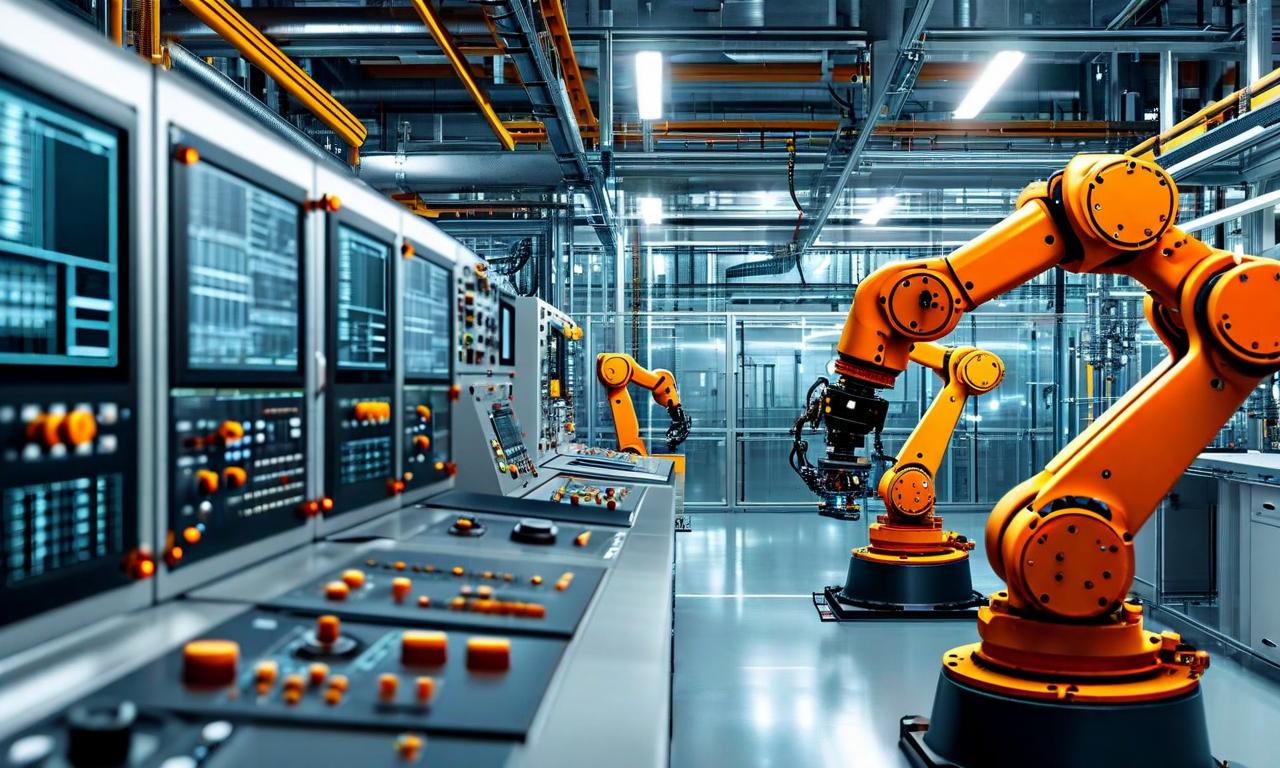

*this image is generated using AI for illustrative purposes only.
Honeywell is positioning automation as a long-term structural growth driver, with Chairman and CEO Vimal Kapur highlighting the company's Forge platform and "physical AI" strategy during an interview at the World Economic Forum 2026 in Davos. The industrial conglomerate sees significant opportunities in helping companies achieve higher efficiency across energy systems, supply chains, and buildings.
Automation as Secular Growth Driver
Kapur emphasized that automation represents a fundamental shift in how industries operate. "Automation is a secular growth trend. As the world becomes more productive, you need to put automation into all kinds of infrastructure," he explained. The company has operated in automation for more than a century, giving it deep expertise in energy, supply chains, and building systems.
The CEO outlined how different industries face unique challenges that require tailored solutions:
| Industry Sector | Specific Challenges |
|---|---|
| Life Sciences | Drug production optimization |
| Healthcare | Hospital operations management |
| Oil and Gas | Production and refining efficiency |
| Supply Chains | Logistics and distribution |
| Buildings | Energy management systems |
Forge Platform and Physical AI Strategy
A central component of Honeywell's strategy is the Forge platform, designed to unlock value from industrial data. Kapur distinguished between consumer AI applications and industrial AI needs, noting that industrial data is not publicly available and cannot be used to train generic models.
"That's where physical AI comes in," Kapur said. "You want to have access to data, remove data friction, and solve segment-specific issues." The approach focuses on augmenting the workforce rather than replacing it, with the goal of enabling workers to become more productive.
The company expects to benefit from AI applications in the physical world over the next 20 to 30 years, viewing higher productivity as one of the biggest potential gains for the global economy.
Three-Way Corporate Split Progress
Honeywell is executing a major restructuring announced in February 2025, splitting into three independent, publicly listed businesses. The company has already completed the spin-off of its specialty chemicals unit, now operating as Solstice Advanced Materials for approximately three months.
| Business Unit | Status | Timeline |
|---|---|---|
| Specialty Chemicals | Completed | Operating as Solstice Advanced Materials |
| Aerospace Business | In Progress | Second half of 2026 |
| Automation Business | Ongoing | Will remain as Honeywell |
Kapur explained that the restructuring creates clearer growth platforms for each business and provides shareholders with sector-specific investment choices. "It's a win for our shareholders because they can invest in the sector-specific choices they have," he said.
Financial Outlook and Growth Expectations
The automation-focused Honeywell expects steady expansion rather than sharp swings tied to single themes. Kapur described the company as a through-cycle business with exposure to multiple end markets, providing stability across different economic conditions.
| Growth Metric | Expected Range |
|---|---|
| Revenue Growth | Mid-single-digit rate |
| Earnings Growth | High single digits |
| Business Model | Through-cycle, multiple end markets |
While Honeywell participates in AI-related infrastructure and data centers, these areas are not the dominant growth drivers. Instead, the company relies on its large installed customer base to drive performance by helping clients improve efficiency and profitability.
"Our customers win because they make more money, and therefore they pay us more money. So, it is a win-win," Kapur explained, highlighting the mutually beneficial nature of the company's technology offerings.
Historical Stock Returns for Honeywell Automation
| 1 Day | 5 Days | 1 Month | 6 Months | 1 Year | 5 Years |
|---|---|---|---|---|---|
| -1.11% | -2.35% | -5.84% | +11.13% | -9.78% | -27.08% |
 15
15






 Access 50+ Readymade Screeners
  Use 200+ Custom Filters
  Get Full Market Insights





