

F-15 Pilot 'Bravo' Survives Iran Shootdown, Denies Forced Interview


- F-15 pilot 'Bravo' survived a 70-100 mph fall and two days behind enemy lines in Iran
- Pentagon denies reports that officials forced pilots to participate in CBS News interview
- Mission Dude 44 targeted Iranian drone and missile facilities near Isfahan in April
- Construction activity increased at suspected nuclear site Pickaxe Mountain near Natanz

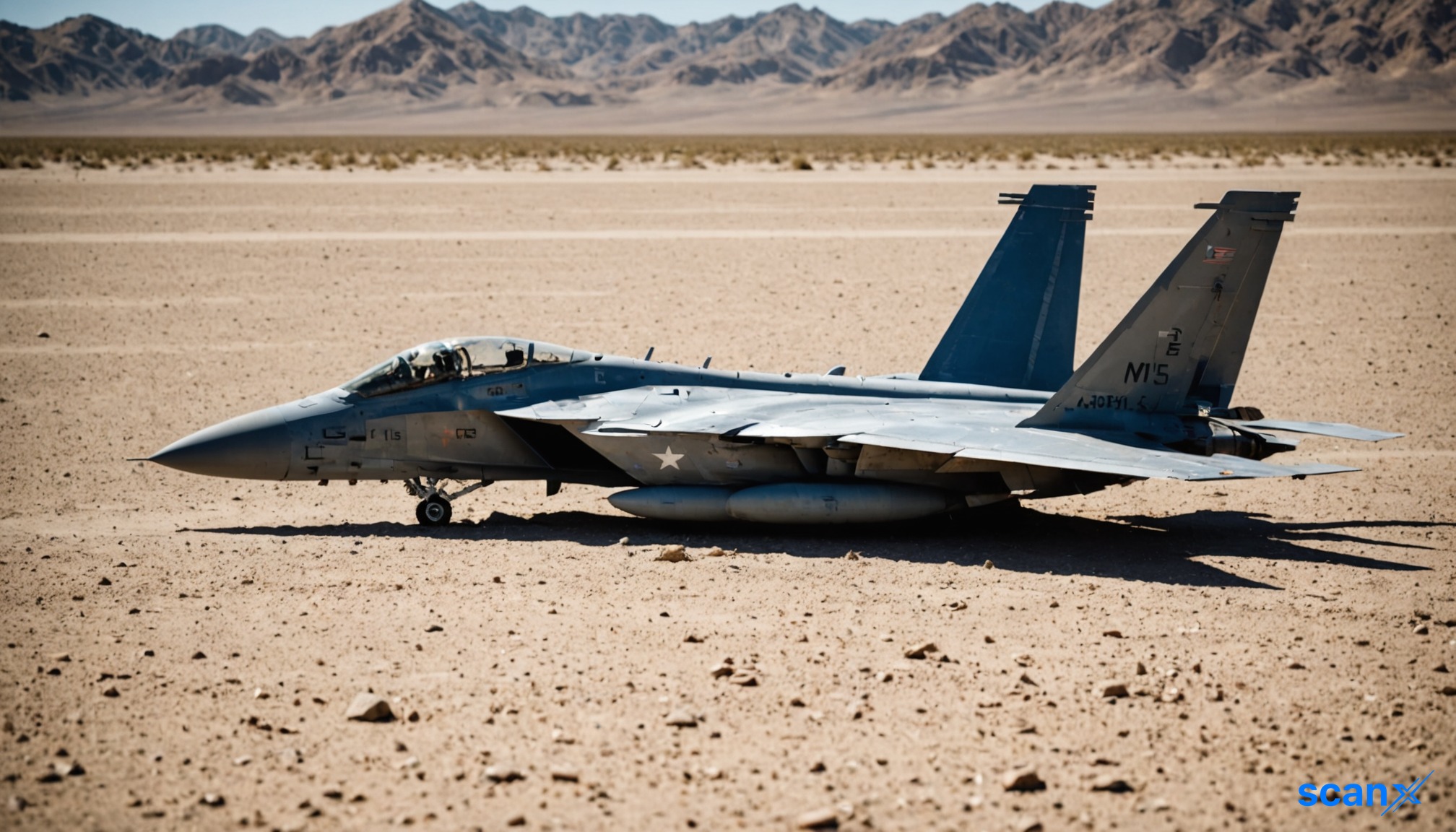

*this image is generated using AI for illustrative purposes only.
US Air Force officer 'Bravo' recounted surviving a 70-100 mph fall and two days behind enemy lines in Iran after his F-15E was shot down. The pilot described the incident as a "modern-day miracle" following a rescue operation near Isfahan.
Bravo told CBS News "60 Minutes" that he was separated from his pilot, "Alpha," when their aircraft was hit by an Iranian missile in April. He free-fell to the ground at an estimated speed of 70-100 mph after the missile damaged his parachute. Despite suffering a broken back, arm, and shoulder upon impact, Bravo managed to hide and survive for two days before being rescued.
Mission Context and Rescue
The mission, known as Dude 44, was conducted near Isfahan, a city close to where Iran stores much of its highly enriched nuclear material. According to Adm. Brad Cooper, the commander of US Central Command, the mission's objective was to strike industrial facilities related to Iran's drone and missile program.
President Donald Trump announced the successful rescue of the second crew member in April, declaring "WE GOT HIM!" and calling it "one of the most daring Search and Rescue Operations in US History." Trump stated the officer "was never truly alone," as Defense Secretary Pete Hegseth, Chairman of the Joint Chiefs of Staff, and fellow warfighters monitored the operation around the clock.
Interview Controversy
Defense Secretary Pete Hegseth told CBS News that he immediately focused on the crew's safety after being awakened by the incident. He vowed the US would retrieve them regardless of their status.
A report by CNN stated that Hegseth and Pentagon political appointees pushed the two F-15 crew members shot down over Iran in April to participate in a "60 Minutes" report about their rescue. Both airmen initially hesitated, with one concerned they could be ordered to participate, while military officials worried the interview could expose classified details of the rescue operation.
After raising concerns, the two survivors were privately asked by Hegseth whether they wanted to participate. One pilot, "Bravo," agreed to an on-camera interview, while "Alpha" declined to participate.
Pentagon spokesperson Sean Parnell strongly denied CNN's report, calling it "a complete lie." He said the pilots independently decided whether to participate in the interview and stressed that the Pentagon took steps to protect operational security and sensitive information.
Regional Tensions
The rescue of Bravo comes against the backdrop of heightened tensions. Suspected Iranian nuclear site Pickaxe Mountain, near the Natanz complex, has reportedly seen increased construction activity this year, drawing continued intelligence attention. Meanwhile, Pentagon officials are developing plans for potential strikes on Iran's underground nuclear facilities, including a recent focused "planning sprint" on possible operations.

How might the controversy over Pentagon pressure for media interviews impact future military personnel's willingness to participate in public relations efforts?
What are the potential diplomatic repercussions of the US conducting strikes near Iran's nuclear facilities and the subsequent high-profile rescue operation?
Could the increased construction activity at Pickaxe Mountain signal an acceleration in Iran's nuclear program, thereby influencing the timeline for planned US military responses?
 18
18




 Access Market Heat-map & Insights
  Create, Save & Share your Screener
  Use 200+ Screening Filters





