

Brent crude jumps to $95 as US strikes Iran near Hormuz


- Brent crude hit $95.01/barrel; WTI rose above $90
- US strikes Iran after tanker attacks in Strait of Hormuz
- USO and BNO funds jumped over 5% on energy demand
- Defense stocks LMT, RTX, and NOC all declined
- Trump warns of further consequences if Iran retaliates

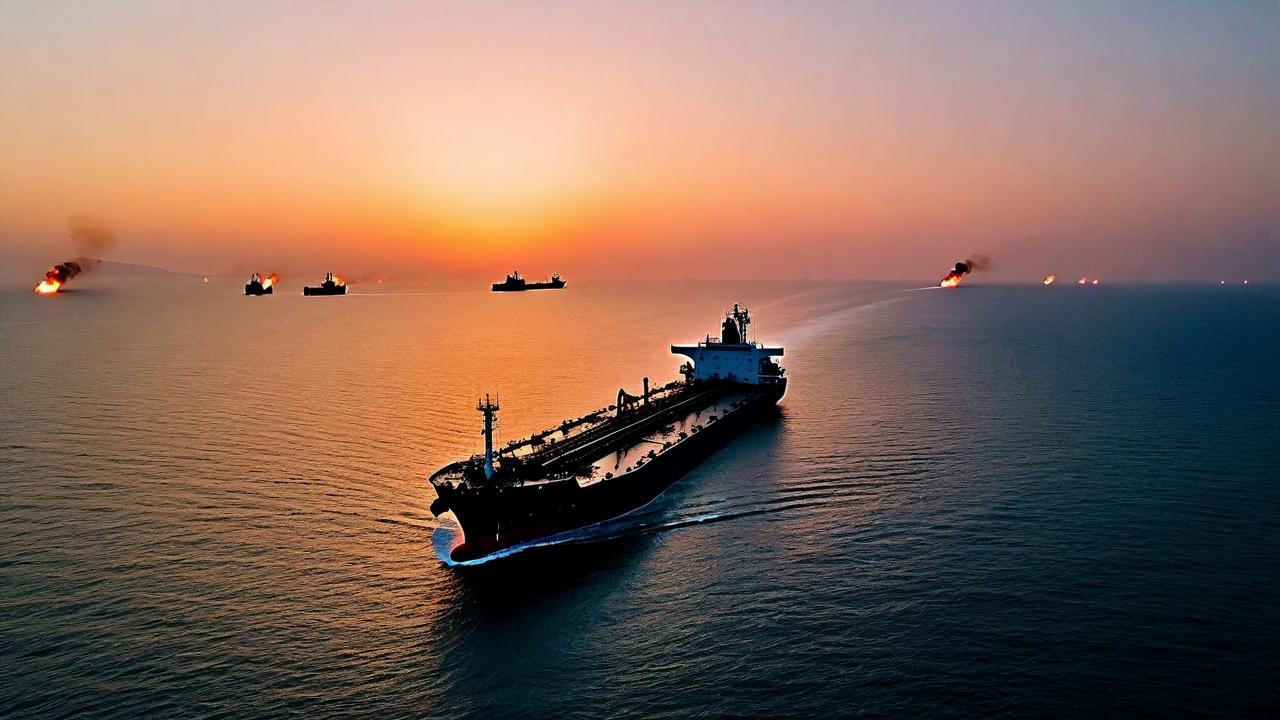

*this image is generated using AI for illustrative purposes only.
Brent crude oil futures surged to $95.01 a barrel Tuesday after the United States launched military strikes on Iranian targets near the Strait of Hormuz. The escalation followed attacks on two oil tankers in the critical waterway.
The US Central Command confirmed the strikes, which aimed to dismantle radar and missile systems threatening shipping. President Donald Trump stated the action was retaliation for attempts to place sea mines in the Strait and for missile fire against a US base in Jordan.
Market Reaction
Energy-linked assets rallied sharply as traders rotated into crude exposure. WTI futures climbed above $90, marking the highest level in over a month.
| Ticker | Fund Name | Change |
|---|---|---|
| USO | United States Oil Fund | +5.27% |
| BNO | United States Brent Oil Fund | +5.11% |
Defense prime contractors moved in the opposite direction, suggesting that headline risk is cutting both ways once active conflict is priced in.
What the Numbers Show
The divergence between energy and defense stocks highlights a shift in market positioning. While oil funds gained over 5%, Lockheed Martin (NYSE: LMT) fell 3.26%, RTX Corp. (NYSE: RTX) dropped 1.42%, and Northrop Grumman (NYSE: NOC) declined 1.61%. This indicates that investors are prioritizing immediate commodity supply shocks over long-term defense contract visibility amid acute geopolitical uncertainty.

Will the disruption to shipping through the Strait of Hormuz trigger a sustained supply deficit that pushes Brent crude above the $100 per barrel psychological barrier?
How might the unexpected sell-off in defense stocks signal a broader market rotation away from geopolitical risk hedges toward other safe-haven assets like gold or government bonds?
What is the likelihood of retaliatory measures by Iran escalating into a wider regional conflict, and how would that impact global insurance premiums for maritime logistics?
 18
18




 Access Market Heat-map & Insights
  Create, Save & Share your Screener
  Use 200+ Screening Filters





