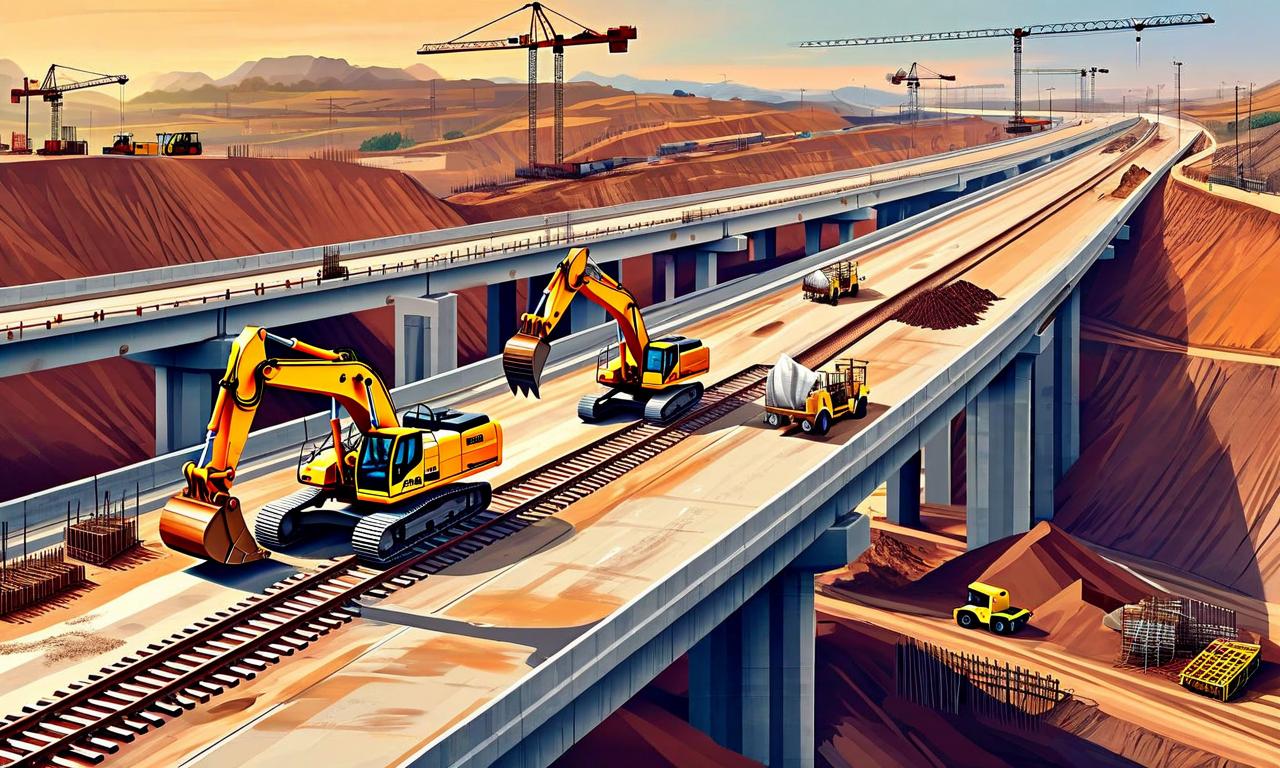
The Government of India's infrastructure investment momentum is set to continue with ICRA projecting capital expenditure targets of ₹13.1 trillion for FY27. This represents a substantial 14% increase from the anticipated ₹11.5 trillion capex spending expected in FY26, underlining the government's commitment to infrastructure development across multiple sectors.
Strong Capital Expenditure Performance
The government's capital outlay performance has shown remarkable consistency and growth. Key financial metrics demonstrate this upward trajectory:
| Parameter |
FY26 BE |
FY25 A |
Growth |
| Gross Capital Outlay |
₹11.20 trillion |
₹10.50 trillion |
6.60% |
| April-November Capex (FY26) |
₹6.60 trillion |
- |
28.20% YoY |
| Execution Rate (Apr-Nov FY26) |
58.70% of BE |
- |
- |
During FY19-FY26, the capital outlay witnessed a robust CAGR of around 20.3%, primarily driven by significant allocations in road, railways, and defence sectors. The actual capex undertaken during April-November 2025 increased by 28.2% to ₹6.6 trillion, representing 58.7% of FY26 Budget Estimate, compared to ₹5.1 trillion during the same period in 2024.
Sector-Wise Capital Allocation Trends
Roads Infrastructure
The road sector continues to dominate government capex allocation, maintaining its position as a priority infrastructure segment:
| Metric |
FY26 BE |
FY14 |
Growth Rate |
| MoRTH Capital Allocation |
₹2.72 trillion |
₹0.31 trillion |
~20% CAGR |
| Share of Total Capex |
24.30% |
- |
- |
| FY25 Actual Spending |
₹2.85 trillion |
- |
105% of allocation |
The Ministry of Road Transport and Highways allocation increased more than eight times from FY14 to FY26 BE. Roads and highways have consistently accounted for around 25% of budgetary allocation over the past five years. Till November 2025, the Ministry spent ₹1.8 trillion, representing 66% of capital allocation for FY26 BE, with expectations to spend around ₹1 trillion during the remaining period.
Railways Development
Railways capital outlay reached a historic high of ₹2.65 trillion in FY26 BE, including extra budgetary resources via PPPs. The focus areas for railway infrastructure include:
- Capacity Augmentation: New routes, gauge conversion, track doubling, and dedicated freight corridors
- Infrastructure Modernisation: Rolling stock upgrades and station redevelopment
- Safety Enhancements: Accelerated deployment of Kavach 4.0 automatic train protection system
- Economic Corridor Development: Ports and mineral logistics connectivity
Power Sector Investments
The power sector allocation focuses on grid resilience and renewable energy integration. Key investment areas include:
- Energy Storage Systems: Battery energy storage systems and pumped hydro projects with viability gap funding
- Transmission Infrastructure: Interstate systems and green energy corridors through HVDC lines
- Distribution Reforms: Enhanced funding under Revamped Distribution Sector Scheme and smart metering initiatives
- Manufacturing Incentives: Grid-scale batteries and solar module manufacturing ecosystem support
Future Outlook and Constraints
ICRA expects the government to enhance capex allocation by around ₹250 billion in FY26, taking it to ₹11.5 trillion versus the BE of ₹11.2 trillion. However, post-FY27, the scope for further capex expansion may narrow due to fiscal rigidities expected from FY28, primarily on account of the 8th Pay Commission.
The rating agency anticipates a sizeable increase in the outlay under the scheme for special assistance as loans to states for capital expenditure, from the budgeted amount of ₹1.5 trillion in FY26, thereby supplementing overall states' expenditure. This comprehensive approach combining adequate budgetary allocation, planned asset monetisation, and long-term financing is expected to provide the requisite stimulus for future infrastructure investments.




 17
17