Workhorse Group Inc (NASDAQ: WKHS) reported second quarter 2026 revenue of $3.6 million, a significant increase from $0.8 million in the same period last year. The electric commercial vehicle manufacturer delivered 26 vehicles during the quarter, up from four deliveries in Q2 2025. On a pro forma combined basis, however, revenue for the prior-year quarter was $6.4 million, reflecting the delivery of 39 vehicles, highlighting the impact of the Workhorse-Motive merger on year-over-year comparability. The company continues to integrate its merger with Motive, aiming for a $20 million annualized cost synergy run rate by year-end.
Despite the revenue growth, Workhorse recorded a net loss of $20.2 million ($1.86 per share), widening from a $12.8 million loss ($1.38 per share) in Q2 2025. Operating expenses rose to $11.9 million from $7.7 million in the prior year period, reflecting costs associated with running the combined entity and continued investment in research and development. Selling, general and administrative expenses were $7.8 million, partly offset by merger-related synergies including reductions in redundant headcount. Research and development expenses totaled $4.1 million, supporting bill of materials cost reduction programs and early-stage engineering for new product lines.
Financial Performance
The company’s gross loss stood at $7.5 million in Q2 2026, consistent with the first quarter, driven by a cost of sales of $11.0 million against the $3.6 million in revenue. Management expects gross margins to improve as production volumes scale at its Union City facility and combined platform cost benefits are realized. Interest expense, net, was $0.8 million compared to $3.8 million in the prior-year period, attributed to debt restructuring as part of the merger which resulted in lower debt levels and interest rates.
| Metric: |
Q2 2026 |
Q2 2025 |
Change |
| Revenue: |
$3.6 million |
$0.8 million |
+350% |
| Vehicles Delivered: |
26 |
4 |
+550% |
| Gross Loss: |
$7.5 million |
$1.4 million |
Widened |
| Operating Loss: |
$19.4 million |
$9.0 million |
Widened |
| Net Loss: |
$20.2 million |
$12.8 million |
Widened |
For the first half of 2026, revenue was $7.9 million, roughly in line with pro forma combined revenue of $8.2 million for the same period in 2025. The company expects deliveries to increase meaningfully in the second half of 2026 as it ramps production at Union City to fulfill existing backlog orders, including previously announced orders of 100 vehicles each from Purolator and Gateway.
Strategic Developments
Workhorse announced its intent to enter the mobile AI data center market, targeting an estimated $41 billion market by 2031. The company plans to leverage its expertise in power electronics, thermal management, and ruggedized enclosures to manufacture containerized platforms for distributed AI deployments. Initial production and commercial deliveries are targeted for 2027. CEO Scott Griffith described this as a pivot toward becoming an industrial technology firm, leveraging capabilities in design, engineering, and manufacturing for broader applications beyond commercial vehicles.
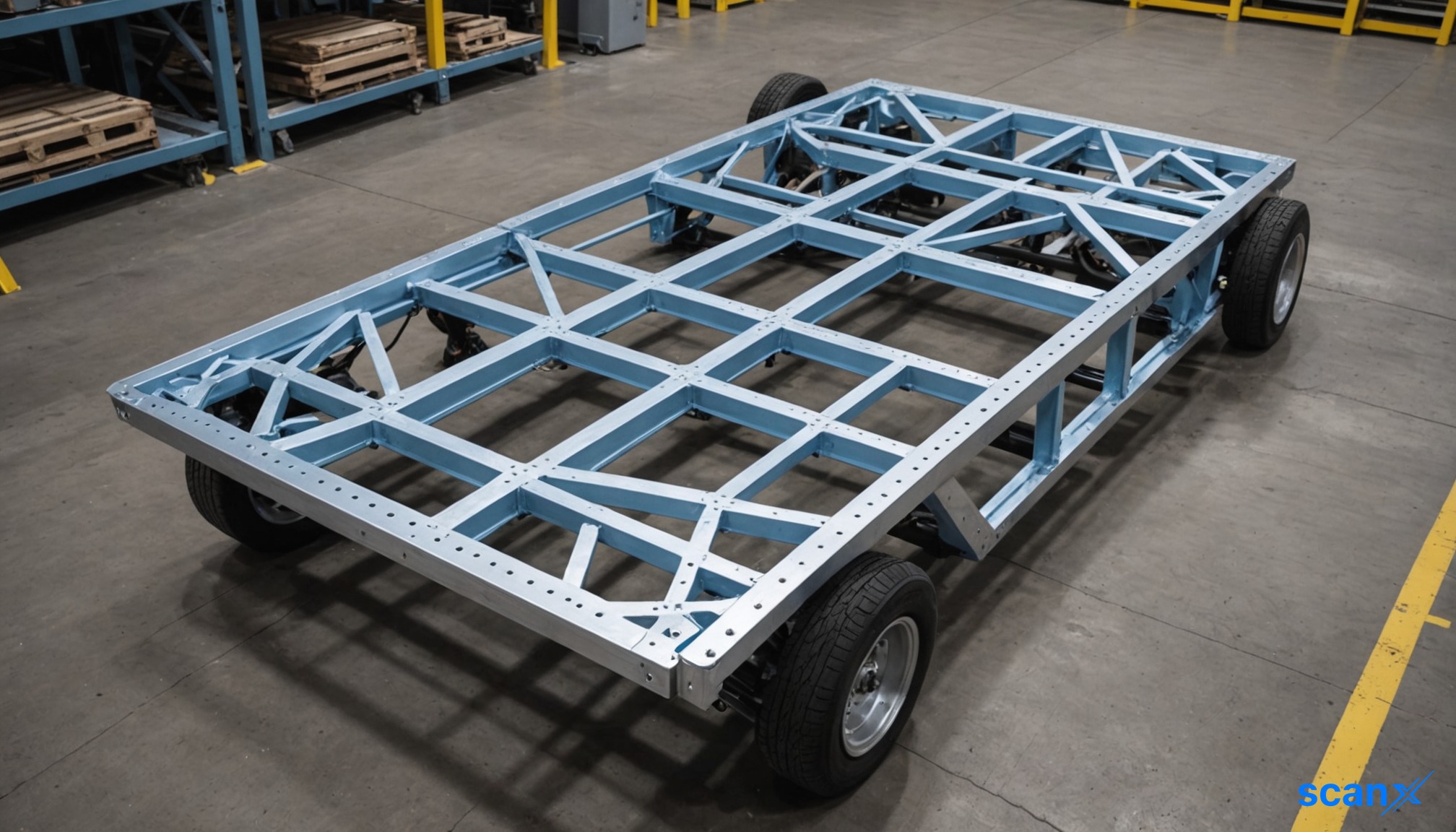
Additionally, the company strengthened its leadership team with the appointment of Jody Davis as Chief Financial Officer in July. Davis brings approximately 15 years of finance leadership across manufacturing and technology sectors. Workhorse also noted progress on its modular chassis program, with production expected to begin in late 2027, designed to expand its addressable market beyond step vans into Class 5-6 truck types. The sales pipeline has more than doubled since the start of 2026, driven by a refreshed sales approach and promotional pricing.
What the Numbers Show
The divergence between rising vehicle deliveries and expanding gross losses highlights the company's current unit economics. While volume increased six-fold (from 4 to 26 units), cost of sales more than tripled (from $2.1 million to $11.0 million), indicating that fixed manufacturing costs and supply chain inefficiencies still outweigh the benefits of increased throughput at current scales. This suggests that the anticipated margin improvements remain dependent on achieving significantly higher production volumes than those reported in Q2 2026. Furthermore, the reduction in net interest expense from $3.8 million to $0.8 million demonstrates immediate financial relief from the merger-related debt restructuring, even as operating losses widened.
Balance Sheet Position
As of June 30, 2026, Workhorse held $9.6 million in cash and cash equivalents, plus $0.7 million in restricted cash. During the first half of 2026, the company drew $20.0 million under its Cash Flow Credit Agreement, bringing the outstanding balance to $30.0 million, and drew $18.3 million under its Customer Order Credit Agreement. Subsequent to quarter end, the company amended its Cash Flow Credit Agreement to increase capacity and borrowed an additional $10 million to fund operations. As of the filing of its 10-Q, the company had $1.7 million available to borrow under its current credit agreements.




 17
17







 Create Custom Screeners
  Access 200+ Pre-built Filters
  Use 50+ Readymade Screener





