

Vardhman Special Steels targets higher EBITDA, expands capacity


Vardhman Special Steels reported strong Q1FY27 results with net profit doubling to ₹41.19 crore. The company is pursuing capacity expansion to 360,000 tonnes and launching a 500,000-tonne greenfield plant by FY29-30. Management raised EBITDA per tonne guidance for FY28, driven by operational efficiencies and diversification into die steels.

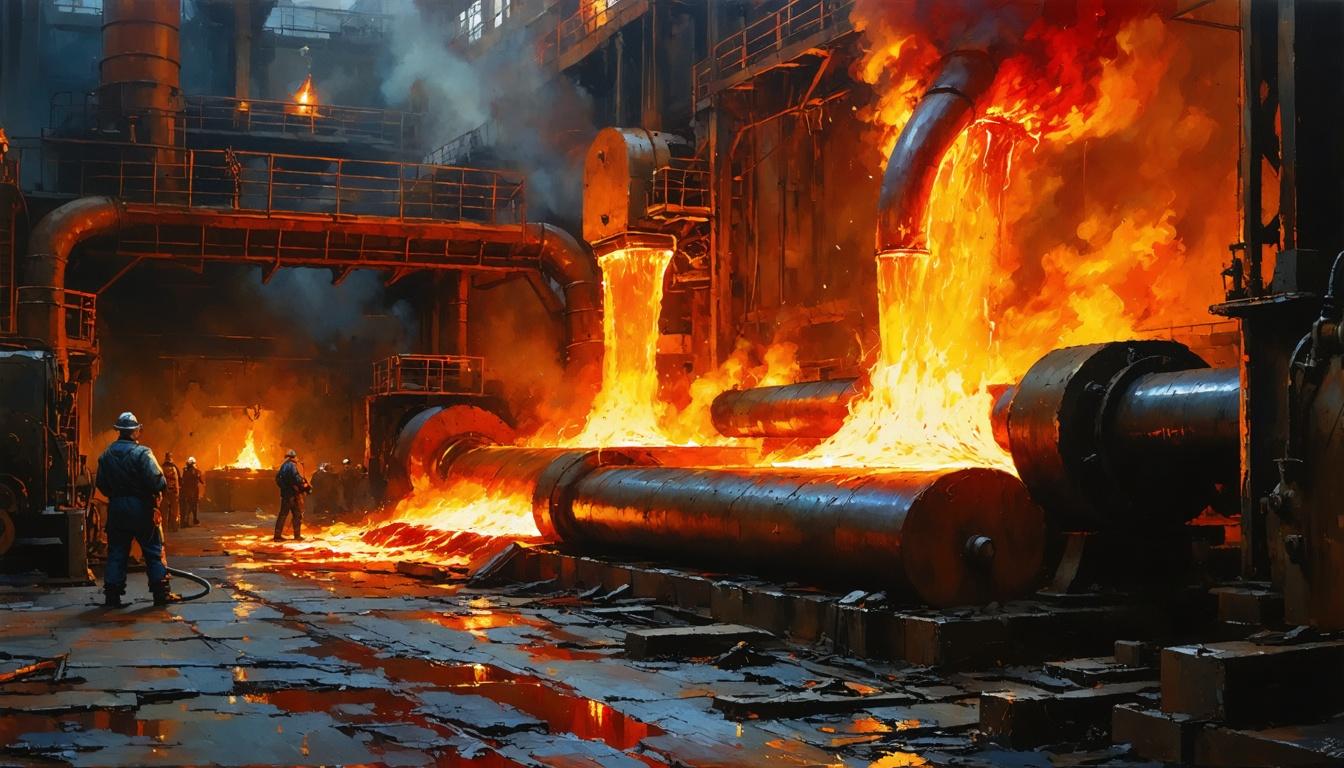

*this image is generated using AI for illustrative purposes only.
Vardhman Special Steels Limited reported a 107% surge in net profit to ₹41.19 crore for Q1FY27, driven by strong demand and operational efficiencies. During the subsequent earnings call held on July 23, 2026, management outlined a strategic roadmap to enhance margins through capacity expansion and diversification into high-value non-automotive steel segments.
Financial Performance and Operational Updates
The company’s revenue from operations grew 12% year-on-year to ₹486.01 crore, supported by a 6.5% increase in sales volumes to 59,103 tonnes. EBITDA rose sharply to ₹68.29 crore from ₹39.33 crore in Q1FY26. Management clarified that the reported EBITDA includes income from surplus funds deployed in money markets; excluding this, the operational EBITDA per tonne stands at ₹10,700.
| Particulars | Q1 FY27 | Q1 FY26 |
|---|---|---|
| Sales Volume (tonnes) | 59,103 | 55,574 |
| Revenue from Operations | ₹486.01 crore | ₹433.70 crore |
| EBITDA* | ₹68.29 crore | ₹39.33 crore |
| PAT | ₹41.19 crore | ₹19.90 crore |
*Including other income
Capacity Expansion and New Projects
Sachit Jain, Chairman & Managing Director, stated that the company has applied to the Environment Ministry for approval to increase melting capacity from 300,000 to 360,000 tonnes. Approval is expected within three to four months. Additionally, a new reheating furnace has been stabilized, and new non-destructive testing (NDT) and peeling lines are scheduled for commissioning by September–October 2026, which will remove current production bottlenecks.
A major greenfield project—a 500,000-tonne steel plant—is in its final stages of land and machinery finalization, with commissioning targeted for FY29-30. Jain noted that the project scope is expanding to include more testing lines, potentially increasing costs but also capacity. The forging unit joint venture with Aichi Steel, Japan, is progressing on schedule with project costs expected to be lower than initially estimated due to better negotiations and local equipment substitution.
Strategic Diversification and Margin Outlook
Management highlighted a shift towards non-automotive steel products, including die steels and railway axles, to create a second engine of growth. Ingot casting facilities for die steels are expected to be ready by Q3FY27, with regular production anticipated in FY28. Currently, exports account for only 6–7% of direct sales, with indirect exports via Aichi adding another 5%. Total export exposure is capped at approximately 10%.
Looking ahead, Jain revised the EBITDA per tonne guidance for FY28 upwards from ₹8,000–₹11,000 to ₹8,000–₹12,000. This improvement is attributed to spreading fixed costs over higher volumes, reduced job work, and operational efficiencies. A planned 50% expansion in solar power capacity within 1.5 years will further reduce energy costs and carbon footprint, strengthening the company’s position for European exports.
Regulatory Disclosures
The Board of Directors approved the unaudited financial results for the quarter ended June 30, 2026, on July 22, 2026. The company filed relevant disclosures with BSE Limited and the National Stock Exchange of India Ltd in compliance with Regulation 30 of the SEBI (Listing Obligations and Disclosure Requirements) Regulations, 2015. The earnings conference call transcript was subsequently filed on July 29, 2026.
Historical Stock Returns for Vardhman Special Steels
| 1 Day | 5 Days | 1 Month | 6 Months | 1 Year | 5 Years |
|---|---|---|---|---|---|
| -4.43% | -7.33% | +9.97% | +83.93% | +29.54% | +221.02% |

How might the timeline for the 500,000-tonne greenfield plant commissioning in FY29-30 impact the company's debt-to-equity ratio and capital expenditure requirements?
What specific regulatory or logistical hurdles could delay the Environment Ministry's approval for the melting capacity expansion, and what are the contingency plans if approval is delayed beyond four months?
Given the shift towards high-value non-automotive segments like die steels, how does Vardhman plan to mitigate the risk of lower initial volumes affecting margin stability during the FY28 ramp-up phase?
 15
15




 Access 50+ Readymade Screeners
  Use 200+ Custom Filters
  Get Full Market Insights





