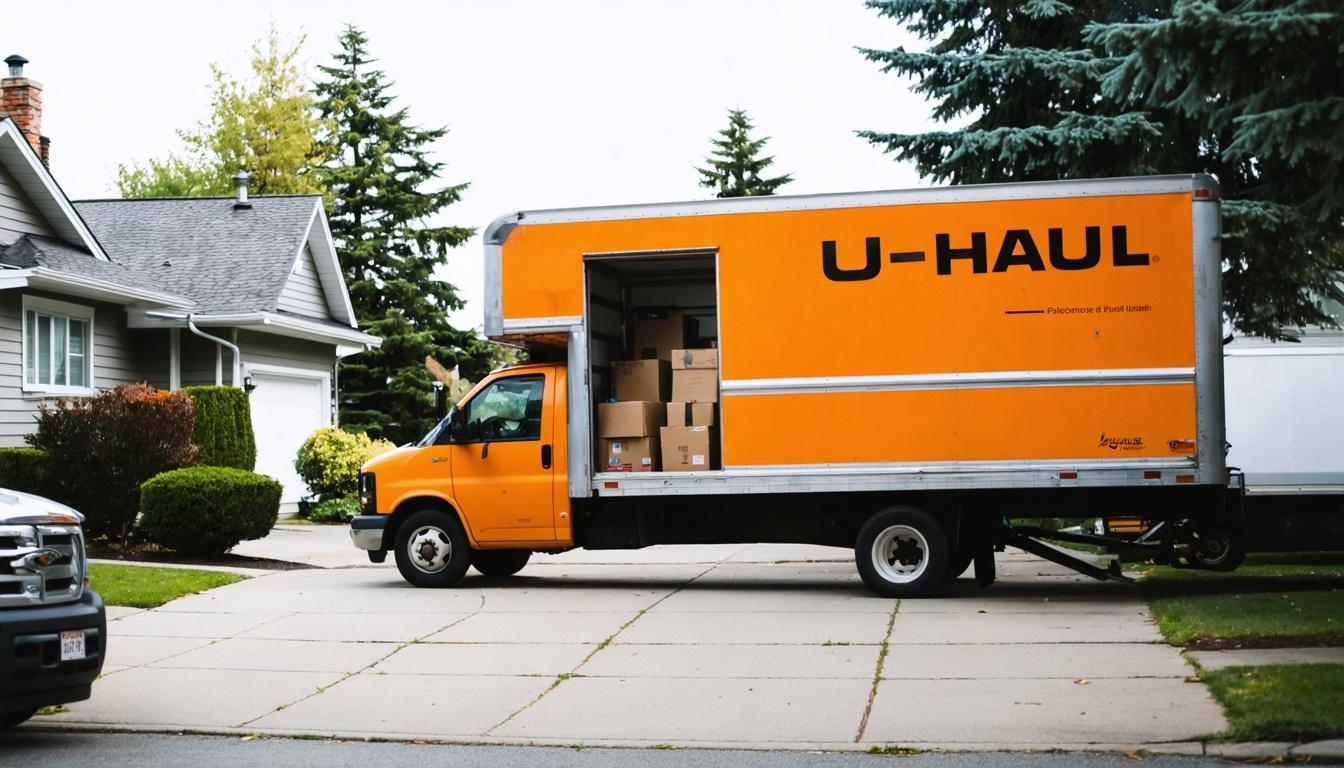
U-Haul opens first Hot Springs facility with 850 units

scanx
Reviewed by
Suketu GScanX News Team
Key Highlights

U-Haul expands its footprint in Arkansas with a new 62,825-square-foot facility in Hot Springs, offering over 850 storage units and 600 U-Box slots. The center emphasizes rate transparency through its 1-Year Price Lock guarantee, aiming to counter competitor pricing strategies while creating local jobs.


powered bylight_fuzz_icon
47921814

*this image is generated using AI for illustrative purposes only.

U-Haul has opened its first company-owned retail, moving, and self-storage facility in Hot Springs, Arkansas, marking a strategic expansion into Garland County. The new center at 623 Files Road began serving do-it-yourself movers and storage customers on July 24, addressing local demand for climate-controlled storage options. This expansion reinforces U-Haul’s position as the third-largest storage operator in North America, adding to its portfolio of 1,147,300 rentable storage units across owned and managed facilities.

The 62,825-square-foot facility is designed to offer comprehensive moving and storage solutions under one roof. It features more than 850 self-storage units with climate-control options, high-tech security features, and drive-in load and unload access for weather protection. Additional amenities include ADA-accessible units, elevator and utility cart access, and extended-hours access. The site also houses a U-Box warehouse providing storage capacity for 600 U-Box portable moving and storage containers.

Beyond storage, the Files Road location operates as a full-service retail hub. It offers truck and trailer sharing, professional hitch installation, and a spacious retail showroom stocked with boxes, moving supplies, and towing accessories. U-Haul plans to employ at least eight Team Members to staff the location, prioritizing local hiring to promote job growth in the Hot Springs community. The company actively recruits veterans, giving them preference in the hiring process as a Best for Vets leading veteran-friendly employer.

Facility Specifications

Feature Details
Location 623 Files Road, Hot Springs, Arkansas
Total Area 62,825 square feet
Self-Storage Units More than 850 units
Climate Control Available for select units
U-Box Capacity 600 containers
Staffing At least eight Team Members

Angela Cogar, U-Haul Co. of Arkansas president, stated that the decision to purchase land and build the state-of-the-art facility was driven by observed growth in the Hot Springs community and a specific need for climate-controlled storage. She noted that boat and RV storage services are planned for the near future. The opening aligns with U-Haul’s broader strategy to differentiate itself from competitors through rate transparency.

New self-storage rentals at the Hot Springs center come with the 1-Year Price Lock Guarantee, introduced early in 2026. This policy provides customers with a fair monthly rate and certainty of no cost increases for at least a year, countering industry practices of substantial rate hikes and junk fees. U-Haul CEO Joe Shoen emphasized that this approach aims to restore trust in an industry often criticized for bait-and-switch tactics amid high inflation. The price lock is now available at more than 2,100 U-Haul-owned and -operated centers across the U.S. and Canada.

What the Numbers Show

The Hot Springs facility represents a significant capital investment in physical infrastructure, combining retail, logistics, and real estate assets. With 62,825 square feet of space dedicated to both traditional storage (850+ units) and portable container logistics (600 U-Box slots), the center reflects U-Haul’s dual focus on static storage and flexible moving solutions. The inclusion of a retail showroom and hitch installation services further diversifies revenue streams beyond pure storage rentals, leveraging U-Haul’s status as the largest installer of permanent trailer hitches in the automotive aftermarket industry.

Disclaimer: This article is AI-generated using data from ViewTrade. ScanX is not liable for any inaccuracies.

How might U-Haul's 1-Year Price Lock Guarantee influence pricing strategies and customer retention across the broader self-storage industry?

What is the projected timeline and potential market impact of adding boat and RV storage services to the Hot Springs facility?

Will U-Haul replicate this integrated retail, moving, and self-storage model in other high-growth markets beyond Garland County?

like20
dislike

U-Haul midyear report shows Gen Z curbing California exodus

scanx
Reviewed by
Shriram SScanX News Team
Key Highlights

U-Haul's midyear 2026 report analyzes one-way moves from July 2025 to June 2026. It finds Boomers moving to the Southeast, while Gen Z drives net gains in California and New York. Millennials lead in transaction volume, accounting for over 60% of rentals alongside Gen X. Florida is the only state in the top 10 for all four generations.

powered bylight_fuzz_icon
46887262

*this image is generated using AI for illustrative purposes only.

U-Haul has released its midyear migration trends report for 2026, revealing distinct generational shifts in U.S. residential mobility based on one-way rental data from July 2025 through June 2026. While older generations continue to drive population growth in the Southeast, younger demographics are altering traditional out-migration patterns from high-cost states. Notably, Generation Z is contributing to a net gain in California and New York, suggesting a potential curb in the long-term exodus from these states. This shift is significant for real estate markets and urban planning in major metropolitan areas.

The analysis covers the peak summer moving season, which typically accounts for roughly half of all annual residential moves in the U.S. between Memorial Day and Labor Day weekends. U-Haul, which facilitates millions of one-way transactions annually, uses its fleet of trucks, trailers, and U-Box containers as a proxy for tracking these demographic movements. The company’s data highlights that the renter’s generation, or stage of life, is a primary determinant of destination choice.

Generational Migration Patterns

The report breaks down net-gain states by generation, showing clear divergence in preferences. Baby Boomers (born 1946-1964) are predominantly moving to the Southeast, with six of their top seven net-gain states located in this region. Arizona remains the only non-Southeastern top destination for this group. In contrast, Generation X (born 1965-1980) and Millennials (born 1981-1996) both favor Florida and Texas but diverge thereafter. Gen X continues to prefer the Southeast and Mountain West, while Millennials are scattering to California and several Midwest states, likely driven by career opportunities.

Generation Top Net-Gain States Key Destination Trend
Baby Boomers South Carolina, North Carolina, Florida, Arizona Strong preference for Southeast and warm climates
Generation X Florida, Texas, South Carolina, Tennessee Focus on Southeast and Mountain West
Millennials Florida, Texas, California, Ohio Mix of Sun Belt and Midwest/Career hubs
Gen Z Texas, California, New York, Illinois Densely populated markets with entry-level jobs

Generation Z (born 1997-2012) is gravitating toward densely populated markets with numerous colleges, entry-level jobs, and apartment access. Texas and California top their list, followed by New York, Illinois, and Colorado. This trend reflects a diverse blend of geography and politics, contrasting with the retiree-focused destinations of Boomers.

Market Share and Volume

Millennials account for the most one-way U-Haul transactions, followed closely by Generation X. Together, these two generations total more than 60% of all rentals. This dominance underscores the economic impact of working-age adults on the moving industry. Meanwhile, metro areas such as College Station, Gainesville, Lubbock, Lexington, Tallahassee, Manhattan (Kan.), Champaign, Madison, and Baton Rouge show sizeable gains among Gen X contract holders. This pattern indicates that many parents in this generation are assisting university-bound children with their moves.

Florida stands out as the only state with a top-10 net gain among all four generations. Texas ranks very high for everyone except Boomers, while Idaho appears on three generational lists. These consistent destinations highlight broad appeal across different life stages, whether for retirement, career advancement, or education.

What the Numbers Show

The data reveals a bifurcation in migration drivers: lifestyle versus opportunity. For Baby Boomers, the primary driver appears to be climate and retirement amenities, concentrating them in the Carolinas, Florida, and Arizona. For younger generations, particularly Millennials and Gen Z, the drivers are employment density and educational access, pulling them back into high-cost states like California and New York. This reversal in Gen Z trends is particularly notable, as it suggests that the push factors driving previous generations away from coastal cities may be less influential for the youngest renters, who prioritize job markets and urban infrastructure over cost-of-living considerations alone.

Disclaimer: This article is AI-generated using data from ViewTrade. ScanX is not liable for any inaccuracies.

How will the return of Gen Z to high-cost coastal states impact housing affordability and rental vacancy rates in California and New York over the next three years?

What specific infrastructure or policy adjustments might Southeastern cities need to make to accommodate the continued influx of Baby Boomers seeking retirement amenities?

Could the divergence between Gen Z's urban preference and older generations' suburban/Sun Belt trends lead to a fragmented real estate market with distinct regional valuation drivers?

like17
dislike

More News on U-Haul Holding