

TCI Q1FY27 revenue rises 9.1% to ₹12,548 Mn; EBITDA grows 5.2%


TCI's Q1FY27 results show robust top-line growth with revenue reaching ₹12,548 Mn, driven by automotive and consumer logistics. However, higher diesel and bunker fuel costs pressured margins, causing a slight dip in net profit to ₹1,066 Mn. The Supply Chain Solutions division emerged as a key growth driver, while the Seaways division maintained multimodal stability.


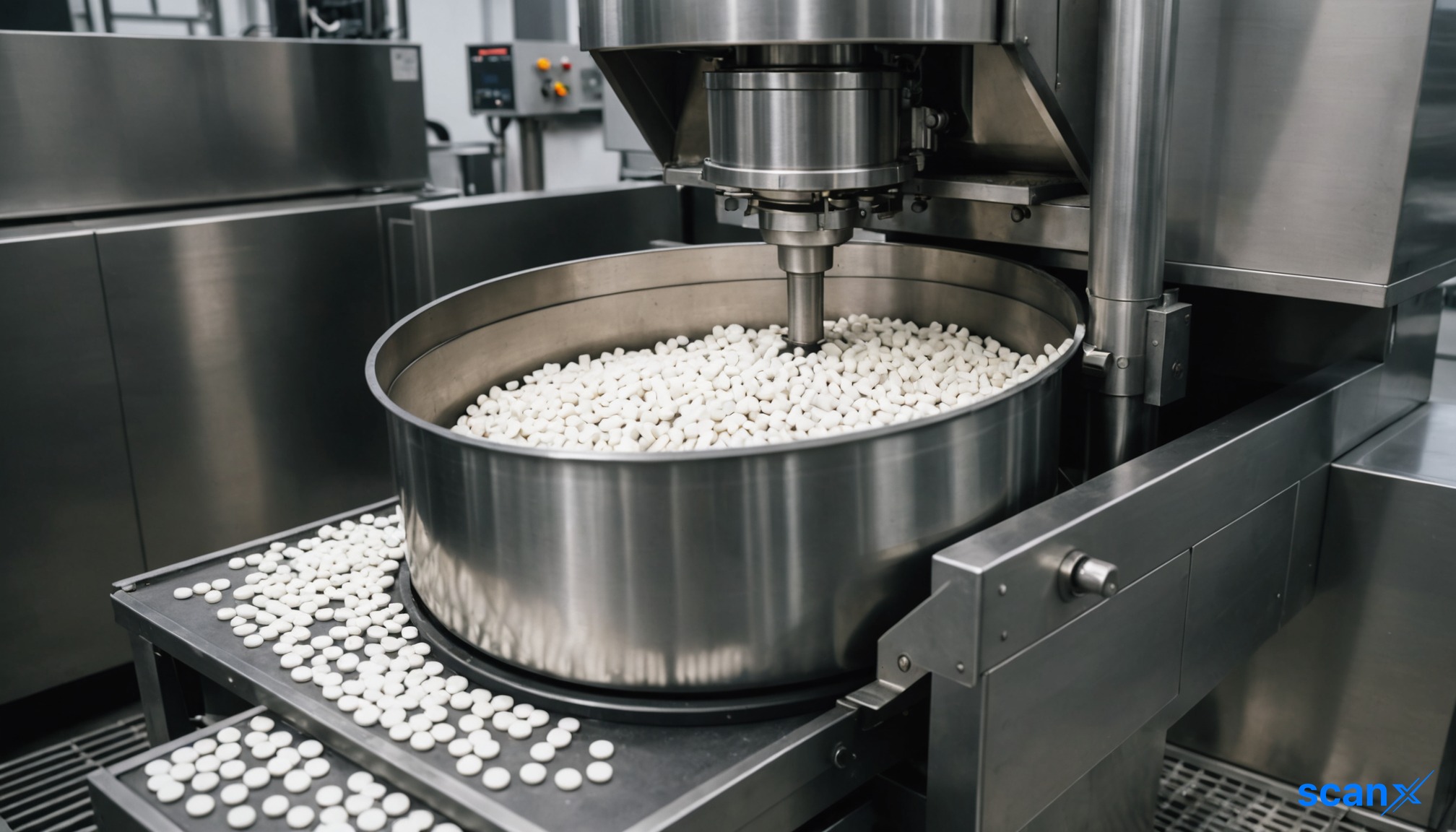
*this image is generated using AI for illustrative purposes only.
Transport Corporation of India Limited reported a 9.1% year-on-year rise in consolidated revenue for the first quarter of FY27, reaching ₹12,548 million compared to ₹11,506 million in the corresponding period last year. The company’s earnings before interest, taxes, depreciation and amortization (EBITDA) grew 5.2% to ₹1,599 million from ₹1,520 million, driven by strong traction in automotive and consumer goods logistics. Despite operational gains, consolidated net profit attributable to equity shareholders declined marginally by 0.6% to ₹1,066 million from ₹1,072 million in Q1FY26, as higher diesel and bunker fuel costs exerted pressure on margins.
The Board of Directors approved the unaudited financial results on July 30, 2026, and the investor presentation was submitted to exchanges on August 3, 2026. Management noted that contractual escalation mechanisms protected most contracted business, but spot recovery reflected a short timing lag. The following table outlines the key financial metrics for the quarter ended June 30, 2026:
| Metric | Q1FY27 (₹ Mn) | Q1FY26 (₹ Mn) | YoY Change |
|---|---|---|---|
| Revenue from Operations | 12,548 | 11,506 | +9.1% |
| EBITDA | 1,599 | 1,520 | +5.2% |
| Consolidated Net Profit | 1,066 | 1,072 | -0.6% |
Standalone revenue grew by 7.5% to ₹11,116 million from ₹10,338 million in the previous year’s quarter. Standalone EBITDA increased modestly by 1.6% to ₹1,655 million from ₹1,629 million. However, standalone net profit declined by 3.5% to ₹1,198 million from ₹1,242 million, reflecting similar cost pressures at the parent company level.
Segment-Wise Growth Drivers
The Freight Division remained a significant contributor, with automotive, consumer goods, and quick-commerce fulfillment providing healthy traction. The Supply Chain Solutions Division showed strong momentum, benefiting from integrated logistics demand. Conversely, Managing Director Vineet Agarwal highlighted that the impact of war on certain sectors like chemicals, tiles, and packaging was visible, creating localized headwinds. The Seaways Division continued to connect India’s western, eastern, and southern ports, contributing to the multimodal stability of the group.
Auditor Review and Compliance
The unaudited financial results were reviewed by Brahmayya & Co., Chartered Accountants, the statutory auditors, pursuant to Regulation 33 of the SEBI (Listing Obligations and Disclosure Requirements) Regulations, 2015. The auditors issued an unmodified conclusion on both standalone and consolidated statements. Notably, the auditors did not review the interim results of one subsidiary (revenue ₹1,250.46 Mn) and one joint venture (share of profit ₹183.62 Mn), relying instead on reports from other auditors. Five subsidiaries and one branch were not reviewed by their respective auditors, though management deemed these immaterial to the Group.
What the Numbers Show
The divergence between EBITDA growth (5.2%) and net profit decline (-0.6%) underscores the sensitivity of TCI’s bottom line to fuel cost volatility. While operational efficiency improved, as evidenced by the rise in EBITDA, the inability to fully pass through spot fuel costs in real-time eroded net margins. This suggests that while volume growth remains strong across key segments like automotive and quick-commerce, margin protection relies heavily on contractual escalation clauses rather than immediate spot market adjustments.
Historical Stock Returns for Transport Corporation of India
| 1 Day | 5 Days | 1 Month | 6 Months | 1 Year | 5 Years |
|---|---|---|---|---|---|
| -0.64% | +0.85% | +3.83% | -13.12% | -27.97% | 0.0% |

How might TCI adjust its pricing strategy or contract terms to better mitigate the impact of volatile diesel and bunker fuel costs on net margins?
What specific operational changes is TCI implementing to offset the localized headwinds in the chemicals, tiles, and packaging sectors caused by geopolitical conflicts?
To what extent could the growth in quick-commerce fulfillment continue to drive revenue, and are there capacity constraints that might limit this expansion in FY27?
 15
15







 Access Market Heat-map & Insights
  Create, Save & Share your Screener
  Use 200+ Screening Filters





