

Musk says Optimus production will be extremely slow at first


Tesla Inc. CEO Elon Musk stated that the initial production ramp for its Optimus humanoid robot will be extremely slow because the company is building an entirely new manufacturing system. The company has converted production lines at its Fremont factory, previously used for Model S and Model X vehicles, to support the assembly of Gen 3 Optimus robots. Pilot production is expected to begin this summer, with high-volume production anticipated around summer 2027 and a long-term target of 10 million robots annually. Meanwhile, China continues to dominate the market, shipping 90% of global units last year, with competitors like Unitree offering cost-effective alternatives.



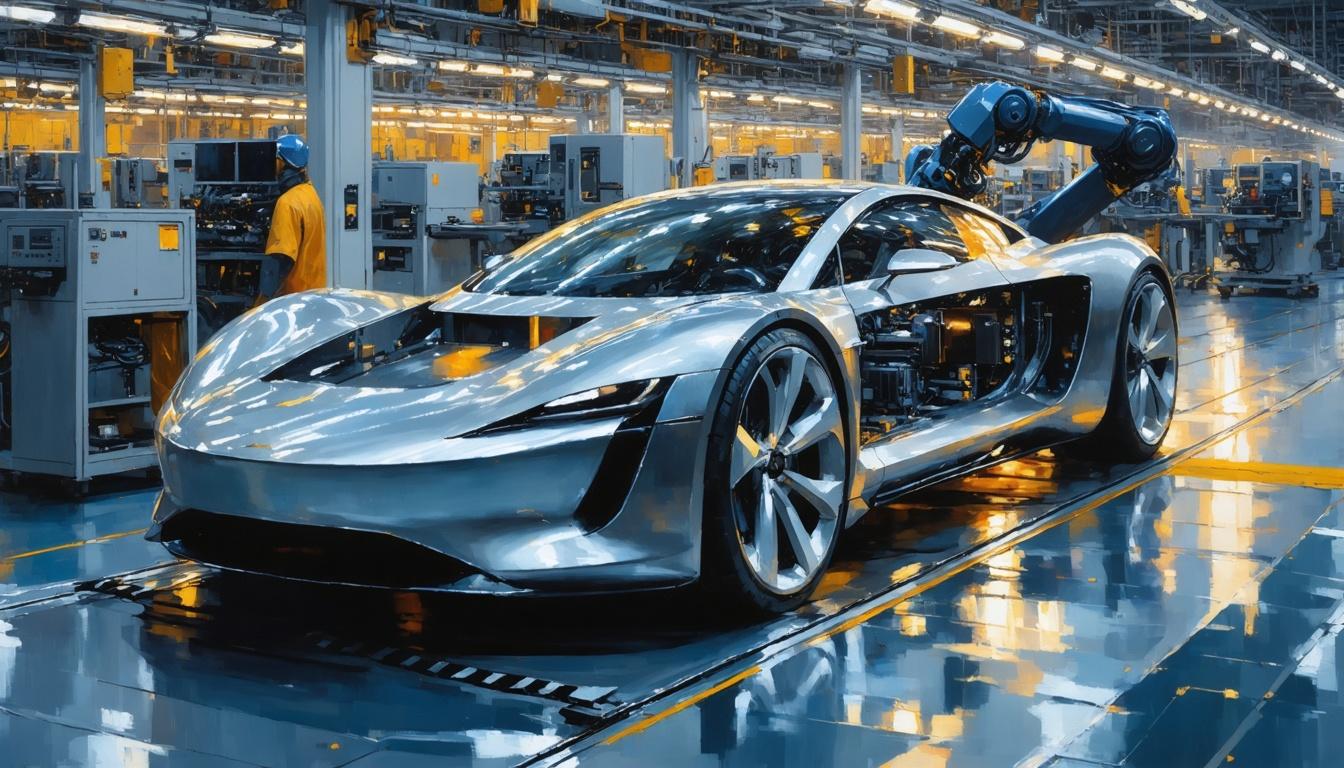
*this image is generated using AI for illustrative purposes only.
Tesla Inc. CEO Elon Musk stated that the initial production ramp for its Optimus humanoid robot will be extremely slow because the company is building an entirely new manufacturing system. Musk clarified on social media platform X that the process is not comparable to making a car, countering speculation that Tesla was ahead of schedule. The company has converted production lines at its Fremont factory, previously used for Model S and Model X vehicles, to support the assembly of Gen 3 Optimus robots. Pilot production is expected to begin this summer at Fremont, while a much larger factory is under construction at Giga Texas. High-volume production is not anticipated until around summer 2027, with Tesla targeting a long-term capacity of 10 million robots annually.
Manufacturing Complexity and Design
Tesla VP of Vehicle Engineering Lars Moravy detailed the installation of the first production line, highlighting its modular design tailored for the robot's smaller size. The bring-up process is expected to be quick due to the robot's dimensions, though the production setup includes 40 lines to accommodate numerous actuators and intricate limb and torso designs. Musk noted that the early phase will focus on getting the assembly process right rather than chasing high volume, citing the robot's complexity with roughly 10,000 unique parts. Additionally, Tesla vehicles can now drive themselves from the end of the line to the logistics yard using a system termed "Full-Self Hearing," which utilizes in-built microphones to detect noises and cracks.
Market Dynamics and Forecasts
The shift to robotics comes as China strengthens its lead in the global humanoid robot market. China shipped approximately 90% of the world's units last year, and Morgan Stanley has doubled its 2026 forecast for Chinese shipments to roughly 50,000 units. The Chinese government supports this sector through a Rmb1 trillion fund for "new productive forces" and mandates for state-owned enterprises to adopt AI-powered robots.
| Metric | Figure |
|---|---|
| China's share of global humanoid robot shipments (last year) | 90% |
| Morgan Stanley 2026 forecast for Chinese shipments | 50,000 units |
| China's industrial robot base (2021–2024) | 2 million units |
| Beijing fund for "new productive forces" | Rmb1 trillion |
Competitive Landscape
Chinese manufacturers like Unitree are leveraging supply chains to produce cost-effective hardware, with the G1 robot priced at $16,000 compared to Tesla's $20,000 target. The G1 is already deployed at major automotive manufacturers including BYD, Geely, and NIO. Tesla is advancing its technology with the Optimus Gen 3, featuring 22 degrees of freedom in the hands, but prediction market Polymarket assigns only a 14% probability to a consumer release this year.

How will Tesla's slower production ramp impact its ability to compete with Chinese manufacturers like Unitree in the near term?
What specific technological advantages does the Optimus Gen 3 offer to justify a higher price point compared to competitors like the G1?
Will the 'Full-Self Hearing' system developed for vehicle manufacturing be integrated into the operational capabilities of the Optimus robots?
 15
15







 Access 50+ Readymade Screeners
  Use 200+ Custom Filters
  Get Full Market Insights





