

Tesla raises Cybertruck prices by up to 7% despite sluggish sales


- Tesla raises Dual-Motor AWD Cybertruck price to $74,990, a 7.1% increase
- Premium AWD trim rises 6.2% to $84,990; Cyberbeast holds at $99,990
- Only 7,133 Cybertrucks registered in the US through May 2026
- Analysts note Tesla prioritizing Cybercab over Model Y Robotaxi ramp-up

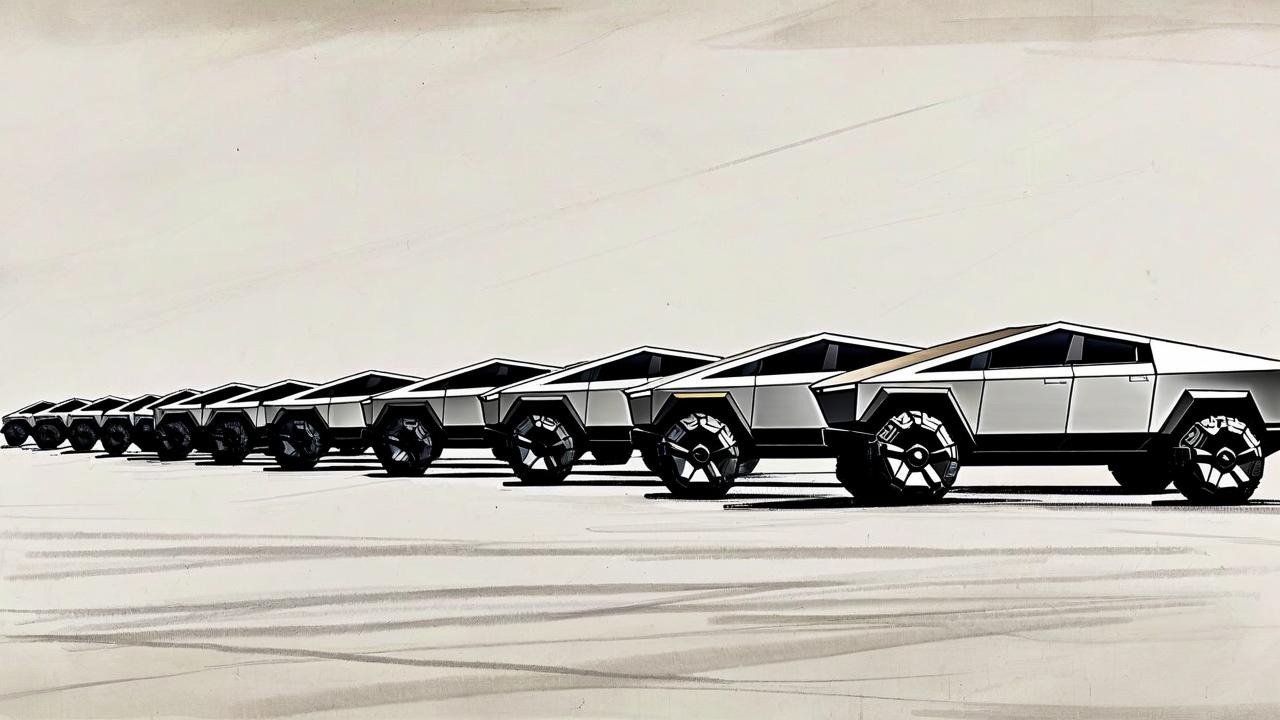

*this image is generated using AI for illustrative purposes only.
Tesla Inc. (NASDAQ: TSLA) has increased the price of its Cybertruck electric pickup truck in the United States by up to $5,000 for select trim levels. The pricing adjustment affects the entry-level and mid-range models while leaving the top-tier variant unchanged.
Cybertruck Pricing Changes
The EV manufacturer hiked the price of the Dual-Motor AWD trim to $74,990, a 7.1% increase from its previous price of $69,990. The mid-level Premium AWD trim saw a 6.2% rise to $84,990, up from $79,990. These figures were confirmed by influencer Sawyer Merritt based on data from the company’s website on August 25, 2026.
The range-topping Cyberbeast trim remains at $99,990. Consequently, the price gap between the entry-level Dual-Motor AWD and the Cyberbeast has narrowed to approximately $25,000. Tesla did not provide an explicit reason for the timing of these adjustments.
| Trim Level | New Price | Previous Price | Change |
|---|---|---|---|
| Dual-Motor AWD | $74,990 | $69,990 | +7.1% |
| Premium AWD | $84,990 | $79,990 | +6.2% |
| Cyberbeast | $99,990 | $99,990 | 0% |
Sales Context and Product Updates
The price hike follows the launch of an entry-level trim earlier this year at $59,990 with a 325-mile range and a towing capacity of 7,500 lbs. However, demand appears limited, with only 7,133 Cybertrucks registered in the United States through May 2026.
In June, Elon Musk highlighted upcoming software features, including Actually Smart Summon, which will allow the vehicle to navigate parking lots and drive itself to the owner via a future update.
Strategic Focus and Analyst Views
JP Morgan Chase & Co. (NYSE: JPM) analysts noted in an investor note that Tesla is prioritizing the Cybercab over the Model Y Robotaxi ramp-up. The bank cited management confidence in scaling Cybercab operations and developing future models based on its platform.
Conversely, Ross Gerber of Gerber Kawasaki expressed skepticism regarding Tesla’s Full Self-Driving (FSD) capabilities. He questioned whether the HW4/AI4 chips would support unsupervised FSD, noting that FSD V15 requires additional compute power despite promised improvements.
TSLA shares rose 0.78% to $351.66 in pre-market trading on Tuesday.

Will the narrowed price gap between the Dual-Motor AWD and Cyberbeast trims cannibalize sales of the higher-margin top-tier model?
How might the limited registration numbers for the entry-level trim influence Tesla's production volume targets for 2027?
Could the prioritization of the Cybercab platform over the Model Y Robotaxi signal a strategic pivot away from traditional consumer EV sales?
 16
16







 Access 50+ Readymade Screeners
  Use 200+ Custom Filters
  Get Full Market Insights





