

TCS launches India's first lights-out factory lab in Pune


- Tata Consultancy Services launched India's first lights-out factory lab in Pune
- The facility uses AI, robotics, and digital twins for autonomous manufacturing
- It complements an earlier NVIDIA-powered lab launched by TCS in Bengaluru

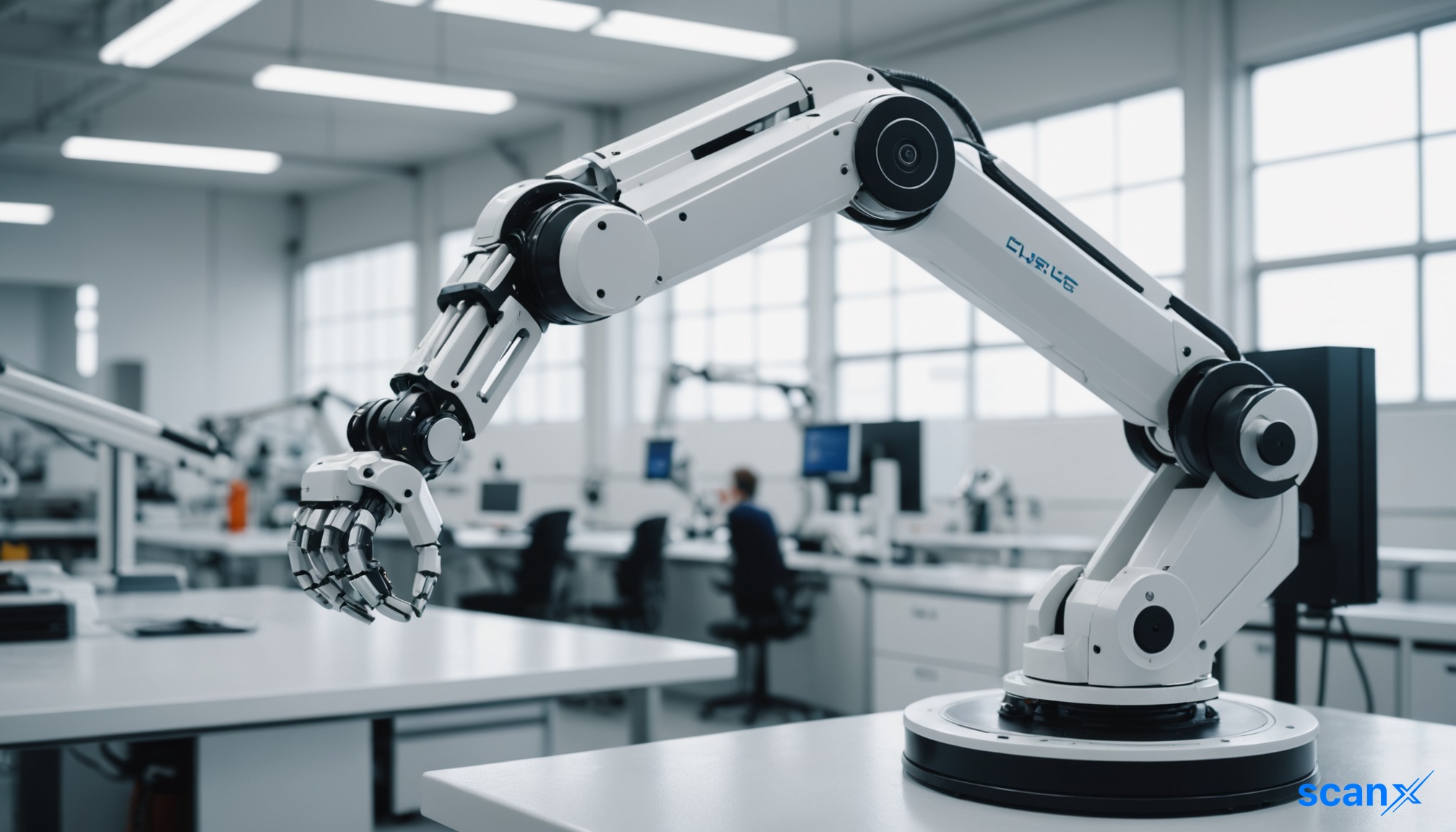

*this image is generated using AI for illustrative purposes only.
Tata Consultancy Services has launched India's first lights-out factory lab in Pune, designed to advance AI-first manufacturing through autonomous operations.
What the lab showcases
The TCS Industrial Autonomy & Engineering Lab – Lights-Out Factory, located at the Sahyadri Park campus in Pune, demonstrates how manufacturing assembly lines can operate with minimal human intervention. The facility integrates three core technology pillars to enable self-optimizing factory operations:
- Artificial intelligence: Enabling self-optimizing factory operations and predictive maintenance
- Robotics: Automating physical manufacturing processes, including a fully robotic battery pack assembly line
- Digital twins: Creating virtual replicas of factory environments for real-time monitoring, simulation, and validation before deployment
The lab also incorporates factory control systems, vision AI, and sensor-to-cloud industrial intelligence to connect shop-floor signals with edge and cloud platforms for context-aware decision-making.
Significance for Indian manufacturing
The facility marks a milestone as the first of its kind in India, positioning Tata Consultancy Services at the forefront of industrial automation research and development. It addresses key challenges in translating Industry 4.0 concepts into practical operating models by providing a controlled setting for manufacturers to prototype, validate, and scale AI-first production systems.
This launch complements TCS' earlier initiative in Bengaluru, where it launched the TCS Industrial Autonomy & Engineering Lab Powered by NVIDIA earlier this year to accelerate Physical AI innovation for industrial and mobility applications.
| Feature | Details |
|---|---|
| Location | Pune, India (Sahyadri Park campus) |
| Lab type | Lights-out factory lab |
| Key technologies | AI, robotics, digital twins, factory control systems |
| Distinction | India's first lights-out factory lab |
| Focus area | AI-driven, self-optimizing, autonomous manufacturing |
Industry perspective
Joakim Landholm, SVP Commercial & Operations Development at SKF, noted that reducing friction is central to industrial progress, stating that the next wave of manufacturing will depend on smarter, more energy-efficient, and reliable operations. He viewed the lab as an important step in helping industry translate advanced automation into measurable operational value.
Sreenivasa Chakravarti, Global Head & Vice President of Industrial Autonomy and Engineering at TCS, emphasized that the facility helps customers turn their aspiration of lights-out manufacturing into reality. He highlighted how the Human + AI model enables enterprises to progress from digitally enabled operations to increasingly autonomous production systems.
Historical Stock Returns for Tata Consultancy Services
| 1 Day | 5 Days | 1 Month | 6 Months | 1 Year | 5 Years |
|---|---|---|---|---|---|
| +1.19% | -0.70% | -11.40% | -12.04% | -28.16% | -45.04% |

How might the deployment of lights-out manufacturing labs impact India's labor market dynamics and workforce reskilling requirements in the coming years?
What are the estimated cost barriers for mid-sized Indian manufacturers to adopt similar AI-first autonomous systems compared to large enterprises?
Could this initiative accelerate India's position as a global hub for high-tech industrial automation exports, and if so, which sectors would benefit most?
 19
19









 Access Market Heat-map & Insights
  Create, Save & Share your Screener
  Use 200+ Screening Filters





