

SK Hynix explores Japan JV for AI memory expansion


- SK Hynix explores a joint venture or small acquisition in Japan to expand AI memory manufacturing.
- Chairman Chey Tae-won is evaluating sites with reliable power and water infrastructure.
- The move aims to capture value from surging AI demand while managing production costs.
- Nasdaq-listed ADRs rose 0.41% to $161.70 in premarket trading on Monday.



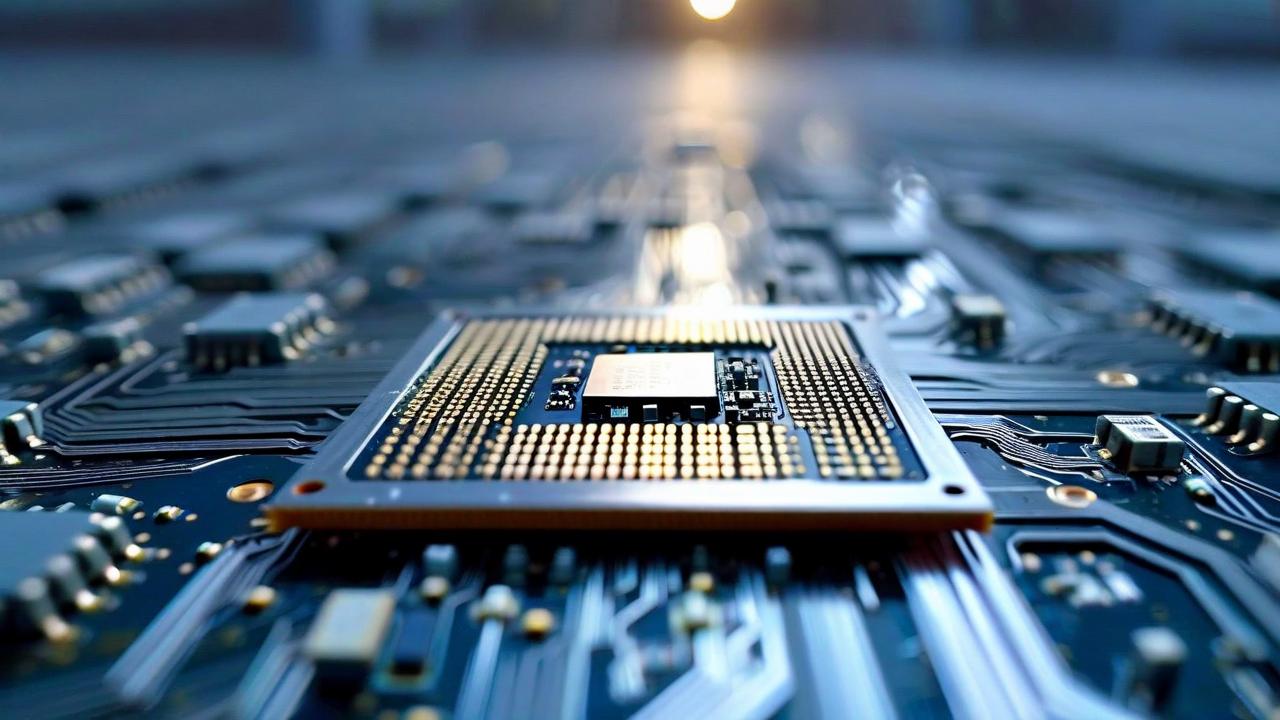
*this image is generated using AI for illustrative purposes only.
SK Hynix Inc. (NASDAQ: SKHY) is exploring a potential joint venture or small acquisition in Japan to expand its memory chip manufacturing footprint. Chairman Chey Tae-won confirmed the company is evaluating sites with adequate power and water infrastructure.
The strategic shift moves beyond initial site scanning to structured partnership discussions. A person familiar with the matter told Bloomberg that the eventual structure could involve a joint venture or co-investment, depending on the partner and product. This development aligns with SK Hynix’s goal to capture more value from surging artificial intelligence demand while managing production costs.
Strategic Context and Market Position
The potential Japanese expansion reinforces SK Hynix’s broader global strategy. The company holds a roughly 14% stake in Japanese memory giant Kioxia Holdings Corp. through an investment vehicle, providing existing market access as it seeks to diversify its manufacturing base.
CEO Kwak Noh-Jung recently stated the company is "carefully looking at how we can co-develop the NAND flash market with our customers and suppliers." This approach complements the firm’s existing relationships with Japanese customers and suppliers, aiming to deepen economic ties between South Korea and Japan.
What the Numbers Show
SK Hynix commands a dominant share in the high-bandwidth memory (HBM) segment, critical for AI applications. Counterpoint Research data indicates SK Hynix held 58% of the global HBM market by revenue in the first quarter of 2026. This significantly outpaces competitors Samsung Electronics and Micron Technology, each holding 21%.
This concentration highlights SK Hynix’s operational leverage in the AI supply chain. The disparity between its HBM market share and the broader memory landscape suggests that its growth trajectory is heavily dependent on maintaining this technological lead against rivals expanding their own capacities, such as Micron’s recent $9.3 billion DRAM plant expansion in Japan.
Global Expansion Timeline
Beyond Japan, SK Hynix is advancing significant projects in the United States. The company announced it will begin volume production of next-generation HBM4E chips at its Indiana facility in the third quarter of 2029. This project, valued at more than $4 billion, reinforces its presence in the US market amid geopolitical trade dynamics.
Earlier reports indicated SK Hynix was considering a memory-chip manufacturing facility in Japan’s Miyagi prefecture, potentially involving tens of trillions of won in investment. If SK Hynix proceeds with a large-scale investment, it would represent the first such semiconductor manufacturing investment in Japan by a South Korean chipmaker.
Share Performance and Analyst Views
Market reaction to the stock has been mixed across listings since its Nasdaq debut in July. Key performance metrics include:
| Listing | Period | Performance |
|---|---|---|
| Nasdaq ADRs | Since July listing | Down 4.15% |
| Seoul Stock | Year-to-date 2026 | Up 157.14% |
| Seoul Stock | Past 12 months | Up 522.3% |
On Monday, Nasdaq-listed ADRs rose 0.41% to $161.70 in premarket trading. South Korean shares closed 1.27% higher on Monday at 16.74 million won ($1,223.86).
Analyst consensus remains bullish. SK Hynix carries a Buy rating with an average price forecast of $248.00. Recent analyst moves include:
- Needham: Buy (Raises Forecast to $220.00) (Aug. 24)
- Wolfe Research: Initiated with Outperform (Forecast $200.00) (Aug. 4)
- RBC Capital: Initiated with Outperform (Forecast $200.00) (Aug. 4)
Top ETF exposure includes NestYield Dynamic Income ETF (5.05% weight) and NestYield Visionary ETF (4.96% weight), meaning significant inflows or outflows for these funds will likely force automatic buying or selling of the stock.

How might a joint venture structure in Japan impact SK Hynix's control over HBM4E intellectual property compared to a wholly-owned subsidiary?
Will the potential Japanese expansion accelerate or delay the timeline for volume production of HBM4E chips at the Indiana facility?
How could this move influence the competitive dynamics between SK Hynix and Micron, given Micron's recent $9.3 billion DRAM plant expansion in Japan?
 15
15









 Create Custom Screeners
  Access 200+ Pre-built Filters
  Use 50+ Readymade Screener





