

Shell resumes $4.2B buyback after Q2 earnings beat estimates


Shell resumed a $4.2B buyback after reporting Q2 adjusted earnings of $9.8B, beating estimates. Net debt fell to $41.8B as cash flow surged to $17.5B, driven by higher realized prices and strong LNG trading performance.

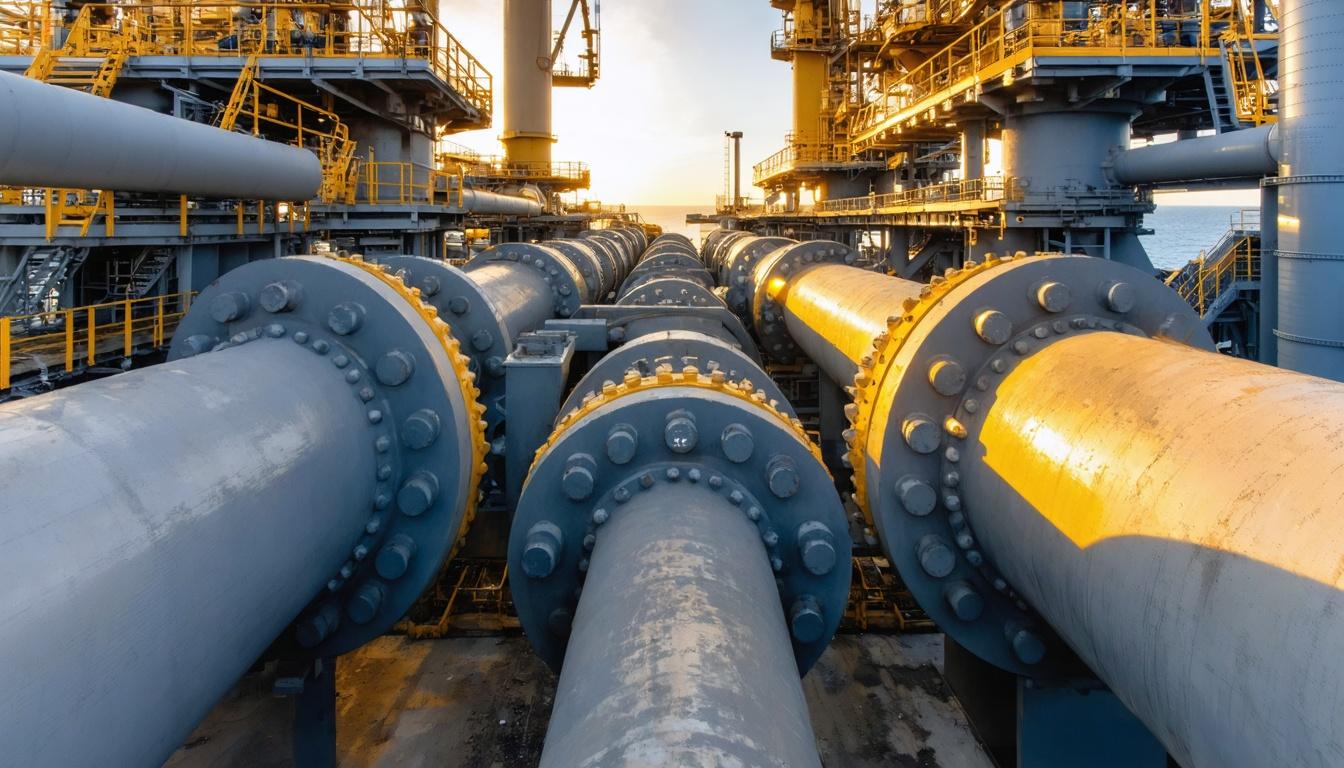

*this image is generated using AI for illustrative purposes only.
Shell plc resumed its share repurchase programme on July 30, 2026, launching a combined $4.2 billion initiative that includes $3 billion in new buybacks and $1.232 billion carried over from a previously suspended plan. This capital return follows the company’s announcement of adjusted earnings of $9.8 billion for the second quarter of 2026, significantly beating the analyst consensus estimate of $1.58 per American depositary share (ADS). The strong financial performance, driven by higher realised commodity prices and robust liquefied natural gas (LNG) trading, generated free cash flow of $17.5 billion, enabling Shell to return significant capital to shareholders while maintaining a dividend of $0.3906 per share.
The buyback programme is structured through two non-discretionary contracts with a single broker, covering an aggregate contract term of approximately three months, running through October 23, 2026. Purchases will be executed on London market exchanges (London Stock Exchange, BATS, Chi-X) under a contract with a maximum consideration of $2.821 billion, and on Netherlands exchanges (Euronext Amsterdam, CBOE Europe DXE, Turquoise Europe) under a contract with a maximum consideration of $1.411 billion. All shares repurchased will be cancelled to reduce the issued share capital. The programme is intended to be completed prior to the Q3 2026 results announcement, subject to market conditions.
Programme Mechanics and Regulatory Compliance
The maximum number of ordinary shares that may be purchased or committed to purchase under the programme is 565,550,000, representing the remaining authority granted by shareholders at the 2026 Annual General Meeting. The broker will make trading decisions independently of Shell plc. The programme adheres to Chapter 9 of the UK Listing Rules and Article 5 of the Market Abuse Regulation (EU MAR), including provisions "onshored" into UK law via the European Union (Withdrawal) Act 2018 and subsequent amendments such as The Market Abuse (Amendment) (EU Exit) Regulations (SI 2019/310).
The resumption follows a suspension period from June 12, 2026, to July 14, 2026, necessitated by securities law requirements related to the acquisition of ARC Resources Ltd. Shareholders of ARC Resources voted in favour of the acquisition on July 30, 2026, with the transaction expected to close in Q3 2026. The deal, valued at approximately USD 13.6 billion, is projected to increase Shell’s production growth to a 4% compound annual growth rate (CAGR) through 2030.
Financial Performance and Balance Sheet Strength
Shell’s Q2 2026 results demonstrated improved balance sheet metrics, with net debt decreasing to $41.8 billion from $52.6 billion at the end of Q1 2026. This reduction lowered gearing to 18.7% from 23.2%. Revenue for the quarter totaled $94.66 billion, missing the Street estimate of $108.24 billion, but adjusted earnings rose to $9.8 billion from $6.9 billion in the first quarter. Cash flow from operations was $21.4 billion during the quarter.
| Metric | Q2 2026 | Q1 2026 | Q2 2025 |
|---|---|---|---|
| Adjusted Earnings ($M) | 9,836 | 6,915 | 4,264 |
| Free Cash Flow ($M) | 17,524 | 2,927 | 6,531 |
| Net Debt ($M) | 41,754 | 52,606 | 43,216 |
| Gearing (%) | 18.7% | 23.2% | 19.1% |
| Dividend per Share ($) | 0.3906 | 0.3906 | 0.3580 |
Segment Contributions and Operational Updates
Integrated Gas contributed $2,691 million to adjusted earnings, up from $1,819 million in Q1 2026. However, Integrated Gas production fell 31% from the previous quarter to 631,000 barrels of oil equivalent (boe) per day, reflecting the impact of the Middle East conflict on Qatari volumes. LNG liquefaction volumes declined 2% sequentially to 7.73 million metric tons due to the conflict and higher planned maintenance. Realised liquids prices increased to $80 per barrel from $77 in the prior quarter, while realised gas prices rose to $7.20 from $6.50 per thousand standard cubic feet.
Upstream production edged down to 1.824 million boe per day from 1.843 million in the first quarter, primarily because of higher maintenance activity. Upstream earnings rose to $3,485 million, driven by record production in Brazil and higher realised prices. The Chemicals and Products segment saw a significant recovery, with adjusted earnings reaching $2,877 million, aided by higher chemicals margins and record refinery utilisation of 102%. Marketing sales volumes declined to 2.57 million barrels per day from 2.63 million in the prior quarter.
What the Numbers Show
The surge in free cash flow to $17.5 billion, compared to $2.9 billion in Q1 2026, highlights significant volatility in working capital dynamics. A $3.4 billion working capital inflow in Q2 2026, contrasting with an $11.2 billion outflow in Q1, significantly boosted liquidity. This operational efficiency, combined with disciplined capital expenditure of $4.2 billion, allowed Shell to aggressively reduce net debt while maintaining substantial shareholder distributions, including the resumed buyback programme. Despite revenue missing estimates, the margin expansion driven by higher realised prices enabled the company to exceed earnings expectations significantly.

How might the integration of ARC Resources impact Shell's projected 4% production CAGR through 2030, and what are the key execution risks?
Will Shell maintain its current dividend payout ratio and buyback intensity if realized commodity prices revert to pre-Q2 2026 levels?
What is the strategic rationale behind the significant sequential drop in Integrated Gas production despite higher earnings, and how sustainable are these margins?
 18
18










 Access 50+ Readymade Screeners
  Use 200+ Custom Filters
  Get Full Market Insights





