

Sandisk develops high bandwidth flash to tackle AI memory wall


- Sandisk shares rose 1.24% to $1,814 in premarket trading
- Data centers now account for more than half of NAND demand
- Company signed eight strategic agreements lasting up to five years
- Developing High Bandwidth Flash to address AI memory wall
- Stock up more than 1,600% over the past 12 months


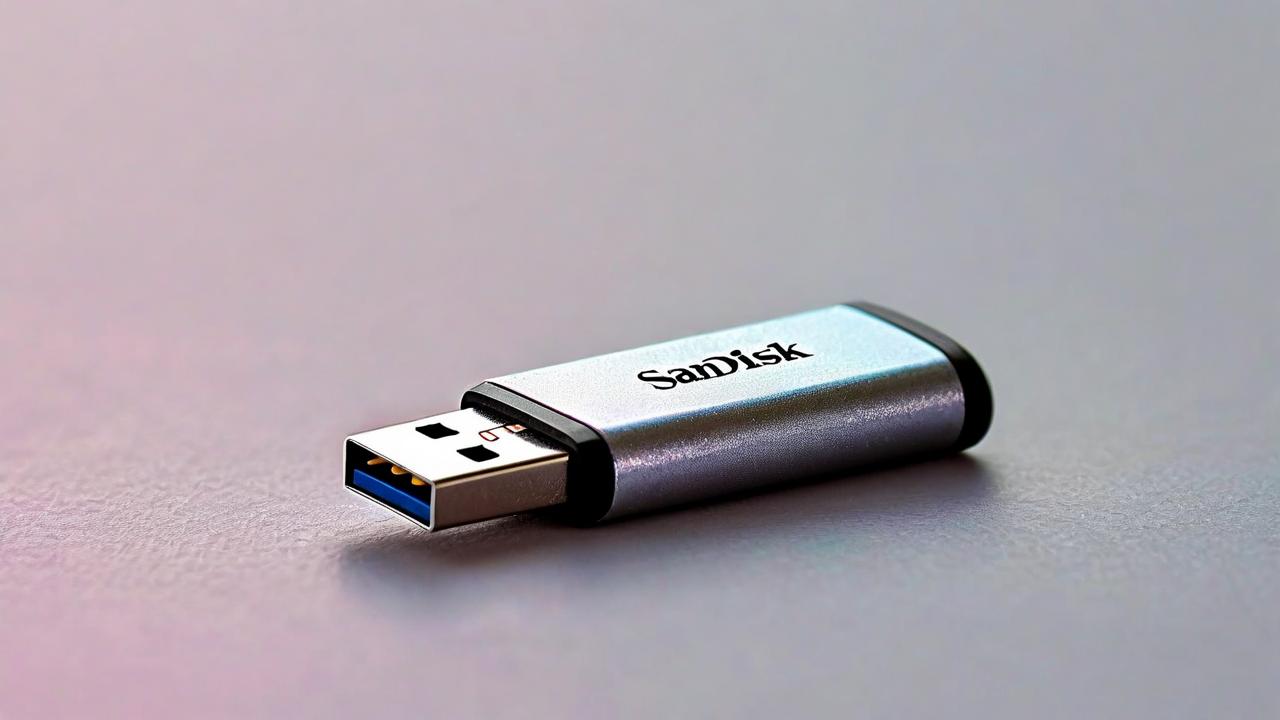
*this image is generated using AI for illustrative purposes only.
Sandisk Corp. (NASDAQ: SNDK) shares rose 1.24% to $1,814 in premarket trading. Executives outlined how artificial intelligence inference is reshaping the NAND flash market, driving data center demand to over half of industry total.
Data Center Demand Shifts Buying Patterns
Speaking at the Goldman Sachs Communacopia + Technology Conference, Sandisk noted that larger AI models and longer context windows are increasing the need for scalable storage. Technologies such as retrieval-augmented generation and KV cache are expanding NAND’s role in AI infrastructure.
Chief Executive David Goeckeler said the shift toward data centers is changing customer purchasing behavior. Large cloud and data center operators increasingly prefer predictable supply over quarterly price negotiations. In response, Sandisk has moved more future supply into longer-term agreements, providing customers with greater supply certainty while giving the company better visibility into future demand.
Chief Financial Officer Luis Visoso stated that Sandisk has signed eight strategic agreements, some covering requirements for as long as five years. These contracts can include fixed-price periods, upside participation, downside protection, and third-party financial guarantees.
Sandisk said it has spent the past several years expanding its enterprise SSD portfolio. The company believes that investment positions it to benefit as data center demand becomes a larger share of the NAND market.
High Bandwidth Flash Targets AI Inference
Sandisk is developing High Bandwidth Flash, or HBF, specifically for AI inference workloads. Goeckeler described an emerging "memory wall" as models grow larger and inference workloads demand more capacity. The company sees an opportunity to use its NAND expertise to address this bottleneck by combining greater storage density with higher bandwidth and durability.
Goeckeler clarified that HBF is not designed to replace high-bandwidth memory, or HBM. Instead, Sandisk aims to combine NAND’s density with higher bandwidth and durability to address memory constraints as inference workloads scale. The company plans to place HBF samples with customers next year.
Financial Model and Technical Outlook
Sandisk reiterated its longer-term financial model, which includes an 80% gross margin target and a 50% free cash flow margin. The company continues to favor share repurchases over dividends for returning cash to shareholders.
Technically, the stock remains well above its major moving averages. It sits about 14% above its 20-day simple moving average of $1,591.42 and nearly 70% above its 200-day SMA of $1,068.24. Momentum indicators show the MACD above its signal line with a positive histogram, suggesting eased selling pressure following the previous downswing.
Sandisk shares remain in a powerful longer-term uptrend after gaining more than 1,600% over the past 12 months. However, the extended move could also leave the stock vulnerable to sharper pullbacks. Near-term resistance sits around $1,828. Support is near $1,514.50, close to the 50-day SMA of $1,504.20.
The stock peaked near its 52-week high in June before reaching a swing low in July. Traders will now watch whether the latest rebound can establish a higher low.
What the Numbers Show
The transition from quarterly price negotiations to multi-year strategic agreements represents a structural shift in revenue visibility. By locking in supply for up to five years, Sandisk is effectively trading short-term pricing flexibility for long-term demand certainty, aligning its production cycles with the predictable, albeit capital-intensive, expansion of AI data centers.
Analyst Outlook and ETF Exposure
Sandisk holds a Buy consensus rating with an average price forecast of $2,282.69. Mizuho maintained an Outperform rating but lowered its forecast to $1,875 on Aug. 25. RBC Capital raised its forecast to $1,600 on Aug. 14, maintaining a Sector Perform rating. Wells Fargo raised its forecast to $1,550 while keeping an Equal-Weight rating.
Sandisk has a Momentum score of 99.85 in Benzinga Edge Rankings, reflecting strong relative price performance. Its Value score stands at 8.98. The stock currently trades at about 24.3 times earnings.
The stock is a major holding in several exchange-traded funds. The First Trust US Equity Opportunities ETF (NYSE: FPX) has an 8.82% weighting, while the Invesco S&P 500 Pure Growth ETF (NYSE: RPG) has an 8.02% weighting. The Invesco Dorsey Wright Technology Momentum ETF (NASDAQ: PTF) carries a 5.43% weighting.
Large fund inflows or outflows could therefore contribute to trading activity in Sandisk shares.

How might the shift to multi-year fixed-price contracts impact Sandisk's ability to capitalize on potential NAND price spikes compared to competitors relying on quarterly negotiations?
What are the technical hurdles and timeline risks for Sandisk's High Bandwidth Flash (HBF) to successfully address the 'memory wall' before HBM standards evolve further?
Could the concentration of revenue from a few large cloud operators via strategic agreements increase Sandisk's vulnerability to demand shocks if AI capital expenditure cycles slow down?
 20
20










 Create Custom Screeners
  Access 200+ Pre-built Filters
  Use 50+ Readymade Screener





