Sanathan Textiles cuts energy intensity 3.27%, water usage 6.1% in FY26

2 min read     Updated on 19 Aug 2026, 08:06 PM
scanx
Reviewed by
Shriram SScanX News Team
AI Summary

Sanathan Textiles Limited's FY26 BRSR report highlights a strategic shift toward sustainable manufacturing, evidenced by a ₹73 crore capex injection and measurable reductions in energy and water intensity. Despite higher absolute emissions due to capacity expansion, efficiency metrics improved, underscoring the impact of new ZLD and renewable energy infrastructure.

powered bylight_fuzz_icon
48695770

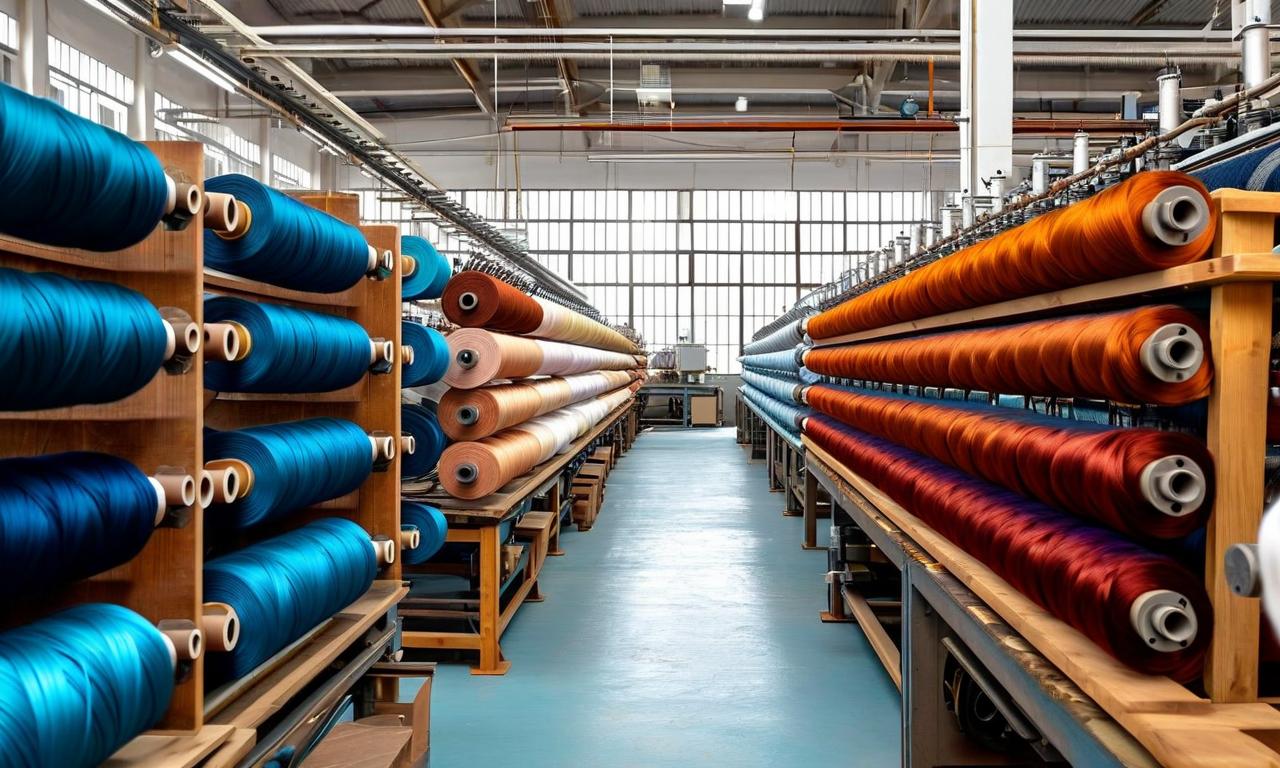
*this image is generated using AI for illustrative purposes only.

Sanathan Textiles Limited submitted its Business Responsibility and Sustainability Report (BRSR) for the financial year ended March 31, 2026, detailing significant improvements in resource efficiency and environmental compliance. The integrated yarn manufacturer reported a reduction in energy intensity to 5.03 GJ/tonne of production, down from 5.20 GJ/tonne in FY25, marking a 3.27% decline. Water intensity also fell by 6.10% to 0.77 KL/tonne from 0.82 KL/tonne.

These operational gains were underpinned by a substantial increase in capital expenditure directed toward sustainability initiatives. The company invested ₹73 crore in FY26 on technologies designed to improve environmental performance, a sharp rise from ₹6.89 crore in the previous year. This spending primarily funded the commissioning of its new Punjab facility, where environmental systems were integrated into the plant design rather than retrofitted.

Environmental Impact and Infrastructure

The capital allocation focused on four key areas: energy efficiency, waste heat recovery, water stewardship, and fuel transition. At the Silvassa unit, the replacement of power-intensive screw compressors with centrifugal turbo compressors significantly lowered energy requirements. Additionally, cooling water pumps were upgraded, reducing daily consumption from 5,340 units to 4,282 units.

Water management remains a critical priority, with the Punjab facility operating as a Zero Liquid Discharge (ZLD) site. Investments included an Effluent Treatment Plant, Reverse Osmosis systems, and Mechanical Vapour Recompression Evaporators to recover and reuse water. The company also initiated a river water project at Silvassa to reduce reliance on groundwater.

Environmental Metric FY25 FY26 Change
Energy Intensity (GJ/tonne) 5.20 5.03 -3.27%
Water Intensity (KL/tonne) 0.82 0.77 -6.10%
Capex for Environment (₹ crore) 6.89 73.00 +956.46%

Emissions and Waste Management

Total energy consumption rose to 2,480,754 GJ from 1,787,876 GJ in FY25, driven largely by the inclusion of the new Punjab operations. Consequently, Scope 1 and Scope 2 greenhouse gas emissions increased to 3,44,738 metric tons of CO2 equivalent, up from 2,69,849 metric tons. However, emission intensity per tonne of physical output decreased to 0.70 metric tons, improving from 0.79 metric tons in the prior year.

The company maintained compliance with all applicable environmental regulations, reporting no fines or penalties. Waste generation totaled 198.66 metric tons, with 10.22 metric tons recycled and 155.39 metric tons disposed of through landfilling or incineration. Sanathan Textiles also met its Extended Producer Responsibility targets for plastic waste recycling and end-of-life processing.

Social Governance and Workforce

Sanathan Textiles employs a workforce of 1,843 permanent employees and 6,053 non-permanent workers. The company reported zero safety-related incidents, fatalities, or lost-time injuries during FY26. Training programs covered 100% of permanent employees and 94% of workers on health, safety, and skill upgradation topics.

Gender diversity remains limited, with women constituting only 3% of permanent employees and 6% of workers. Female representation on the Board of Directors stands at 12.5% (one out of eight members), while Key Management Personnel and Senior Managerial roles have minimal female participation. The company reported no complaints regarding sexual harassment, discrimination, or child labor.

Historical Stock Returns for Sanathan Textiles

1 Day5 Days1 Month6 Months1 Year5 Years
-1.50%-10.69%+0.90%+7.62%-11.34%+15.31%

How will the ₹73 crore capex investment in the new Punjab facility impact Sanathan Textiles' EBITDA margins and return on invested capital (ROIC) over the next 2-3 fiscal years?

Given the rise in absolute Scope 1 and Scope 2 emissions due to expanded operations, what specific decarbonization roadmap or renewable energy targets has the company set to offset this growth?

What is the projected timeline for the Silvassa river water project to become fully operational, and how will it affect the company's long-term water security and operating costs?

Sanathan Textiles FY26 Results: Revenue up 27.10% to ₹3,811.18 crore, PAT falls

5 min read     Updated on 19 Aug 2026, 07:42 PM
scanx
Reviewed by
Riya DScanX News Team
AI Summary

Sanathan Textiles filed its FY2025-26 Annual Report, reporting consolidated revenue of ₹3,811.18 crore, up 27.10% YoY, and consolidated EBITDA of ₹284.35 crore, up 7.90%. Consolidated profit after tax declined to ₹77.35 crore from ₹160.45 crore, primarily due to higher depreciation (₹93.10 crore vs ₹45.86 crore) and finance costs (₹95.85 crore vs ₹17.96 crore) following capitalisation of the Punjab greenfield facility. The Punjab plant reached 700 MTPD capacity by March 2026, and total installed capacity stood at 479,250 MTPA across three verticals.

powered bylight_fuzz_icon
48694357

*this image is generated using AI for illustrative purposes only.

Sanathan Textiles Limited submitted its Annual Report for FY2025-26 to the stock exchanges on August 19, 2026, pursuant to Regulation 34 of the SEBI (Listing Obligations and Disclosure Requirements) Regulations, 2015. The report covers the company's 21st year of operations and is themed "One Yarn, Many Things: Rooted in Values, Weaving a Better Tomorrow." The 21st Annual General Meeting is scheduled for Friday, September 11, 2026, via video conference.

Financial Performance

Consolidated revenue from operations reached a record ₹3,811.18 crore in FY2025-26, growing 27.10% over ₹2,998.61 crore in FY2024-25. This was driven principally by the commissioning and ramp-up of the Punjab facility operated through wholly owned subsidiary Sanathan Polycot Private Limited. Consolidated EBITDA increased 7.90% to ₹284.35 crore from ₹263.53 crore. However, consolidated profit after tax declined to ₹77.35 crore from ₹160.45 crore, as higher depreciation and finance costs accompanied the capitalisation of the greenfield Punjab plant assets.

The following table summarises consolidated and standalone financial results:

Particulars: Consolidated FY2025-26 Consolidated FY2024-25 Standalone FY2025-26 Standalone FY2024-25
Total Income: ₹3,830.58 crore ₹3,015.35 crore ₹3,092.49 crore ₹3,025.74 crore
Revenue from Operations: ₹3,811.18 crore ₹2,998.61 crore ₹3,037.86 crore ₹2,996.80 crore
EBITDA: ₹284.35 crore ₹263.53 crore ₹277.10 crore ₹265.84 crore
Profit Before Tax: ₹114.80 crore ₹216.45 crore ₹247.48 crore ₹231.09 crore
Profit After Tax: ₹77.35 crore ₹160.45 crore ₹191.91 crore ₹174.47 crore
Depreciation: ₹93.10 crore ₹45.86 crore ₹49.22 crore ₹45.43 crore
Finance Costs: ₹95.85 crore ₹17.96 crore ₹35.03 crore ₹18.26 crore

On a standalone basis, revenue from operations grew to ₹3,037.86 crore from ₹2,996.80 crore, with standalone EBITDA margin expanding to 9.12% from 8.87% and standalone profit after tax rising to ₹191.91 crore from ₹174.47 crore — the fourth consecutive year of margin improvement at the standalone level.

During the year, Capital Work-In-Progress of ₹1,971.05 crore was capitalised, reducing the closing CWIP balance to ₹252.00 crore from ₹1,586.95 crore, and increasing net Property, Plant and Equipment to ₹2,804.36 crore from ₹930.87 crore. The company stated that the decline in consolidated profit is explained almost entirely by the higher interest and depreciation that accompany a greenfield project, and that the company reached its annual peak net debt in this investment cycle.

Vertical-Wise Revenue Contribution

Polyester filament yarns remained the dominant business vertical. The following table shows product-wise revenue for FY2025-26:

Product: FY2025-26 Revenue Revenue Share
Polyester yarn products: ₹3,118.31 crore 82%
Cotton yarn products: ₹583.00 crore 15%
Industrial and technical textile yarns: ₹109.87 crore 3%

Polyester filament yarns grew 35.3% to ₹3,118.31 crore, while cotton yarns recorded growth of 3% to ₹583.00 crore.

Manufacturing and Operational Highlights

The company's installed capacity reached 479,250 MTPA across three business verticals. The Wazirabad, Punjab manufacturing facility — operated through Sanathan Polycot Private Limited — commissioned its continuous polymerisation line on August 27, 2025 and ramped up to 700 MTPD by March 2026. The Punjab plant is described as the only integrated polyester filament yarn plant of this scale in North India. The Silvassa facility maintained a capacity utilisation of 96% during the year.

The capacity structure as at year-end is summarised below:

Facility: Capacity Status
Polyester Yarn — Silvassa: 200,750 MTPA Installed and in production
Cotton Yarn — Silvassa: 14,000 MTPA Installed and in production
Technical Textiles — Silvassa: 9,000 MTPA Installed and in production
Polyester Yarn — Punjab (Phase 1): 255,500 MTPA Commissioned
Technical Textiles — Silvassa (additional): 9,000 MTPA Plant and machinery installed, pending commissioning
Polyester Yarn — Punjab (Phase 2): 91,250 MTPA Upcoming
Cotton Yarn — Madhya Pradesh: 73,000 Spindles Upcoming

Sustainability and ESG

The company invested ₹73.00 crore in FY2025-26 in technologies and infrastructure to improve environmental performance, compared to ₹6.89 crore in FY2024-25. Key sustainability metrics showed improvement:

Parameter: FY2024-25 FY2025-26 Change
Energy intensity (GJ/tonne): 5.20 5.03 Reduction of 3.27%
Water intensity (KL/tonne): 0.82 0.77 Reduction of 6.10%

Both the Silvassa and Punjab facilities operate Zero Liquid Discharge systems. The Punjab facility uses rice husk biomass as a renewable heating fuel. Sanathan Polycot Private Limited entered into a Power Supply and Consumption Agreement for sourcing 32 MW of renewable power as a captive consumer. The company also presented its first Business Responsibility and Sustainability Report for FY2025-26.

Workforce and CSR

As at March 31, 2026, the Sanathan Textiles Group had 1,843 permanent employees and 6,053 contract workers on a consolidated basis, totalling a workforce of 7,896. Employee benefits expense stood at ₹125.28 crore for FY2025-26. The average percentage increase in employee salaries during the year was 8%.

The company's CSR obligation for FY2025-26 was ₹4.05 crore, of which ₹0.32 crore was spent during the year. The remaining ₹3.73 crore was transferred to the Unspent CSR Account. CSR activities included healthcare support, fire safety infrastructure at the Punjab community, cervical cancer awareness and vaccination initiatives, food distribution, and renovation of K. M. Haji Bachooali ENT Hospital.

Board and Governance

The Board comprised eight directors as at March 31, 2026 — four Executive Directors and four Independent Directors including one woman director. Mr. Sammir Dattani was appointed as Executive Director with effect from May 26, 2025. Mrs. Rupal Vora was reappointed as Independent Director for a second term from April 1, 2026 to March 31, 2029. The Board met five times during FY2025-26. No dividend was recommended for the year in view of ongoing capacity expansion.

ICRA reaffirmed the company's credit ratings: long-term fund-based term loans and limits at [ICRA]A (Positive) and short-term non-fund-based limits at [ICRA]A2+. Walker Chandiok & Co LLP served as statutory auditors and the Board has proposed their reappointment for a second term of five years from the conclusion of the 21st AGM.

Historical Stock Returns for Sanathan Textiles

1 Day5 Days1 Month6 Months1 Year5 Years
-1.50%-10.69%+0.90%+7.62%-11.34%+15.31%

When is Sanathan Textiles expected to reach full capacity utilization at the Punjab facility, and how will this impact the trajectory of consolidated EBITDA margins?

What is the projected timeline for commissioning Phase 2 of the Punjab plant and the new Madhya Pradesh cotton yarn facility, and what capital expenditure is required for these expansions?

How does the company plan to deleverage its debt levels following the peak net debt cycle associated with the greenfield Punjab project?

More News on Sanathan Textiles

1 Year Returns:-11.34%