

Sai Life Sciences: First Indian CRDMO With a Site Powered by 100% Renewable Energy


Sai Life Sciences announced on May 11, 2026, that its Bidar campus — comprising its flagship API and animal health API manufacturing facilities — now runs entirely on renewable power, making it the first Indian CRDMO site to achieve 100% renewable electricity. The transition, spanning from 21% renewable energy in 2020 to full conversion in fiscal 2026, combines Open Access solar and wind agreements (97%) with I-RECs (3%), alongside a 2.7 MW captive wind project. Across the organisation, nearly 80% of total electricity now comes from renewables, resulting in zero market-based Scope 2 emissions and an estimated 35,110 metric tonnes of CO₂ avoided annually.

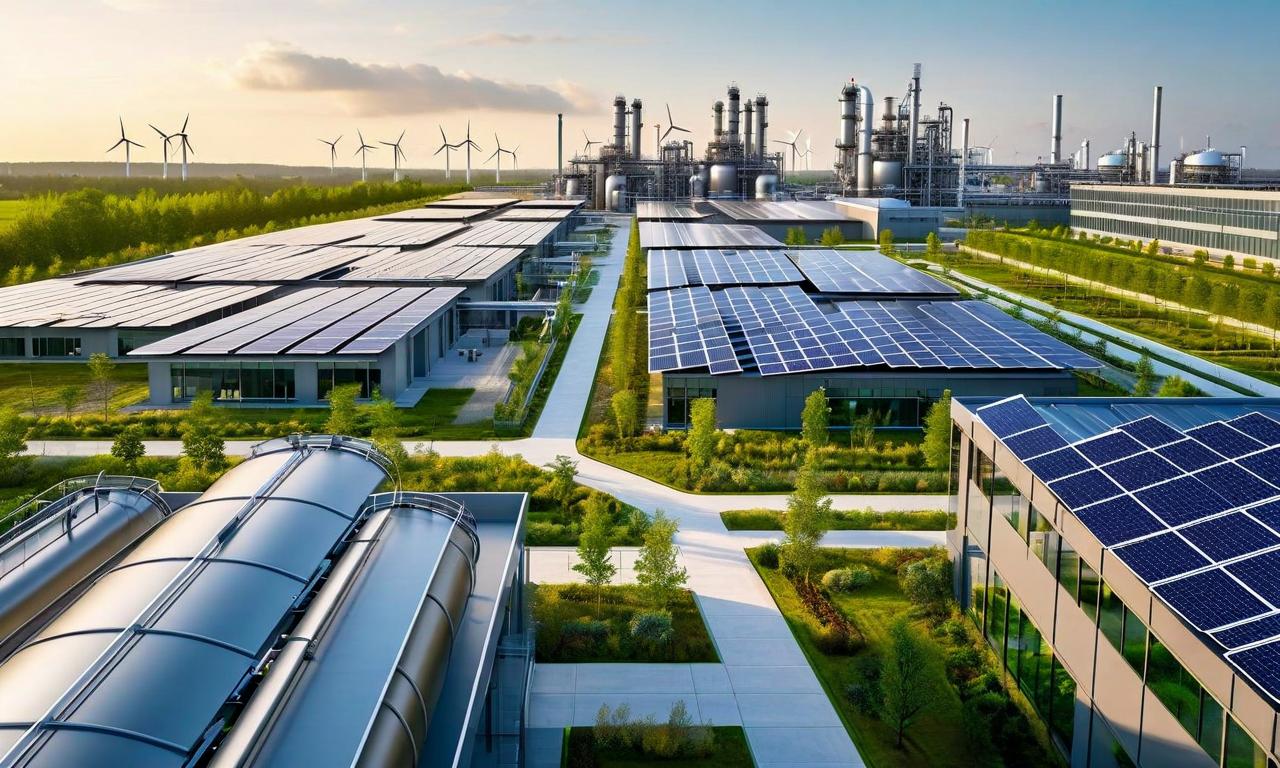

*this image is generated using AI for illustrative purposes only.
Sai Life Sciences Limited, one of India's leading integrated contract research, development, and manufacturing organizations (CRDMOs), announced on May 11, 2026, that its Bidar campus now operates entirely on renewable power. The campus comprises Unit IV — the company's flagship API manufacturing facility — and Unit VI, its animal health API manufacturing facility. With this milestone, the Bidar site becomes the first facility within an Indian CRDMO to achieve 100% renewable electricity usage.
A Phased, Multi-Year Transition
The shift to full renewable power at the Bidar campus followed a structured, multi-year effort that progressively increased the share of renewable energy in the site's total consumption. The journey from partial to complete renewable power spanned over half a decade, reflecting a deliberate long-term approach to energy transition.
The progression of renewable energy adoption at the Bidar campus is outlined below:
| Year / Period: | Renewable Energy Share |
|---|---|
| 2020 | 21% |
| 2022 | 57% |
| Fiscal 2024 | 89% |
| Fiscal 2026 | 100% |
How the 100% Target Is Met
The current energy mix at the Bidar site relies on two complementary mechanisms to ensure that the entire electricity consumption is backed by renewable sources:
- 97% of the site's electricity requirement is sourced directly from solar and wind power through Open Access renewable energy agreements.
- 3% is balanced through the procurement of International Renewable Energy Certificates (I-RECs).
The transition also combined long-term renewable power purchase agreements with direct investments in clean energy infrastructure, including a 2.7 MW wind project under a group captive model. In parallel, Sai Life Sciences implemented energy-efficiency initiatives through equipment upgrades, process optimization, and digital monitoring systems to improve operational performance and reduce overall energy demand.
Leadership Perspective
Krishna Kanumuri, CEO & Managing Director, Sai Life Sciences, commented on the achievement: "The medicines we help bring into the world serve patients for years, often decades. The infrastructure behind them should be built with the same horizon in mind. Decisions around energy and scale therefore have to anticipate a future where sustainability, resilience, and resource efficiency will increasingly define how global industry operates. This transition reflects that long-term view."
Broader Organisational Impact
The Bidar milestone is part of a wider sustainability effort across the organisation. The key outcomes at the organisational level are summarised below:
| Metric: | Details |
|---|---|
| Renewable Energy Share (Total Organisation) | Nearly 80% of total electricity consumption |
| Market-Based Scope 2 Emissions | Zero |
| Estimated Annual CO₂ Emissions Avoided | 35,110 metric tonnes |
The Bidar milestone reflects Sai Life Sciences' broader approach to integrating scientific innovation, operational excellence, and long-term sustainability into the company's growth strategy. With operations across India, the UK, and the US, the company continues to advance its sustainability commitments alongside its core pharmaceutical services business.
Historical Stock Returns for Sai Life Sciences
| 1 Day | 5 Days | 1 Month | 6 Months | 1 Year | 5 Years |
|---|---|---|---|---|---|
| +0.33% | -3.14% | -10.90% | +52.62% | +75.30% | +95.23% |

Will Sai Life Sciences extend the 100% renewable energy model to its other facilities in India, the UK, and the US, and what timeline can be expected for achieving organisation-wide full renewable coverage?
How might Sai Life Sciences' zero Scope 2 emissions status influence its competitiveness in winning new contracts from global pharmaceutical companies with their own net-zero supply chain commitments?
Could the group captive wind project model adopted at Bidar be scaled or replicated by other Indian CRDMOs, potentially reshaping sustainability benchmarks across the sector?
 19
19













 Create Custom Screeners
  Access 200+ Pre-built Filters
  Use 50+ Readymade Screener





