

Sagar Cements posts ₹28 crore loss in Q1FY27; volumes rise 13%


Sagar Cements Limited posted a ₹28 crore loss in Q1FY27 due to elevated input costs, despite achieving 13% volume growth. The company commissioned new capacity expansions and maintains a full-year EBITDA per tonne guidance of ₹500-550, expecting cost pressures to ease later in the year.


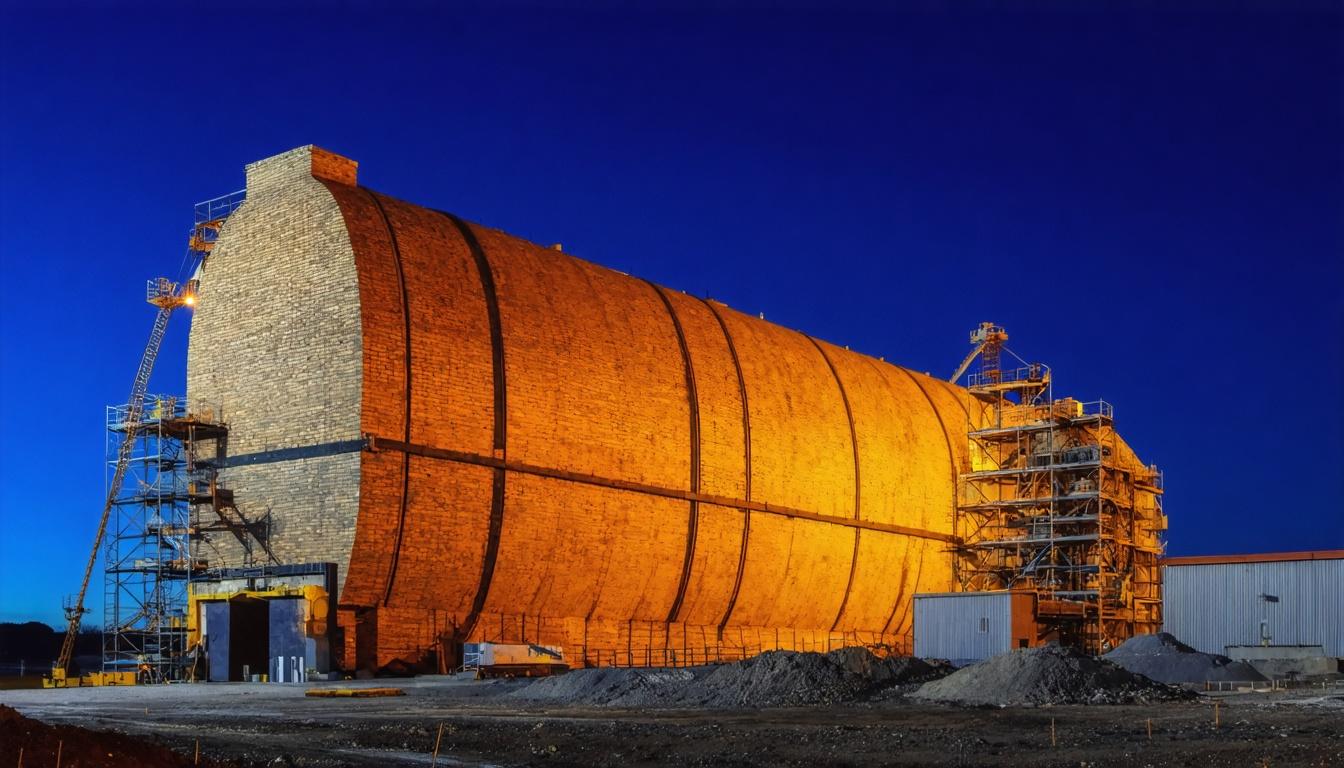
*this image is generated using AI for illustrative purposes only.
Sagar Cements Limited reported a loss after tax of ₹28 crore for the first quarter ended June 30, 2026, driven by elevated input costs despite a 13% year-on-year increase in sales volumes. The company’s revenue grew by 5% during the period, supported by resilient demand across key markets. Joint Managing Director Sreekanth Reddy stated that while pricing momentum moderated towards the end of the quarter due to competitive intensity, realisations remained broadly stable with a marginal sequential improvement.
The earnings call, held on July 28, 2026, and transcribed under Regulation 30 of the SEBI (LODR) Regulations, 2015, revealed that EBITDA per tonne stood at ₹451. This moderation in margins was attributed to higher energy, fuel, and packaging costs stemming from geopolitical tensions in West Asia. Although price hikes earlier in the quarter helped offset some inflation, they were insufficient to fully mitigate the impact. Power and fuel costs rose to ₹1,484 per tonne from ₹1,450 per tonne in Q1FY26, while freight costs remained nearly flat at ₹858 per tonne against ₹860 per tonne previously.
Operational Updates and Capacity Expansion
The company successfully commissioned the remaining 1.55 MW waste heat recovery system at its Gudipadu plant, bringing total installed capacity there to 4.35 MW. Additionally, the 0.5 million tonne capacity expansion at the Jeerabad unit was completed during the quarter. The 0.75 million tonne cement capacity expansion at Andhra Cements is expected to be completed before the end of the current quarter.
Plant utilisation varied significantly across locations. The Jeerabad plant operated at 96% capacity, followed by Gudipadu at 79%, Bayyavaram at 67%, Mattampally at 65%, Jajpur at 50%, and Dachepalli at 42%. Sreekanth Reddy noted that the South region contributed most incremental volumes, with Andhra Pradesh and Telangana showing robust growth, while Karnataka remained flat.
Financial Position and Guidance
As of June 30, 2026, Sagar Cements’ gross debt stood at ₹1,704 crore, comprising ₹1,434 crore in long-term debt and the remainder as working capital. The consolidated net worth was ₹1,833 crore, resulting in a debt-equity ratio of 0.78:1. Cash and bank balances were reported at ₹105 crore.
Looking ahead, management expects input cost pressures to ease as geopolitical situations normalize. The company reaffirmed its volume target of approximately 7 million tons for FY27, excluding clinker sales. Full-year EBITDA per tonne guidance remains between ₹500 and ₹550, assuming stable prices. Cost savings from new efficiency initiatives, including waste heat recovery and capacity expansions, are expected to offset projected cost inflations of ₹100 per tonne over the full year.
What the Numbers Show
Despite a 13% surge in volumes, Sagar Cements recorded a loss, highlighting the sensitivity of its margins to input cost volatility. The divergence between volume growth (13%) and revenue growth (5%) indicates that realisations did not keep pace with volume gains, likely due to product mix shifts or moderate pricing pressure. The company’s strategy relies heavily on operational efficiencies—specifically waste heat recovery and capacity utilization improvements—to restore profitability, rather than aggressive price hikes, given the competitive landscape.
Historical Stock Returns for Sagar Cements
| 1 Day | 5 Days | 1 Month | 6 Months | 1 Year | 5 Years |
|---|---|---|---|---|---|
| -0.75% | -8.52% | -16.44% | -30.33% | -47.46% | -55.79% |

How will the completion of the 0.75 million tonne capacity expansion at Andhra Cements impact Sagar Cements' market share in the competitive Andhra Pradesh region?
Given the debt-equity ratio of 0.78:1, what is the company's strategy for managing interest costs if geopolitical tensions prolong energy price volatility beyond FY27?
Can the waste heat recovery systems at Gudipadu and other plants sufficiently offset the projected ₹100 per tonne cost inflation to meet the full-year EBITDA guidance of ₹500-₹550?
 15
15







 Create Custom Screeners
  Access 200+ Pre-built Filters
  Use 50+ Readymade Screener





