

S.P. Apparels reaffirms ₹2,000 crore FY27 revenue target on strong order book


S.P. Apparels reaffirmed its ₹2,000 crore FY27 revenue guidance despite a moderate Q1FY27. The company reported a ₹600 crore order book, with SPUK adding Marks & Spencer and Young Brand Apparel expanding into luxury bras. Consolidated EBITDA margins expanded to 15.3%, driven by operational efficiency.


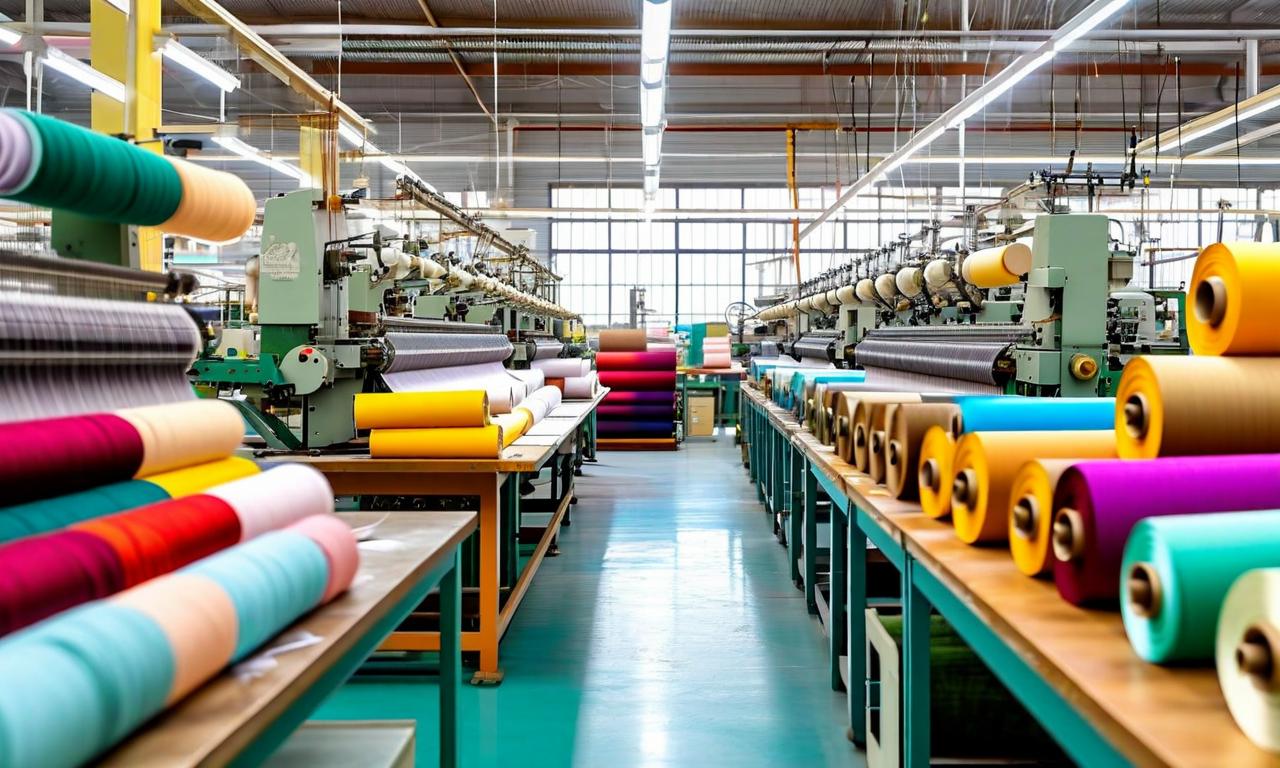
*this image is generated using AI for illustrative purposes only.
S.P. Apparels Limited management reaffirmed its consolidated revenue guidance of ₹2,000 crore for FY27 during the Q1FY27 earnings conference call held on August 13, 2026. Despite a moderate first quarter characterized by shipment schedule shifts and US tariff-related order delays, the company reported a robust total order book of approximately ₹600 crore, providing visibility for the second half of the fiscal year.
Chairman and Managing Director P. Sundararajan highlighted that growth is expected to be weighted towards the second half, driven by improved customer order inflows, traction from the India-UK Free Trade Agreement (FTA), and normalization of shipment schedules. The company maintains confidence in achieving its top-line target despite the first-quarter headwinds.
Segmental Updates and Strategic Wins
The UK-based subsidiary, SPUK, emerged as a key growth driver, reporting revenue of ₹33.3 crore in Q1FY27, a 125.2% year-on-year increase. Management confirmed the addition of three new UK brands to its customer base, explicitly naming Marks & Spencer as one of the new clients. Sundararajan outlined an ambitious roadmap for SPUK, targeting revenue of over GBP 13 million within three years and GBP 50 million within five years. The division currently operates with seven customers, leveraging design support and proximity to UK retailers.
Young Brand Apparel (YBAL), the intimate wear vertical, saw revenue decline sequentially due to customer order hold-ups amid US tariff uncertainties in January and February. However, the segment is expanding its product portfolio to include luxury molded bras, an investment estimated at under ₹10 crore. Commercial production from additional facilities is expected to commence by October 2026, with full capacity utilization targeted for the next financial year.
Operational Capacity and Sri Lanka Expansion
Capacity utilization in the Garment Division stood at 75%, down from previous levels due to order slowness linked to US tariff issues. Management clarified that 750 additional machines were added in India during the current financial year. In Sri Lanka, the company operates approximately 1,650 machines, with 1,300 dedicated to exports. Revenue from Sri Lanka operations was ₹25 crore in Q1FY27. Management projects Sri Lanka revenues to reach between ₹150 crore and ₹200 crore by March 2027, with operational metrics improving steadily post-integration.
Financial Performance and Order Book
Consolidated revenue from operations remained broadly stable at ₹401.1 crore in Q1FY27, compared to ₹403.4 crore in Q1FY26. Consolidated EBITDA grew 15.9% year-on-year to ₹61.4 crore, with margins expanding to 15.3% from 13.1%. Net profit after tax rose 20.4% to ₹24.9 crore. Standalone adjusted EBITDA margin improved to 17.5% from 15.2% last year, reflecting better operating efficiency and favorable product mix.
The total order book breakdown is as follows:
- S.P. Apparels India: ₹430 crore
- Young Brand Apparel: ₹100 crore
- SPUK: ₹70 crore
Management indicated that orders are booked until October 2026, with capacity available from November onwards. Interest costs were higher at ₹15 crore due to exchange volatility on packing credits, but the quarterly run rate is expected to return to ₹9–10 crore from Q2FY27.
What the Numbers Show
The divergence between stable consolidated revenue and significantly higher profitability underscores improved operational leverage. While top-line growth was muted by timing shifts and tariff-related caution, the expansion of EBITDA margins from 13.1% to 15.3% indicates successful cost management and mix optimization. The substantial order book of ₹600 crore relative to the ₹400 crore Q1 run rate suggests a meaningful acceleration in demand visibility for H2FY27, supporting the management's guidance of ₹2,000 crore annual revenue.
Source: https://lodr-files.dhan.co/lodr-inputs/Company/INE212I01016/ad5b042b-2815-4826-9c97-9c4dcd260523.pdf
Historical Stock Returns for SP Apparels
| 1 Day | 5 Days | 1 Month | 6 Months | 1 Year | 5 Years |
|---|---|---|---|---|---|
| -3.01% | -5.45% | -8.45% | +34.30% | +29.29% | +174.85% |

How might the final terms of the India-UK Free Trade Agreement impact SPUK's projected revenue trajectory and competitive advantage against other Asian manufacturing hubs?
What specific risk mitigation strategies is management employing to protect margins against potential escalation of US tariffs or further exchange rate volatility on packing credits?
Given the capacity utilization drop to 75% in the Garment Division, what is the timeline for ramping up production to absorb the ₹600 crore order book without compromising quality or delivery schedules?
 16
16






 Create Custom Screeners
  Access 200+ Pre-built Filters
  Use 50+ Readymade Screener





