

Privi Speciality Chemicals posts 19.2% revenue surge in Q1FY27


Privi Speciality Chemicals delivered strong Q1FY27 results with revenue growing 19.22% to ₹666.22 crore and PAT rising 35.97% to ₹84.21 crore. Management reaffirmed its long-term target of ₹5,000 crore revenue by FY29-30, supported by ongoing capacity expansions and strategic product launches.



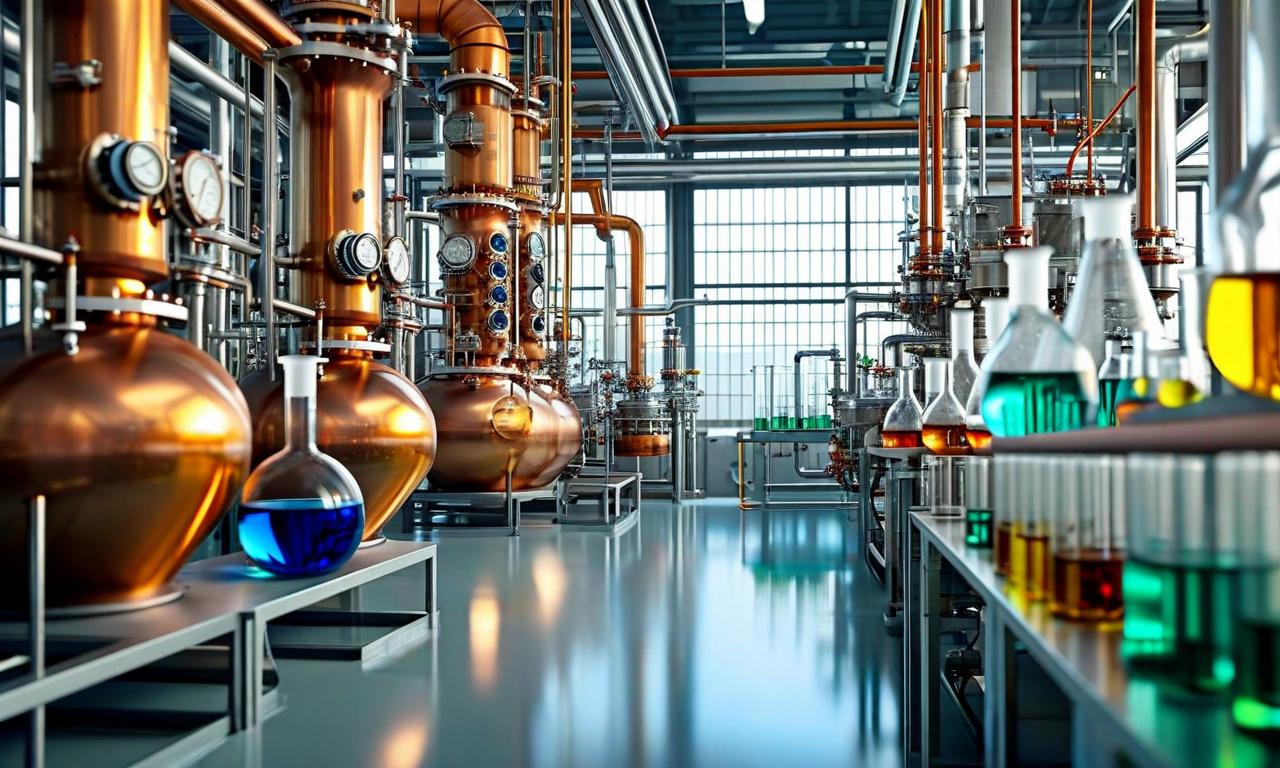
*this image is generated using AI for illustrative purposes only.
Privi Speciality Chemicals Limited delivered a robust start to FY27, reporting a 19.22% year-on-year increase in consolidated revenue from operations to ₹666.22 crore for the quarter ended June 30, 2026 (Q1FY27). Consolidated net profit attributable to owners rose 35.97% to ₹84.21 crore, while EBITDA grew 18.73% to ₹167.47 crore. During the earnings conference call held on July 31, 2026, management reaffirmed its long-term vision to achieve ₹5,000 crore in revenue and over ₹1,000 crore in EBITDA by FY29-30, citing robust demand across domestic and export markets and disciplined execution of expansion projects.
The Board of Directors approved the unaudited financial results on July 30, 2026, pursuant to Regulation 30 read with Regulation 33 of SEBI (Listing Obligations and Disclosure Requirements) Regulations, 2015. Statutory auditors B S R & Co. LLP issued an unmodified limited review report. The company highlighted that despite adverse global headwinds, structural trends such as supply chain diversification and premiumization in the fragrance and flavor value chain supported performance. An isolated operational incident involving a fire at a CFS warehouse near JNPT resulted in a loss of ₹2.78 crore, for which insurance claims have been filed with full recovery expected.
Financial Performance Highlights
| Metric | Q1FY27 (₹ Cr) | Q1FY26 (₹ Cr) | YoY Change | EBITDA Margin | PAT Margin |
|---|---|---|---|---|---|
| Revenue from Operations | 666.22 | 558.81 | 19.2% | — | — |
| Total Income | 681.42 | 567.80 | 20.01% | — | — |
| EBITDA | 167.47 | 141.05 | 18.73% | 24.6% | — |
| Profit Before Tax | 113.37 | 81.18 | 39.6% | — | — |
| Net Profit (PAT) | 82.84 | 57.55 | 43.94% | — | 12.4% |
| PAT Attributable to Owners | 84.21 | 61.93 | 35.97% | — | — |
Standalone net profit increased 22.7% YoY to ₹84.26 crore. Other income rose significantly to ₹15.20 crore consolidated from ₹8.99 crore in the previous year’s quarter. Finance costs declined substantially from ₹23.66 crore to ₹16.74 crore consolidated. The EBITDA margin contracted slightly by 27 basis points to 24.6%, impacted by approximately 42 basis points due to the fire loss. Management noted that gross margins faced pressure due to raw material cost dynamics, with raw material consumption as a percentage of sales averaging between 52% and 55%, compared to favorable conditions in the prior year.
Capacity Expansion and CAPEX Roadmap
Management provided clarity on capital expenditure plans, outlining a broad CAPEX range of ₹850 crore to ₹900 crore over the next three years to support Phase-2 and Phase-3 expansions. Phase-1 of the production capacity expansion is expected to be commercialized shortly, increasing production capacity from 48,000 to 54,000 metric tons. Phase-2 completion has been revised to September 2027, adding another 12,000 metric tons to reach a total capacity of 66,000 metric tons. The company emphasized that these projects are on track and will be funded primarily through internal accruals, with debt instruments used only if necessary at competitive rates.
Strategic Initiatives and Product Pipeline
The company is advancing several high-value specialty molecules, including Maltol, Ethyl Maltol, Ethylene brassylate (Musk T), and Cyclopentanone. Privi Speciality Chemicals aims to become the only company globally fully backward integrated from corn cob to Maltol production, leveraging superior technology to capture market share currently dominated by Chinese manufacturers. The joint venture PRIGIV, established with Givaudan SA, generated revenue of approximately ₹18 crore in Q1FY27 with an EBITDA margin of 14%-15%. An additional equity investment of ₹50 crore is under implementation to scale operations further.
What the Numbers Show
The divergence between revenue growth (19.2%) and EBITDA growth (18.73%) indicates stable but slightly pressured operating margins, primarily due to input cost dynamics and the one-time fire impact. However, the significant decline in finance costs (down 29.3% YoY) and robust other income drove a disproportionate surge in PAT (up 35.97%). Return on Capital Employed (ROCE) improved by 299 basis points to 21.70%, while Return on Equity (ROE) rose by 112 basis points to 22.72%, signaling enhanced capital efficiency. Net debt-to-EBITDA ratio improved to 1.29x, down 35.41% YoY, reflecting strong balance sheet deleveraging. The working capital cycle reduced to 108 days from 141 days in the previous year, demonstrating improved operational liquidity.
Corporate Developments
The Scheme of Amalgamation of Privi Fine Sciences Private Limited and Privi Biotechnologies Private Limited with the parent company was filed before the NCLT, Mumbai Bench, on June 25, 2026, following no-objection letters from both stock exchanges. This consolidation aims to simplify the group structure, enhance operational synergies, and add approximately 6,000 metric tons of capacity to the portfolio. The merger is expected to be completed within the current financial year. Additionally, the company is exploring strategic alliances rather than joint ventures for future collaborations to avoid potential conflicts of interest with existing customers.
Source: https://lodr-files.dhan.co/lodr-inputs/Company/INE959A01019/18628f324b674633.pdf
Historical Stock Returns for Privi Speciality Chemicals
| 1 Day | 5 Days | 1 Month | 6 Months | 1 Year | 5 Years |
|---|---|---|---|---|---|
| -0.48% | -2.82% | -2.99% | +14.31% | +31.14% | 0.0% |

How might the completion of the amalgamation with Privi Fine Sciences and Privi Biotechnologies impact Privi Speciality's consolidated revenue mix and operational synergies in FY27?
What are the specific risks associated with achieving backward integration from corn cob to Maltol, and how could this disrupt the current market dominance of Chinese manufacturers?
Given the slight contraction in EBITDA margins due to raw material costs, what hedging strategies or pricing power mechanisms does management plan to implement to protect margins in subsequent quarters?
 18
18







 Access Market Heat-map & Insights
  Create, Save & Share your Screener
  Use 200+ Screening Filters





