

Panasonic warns shutdown risk over battery waste rules


Panasonic Energy India reported a net profit of ₹348.68 lakh for FY26 but warned that new Battery Waste Management Rules could force a shutdown due to compliance costs potentially reaching ₹50 crore, far exceeding its ₹6 crore projected profit. Auditors issued a qualified opinion as the company did not provision for these liabilities pending government clarification and ongoing legal challenges.

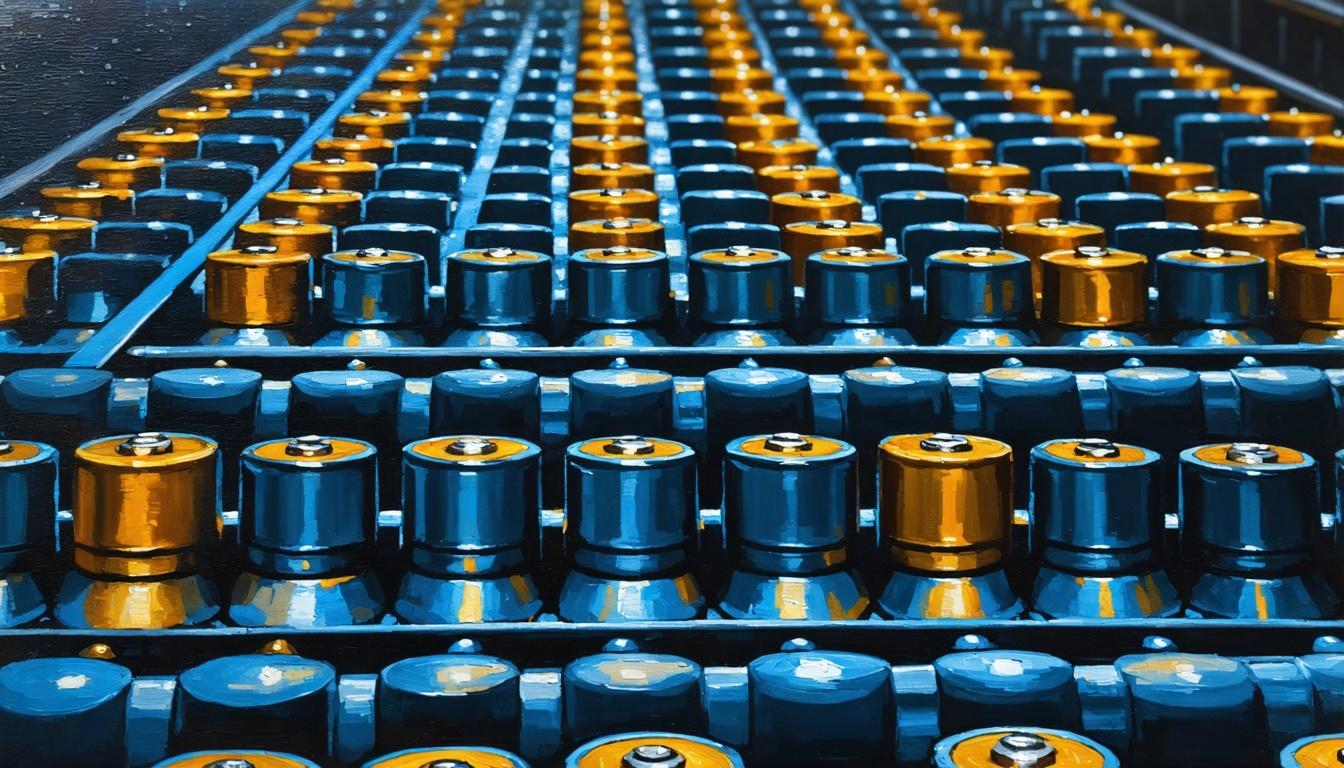

*this image is generated using AI for illustrative purposes only.
Panasonic Energy India Co. Ltd. has warned that the Battery Waste Management Rules, 2022, pose an existential threat to its operations, citing compliance costs that could exceed eight times its projected profitability for FY26. The company disclosed this concern in a regulatory filing on June 25, 2026, attaching newspaper articles that highlighted the financial strain on the dry cell battery industry due to mandated environmental compensation and recycling targets.
The Board of Directors had previously approved the standalone audited financial results for the year ended March 31, 2026, reporting a net profit of ₹348.68 lakh. However, the statutory auditors, BSR and Co, issued a qualified opinion because the company did not estimate or recognise any provision for obligations under the new waste management rules. The Central Pollution Control Board has notified rates for environmental compensation, but the company stated it could not record this liability pending government clarification.
Management argued that the cost calculation prescribed in the rules is based on lithium battery chemistry, rendering the notified costs exorbitant for zinc-carbon operations. According to the Economic Times, if the entire 50% collection mandate is applied to Panasonic, its extended producer responsibility (EPR) credit purchase costs could reach ₹50 crore. This contrasts sharply with the company's total projected profit of ₹6 crore for FY26. Akio Fujita, chairman at Panasonic Energy India, stated that no business can survive compliance costs nearly eight times its profitability.
The industry contends that the rules, effective from 2025, mandate aggressive collection targets from the first year without an established ecosystem. Manufacturers are blocked from recycling batteries themselves and must purchase digital EPR certificates from authorised recyclers at prices ranging between ₹166 and ₹555 per kilogram. With virgin zinc costing around ₹300 per kg and proposed regulatory penalties ranging from ₹720 to ₹2,400 per kg, the cost structure is deemed unviable.
Representations to the Ministry of Environment, Forest and Climate Change and a writ petition by the Indian Battery Manufacturers Association challenging the amendment rules are currently under consideration. Due to the pending regulatory and legal proceedings, the company noted significant uncertainty regarding the expected outflow, and consequently, no adjustments were made to the financial statements.
Financial Summary for FY26
| Particulars | Amount (in ₹ Lakhs) |
|---|---|
| Total Income | 27372.18 |
| Total Expenditure | 26399.67 |
| Net Profit/(Loss) | 348.68 |
| Earnings Per Share | 4.65 |
| Total Assets | 14577.53 |
| Total Liabilities | 4260.79 |
| Net Worth | 10316.74 |
Historical Stock Returns for Panasonic Energy
| 1 Day | 5 Days | 1 Month | 6 Months | 1 Year | 5 Years |
|---|---|---|---|---|---|
| +1.05% | +2.36% | -6.67% | -9.53% | -30.89% | -18.75% |

What is the likelihood that the Ministry of Environment will amend the rules to account for zinc-carbon battery chemistry before the FY26 compliance deadline?
If the writ petition by the Indian Battery Manufacturers Association fails, will Panasonic Energy India consider exiting the dry cell battery market to avoid insolvency?
How might the government's stance on this dispute impact future foreign direct investment in India's manufacturing sector regarding environmental regulations?
 16
16




 Access Market Heat-map & Insights
  Create, Save & Share your Screener
  Use 200+ Screening Filters





