

Ocean Power Technologies delivers WAM-V drone to Stevens Institute


Ocean Power Technologies confirmed the delivery of a WAM-V unmanned surface vehicle to Stevens Institute of Technology on July 30, 2026. This fulfills an order announced in June 2026, demonstrating a five-week production cycle that supports the company's strategy of rapid backlog conversion and operational scalability in the maritime sector.

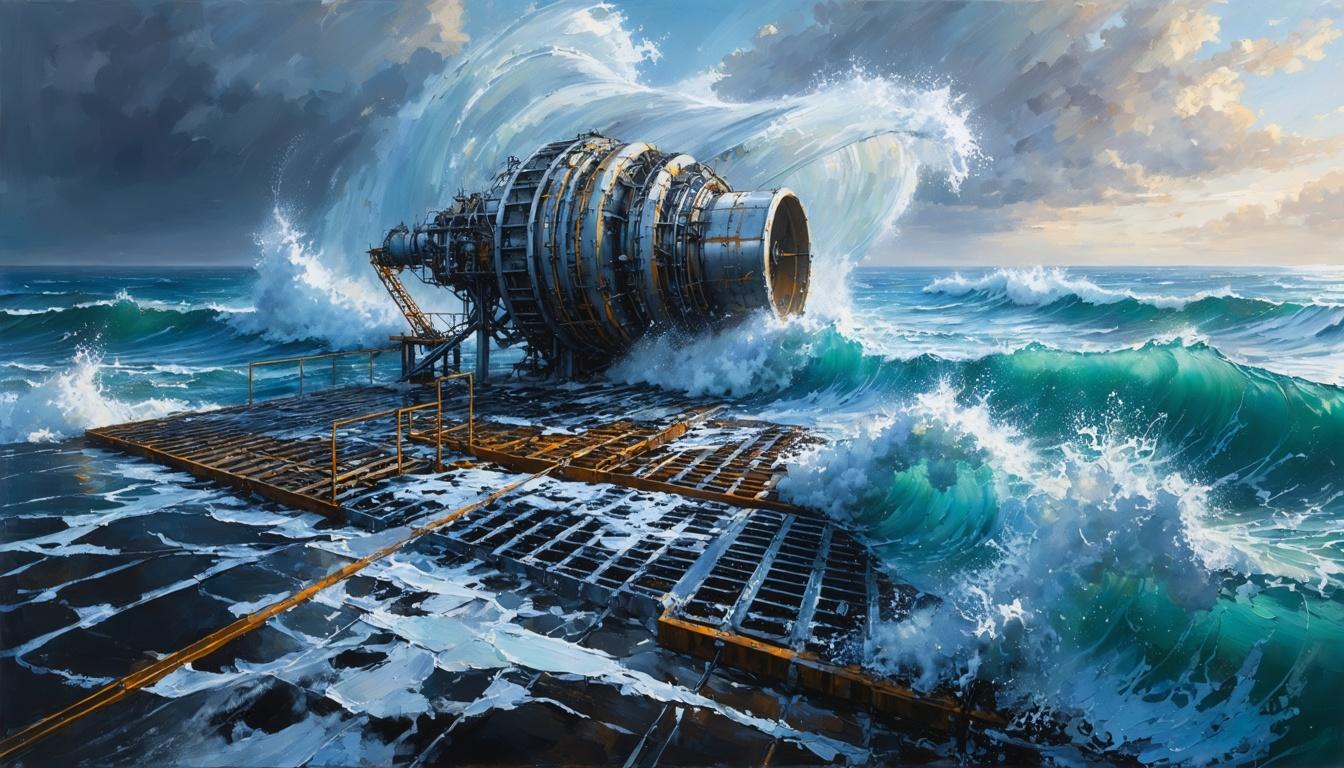

*this image is generated using AI for illustrative purposes only.
Ocean Power Technologies, Inc. (NYSE: OPTT) has delivered a WAM-V unmanned surface vehicle (USV) to Stevens Institute of Technology, completing a customer order originally announced in June 2026. The delivery, finalized on July 30, 2026, underscores the company’s ability to rapidly convert backlog into revenue through accelerated manufacturing cycles. This execution milestone is critical for investors monitoring the company’s transition from order wins to cash generation, particularly as it seeks to validate its operational scalability in the autonomous maritime sector.
The USV was delivered in just five weeks from the date of the order announcement, a timeline that management attributes to increased investments in inventory and capital expenditures. Philipp Stratmann, Chief Executive Officer of Ocean Power Technologies, stated that the rapid delivery demonstrates the company’s disciplined execution and strengthens its installed base across research, commercial, and defense markets. The WAM-V will be utilized by Stevens Institute for advanced marine research and development initiatives, further embedding the company’s technology within academic institutions.
Operational Execution and Backlog Conversion
The Stevens delivery serves as a tangible indicator of Ocean Power Technologies’ broader operational strategy. By shortening the lead time between order award and delivery, the company aims to improve working capital efficiency and accelerate revenue recognition. This approach aligns with recent activities, including the deployment of a PowerBuoy platform for Rutgers University, which collectively reinforce the company’s capability to manage diverse customer programs simultaneously.
| Metric | Detail |
|---|---|
| Customer | Stevens Institute of Technology |
| Product | WAM-V Unmanned Surface Vehicle |
| Order Announcement | June 2026 |
| Delivery Date | July 30, 2026 |
| Turnaround Time | Five weeks |
Market Position in Academic Research
The academic research sector represents a strategic growth avenue for Ocean Power Technologies, characterized by recurring funding opportunities and potential for follow-on procurements. The company views this market as an entry point for long-term customer relationships, leveraging its low-carbon maritime intelligence solutions. The successful handover to Stevens validates the company’s appeal to educational institutions seeking advanced robotics and data collection capabilities for marine studies.
What the Numbers Show
The five-week turnaround time signals a shift in Ocean Power Technologies’ supply chain dynamics. Historically, custom maritime vessels often face longer production delays due to component sourcing and assembly bottlenecks. The ability to deliver a complex USV in less than two months suggests that the company’s prior capital investments have resulted in higher ready-to-ship inventory levels or streamlined assembly processes. This reduction in cycle time directly impacts the company’s cash conversion cycle, allowing for faster realization of revenue from its backlog. For shareholders, this operational efficiency reduces the risk associated with long-duration projects and enhances predictability in quarterly earnings contributions from new orders.

How will the capital expenditures required to maintain this accelerated five-week delivery timeline impact Ocean Power Technologies' near-term free cash flow and debt levels?
What is the projected conversion rate of academic research contracts, such as the Stevens Institute deal, into recurring revenue or larger defense sector procurements?
Can OPTT sustain this rapid production cycle across its entire backlog without encountering supply chain bottlenecks for critical USV components?
 16
16





 Access 50+ Readymade Screeners
  Use 200+ Custom Filters
  Get Full Market Insights





