NHTSA closes Tesla braking probe, GM recalls Vistiq EVs

1 min read     Updated on 02 Jul 2026, 03:37 PM
scanx
Reviewed by
Suketu GScanX News Team
AI Summary

NHTSA closed its investigation into 695,000 Tesla vehicles after software updates reduced braking incidents, determining the issue posed no significant crash risk. GM recalled 14,540 Cadillac Vistiq SUVs due to a seat defect that could trap occupants, while reporting a 41% YoY decline in overall EV sales for Q2 2026.

powered bylight_fuzz_icon
44532459

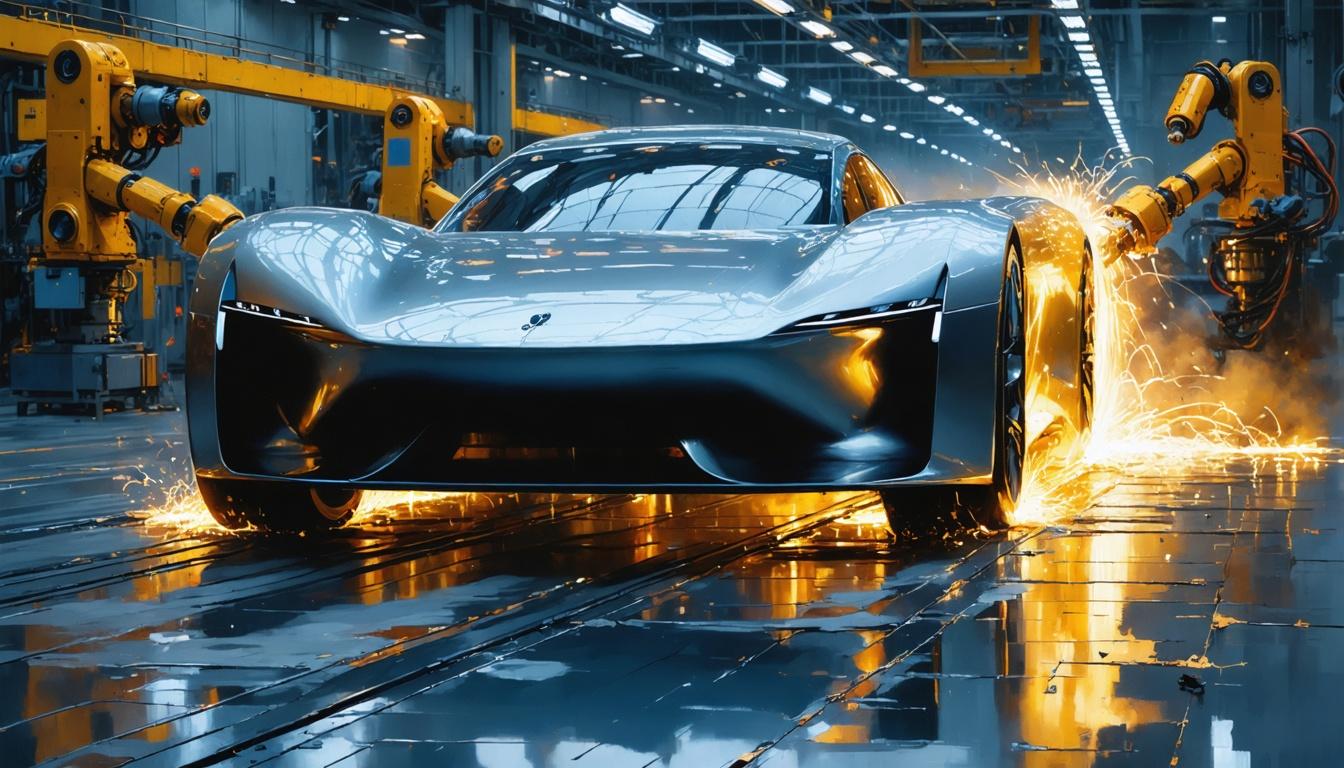
*this image is generated using AI for illustrative purposes only.

The National Highway Traffic Safety Administration (NHTSA) has closed its investigation into 695,000 Tesla Model Y and Model 3 vehicles following software updates that addressed unexpected deceleration issues. The agency determined that the braking anomalies, while concerning to drivers, did not result in any crashes or significant safety risks. Separately, General Motors recalled 14,540 Cadillac Vistiq SUVs due to a defect in the power-folding third-row seat that poses an entrapment risk.

NHTSA Closes Tesla Investigation

NHTSA closed the probe after Tesla released software updates that reduced the number of reported incidents to three since the start of the year, down from 45 in 2024. Owners had previously reported a 10-20 mph speed reduction at highway speeds over a 1-3 second period. The agency noted that the conditions did not alter the vehicle's lateral positioning or cause significant loss of distance between the subject and following vehicle to lead to a collision.

This marks the third recent investigation into Tesla that NHTSA has closed. The agency previously closed a power steering probe after the issue was addressed in a recall and ended an investigation into the automaker's Actually Smart Summon feature affecting 2.5 million vehicles.

GM Recalls Cadillac Vistiq Vehicles

General Motors recalled 14,540 units of the 2026-2027 Cadillac Vistiq because the third-row power seatback may fail to reverse when the power fold feature is activated. This failure could trap occupants in the third row. Dealers will disable the folding feature until parts are available, after which the seat module will be replaced free of charge.

GM EV Sales Performance

The recall announcement coincided with GM's report of a nearly 41% year-over-year decline in electric vehicle sales in the second quarter of 2026. The company sold 27,395 EVs during the period, with specific models showing mixed performance.

Model Q2 2026 Sales YoY Change
Chevrolet Equinox EV 6,660 -61%
Blazer EV 2,089 -68%
Cadillac Optic 4,236 +31%
Cadillac Vistiq 2,001 +14.7%
GMC Sierra EV 1,756 +15%

The sales data reflects an ongoing EV rollback at the automaker, as it adjusts its strategy in response to market dynamics.

Will the closure of the Tesla investigation encourage NHTSA to rely more heavily on software updates rather than physical recalls for future safety issues?

How will the timing of the Cadillac Vistiq recall impact the momentum of its recent sales growth?

What specific strategic adjustments is GM planning to reverse the sharp decline in Equinox and Blazer EV sales?

like16
dislike

Musk says Optimus production will be extremely slow at first

2 min read     Updated on 02 Jul 2026, 08:25 AM
scanx
Reviewed by
Riya DScanX News Team
AI Summary

Tesla Inc. CEO Elon Musk stated that the initial production ramp for its Optimus humanoid robot will be extremely slow because the company is building an entirely new manufacturing system. The company has converted production lines at its Fremont factory, previously used for Model S and Model X vehicles, to support the assembly of Gen 3 Optimus robots. Pilot production is expected to begin this summer, with high-volume production anticipated around summer 2027 and a long-term target of 10 million robots annually. Meanwhile, China continues to dominate the market, shipping 90% of global units last year, with competitors like Unitree offering cost-effective alternatives.

powered bylight_fuzz_icon
43944542

*this image is generated using AI for illustrative purposes only.

Tesla Inc. CEO Elon Musk stated that the initial production ramp for its Optimus humanoid robot will be extremely slow because the company is building an entirely new manufacturing system. Musk clarified on social media platform X that the process is not comparable to making a car, countering speculation that Tesla was ahead of schedule. The company has converted production lines at its Fremont factory, previously used for Model S and Model X vehicles, to support the assembly of Gen 3 Optimus robots. Pilot production is expected to begin this summer at Fremont, while a much larger factory is under construction at Giga Texas. High-volume production is not anticipated until around summer 2027, with Tesla targeting a long-term capacity of 10 million robots annually.

Manufacturing Complexity and Design

Tesla VP of Vehicle Engineering Lars Moravy detailed the installation of the first production line, highlighting its modular design tailored for the robot's smaller size. The bring-up process is expected to be quick due to the robot's dimensions, though the production setup includes 40 lines to accommodate numerous actuators and intricate limb and torso designs. Musk noted that the early phase will focus on getting the assembly process right rather than chasing high volume, citing the robot's complexity with roughly 10,000 unique parts. Additionally, Tesla vehicles can now drive themselves from the end of the line to the logistics yard using a system termed "Full-Self Hearing," which utilizes in-built microphones to detect noises and cracks.

Market Dynamics and Forecasts

The shift to robotics comes as China strengthens its lead in the global humanoid robot market. China shipped approximately 90% of the world's units last year, and Morgan Stanley has doubled its 2026 forecast for Chinese shipments to roughly 50,000 units. The Chinese government supports this sector through a Rmb1 trillion fund for "new productive forces" and mandates for state-owned enterprises to adopt AI-powered robots.

Metric Figure
China's share of global humanoid robot shipments (last year) 90%
Morgan Stanley 2026 forecast for Chinese shipments 50,000 units
China's industrial robot base (2021–2024) 2 million units
Beijing fund for "new productive forces" Rmb1 trillion

Competitive Landscape

Chinese manufacturers like Unitree are leveraging supply chains to produce cost-effective hardware, with the G1 robot priced at $16,000 compared to Tesla's $20,000 target. The G1 is already deployed at major automotive manufacturers including BYD, Geely, and NIO. Tesla is advancing its technology with the Optimus Gen 3, featuring 22 degrees of freedom in the hands, but prediction market Polymarket assigns only a 14% probability to a consumer release this year.

How will Tesla's slower production ramp impact its ability to compete with Chinese manufacturers like Unitree in the near term?

What specific technological advantages does the Optimus Gen 3 offer to justify a higher price point compared to competitors like the G1?

Will the 'Full-Self Hearing' system developed for vehicle manufacturing be integrated into the operational capabilities of the Optimus robots?

like18
dislike

More News on Tesla Inc

Must Read Next

Earnings

Corporate Actions

Stocks