Microsoft shares dip as Italy leads EU probe into gaming units

scanx
Reviewed by
Ashish TScanX News Team
Key Highlights
  • Microsoft shares fell 0.09% to $529.26 as tech stocks declined amid cautious sentiment
  • Italy launched an EU-backed antitrust probe into Microsoft's gaming units over virtual currency costs
  • Analysts expect Q1 revenue of $90.64 billion and EPS of $4.73 for the quarter ending Oct 28
  • Stock trades above key moving averages but RSI of 70.76 indicates overbought conditions
powered bylight_fuzz_icon
53023785

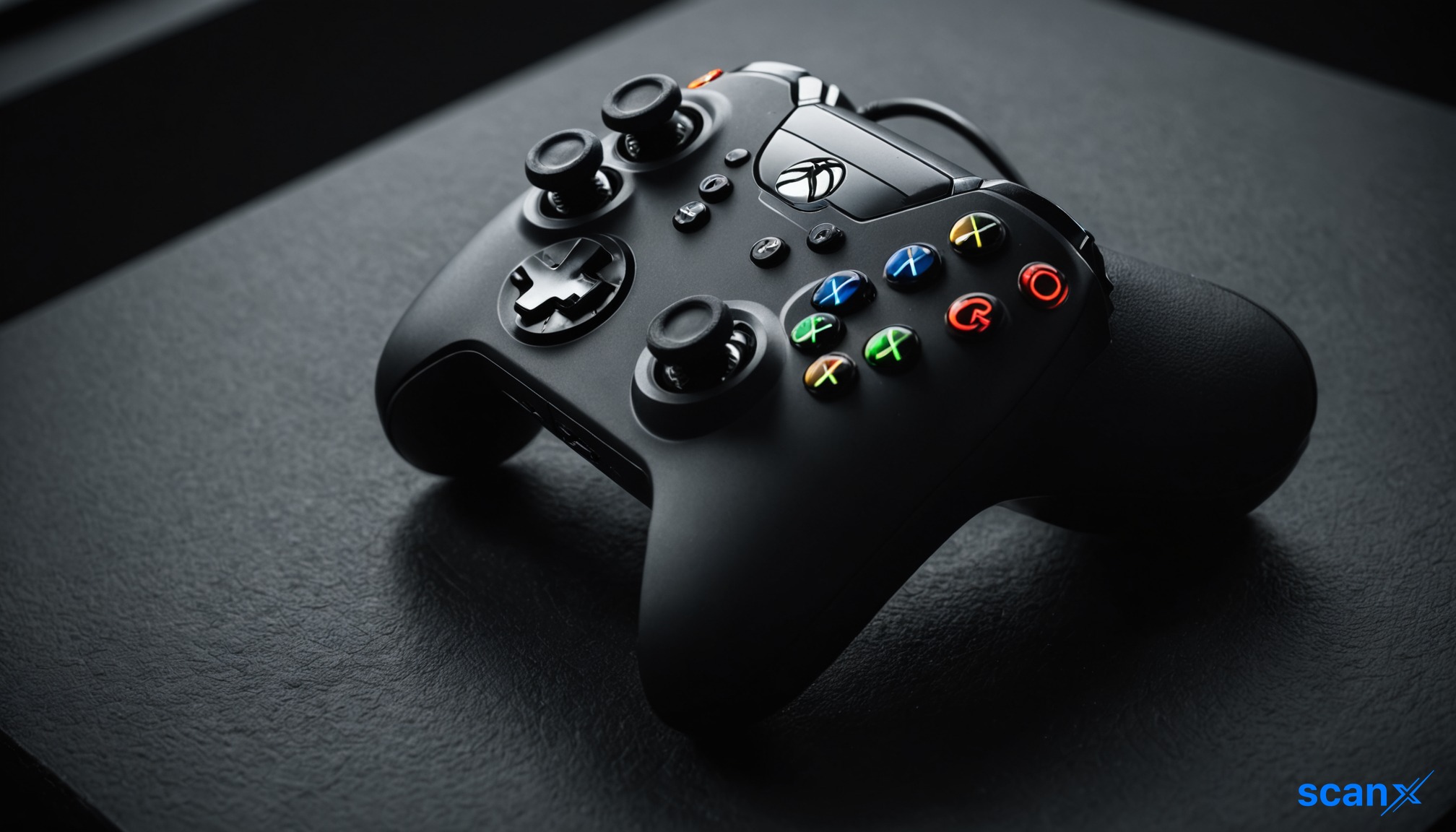
*this image is generated using AI for illustrative purposes only.

Microsoft Corp shares traded slightly lower on Thursday as technology stocks declined amid cautious market sentiment. The Nasdaq fell 0.48%, while the S&P 500 lost 0.20%. Microsoft shares were down 0.09% at $529.26 at the time of publication.

Gaming empire faces fresh EU probe

Reuters reported that Italy’s antitrust authority launched an EU-backed investigation into several Microsoft-owned gaming companies, including Activision Blizzard, over their use of in-game virtual currencies. The probe focuses on whether complex currency conversions obscure the actual cost of digital purchases and violate EU consumer protection rules, particularly those protecting minors.

Italy will lead the investigation alongside regulators from Norway and Denmark. The investigation forms part of a broader initiative coordinated by the EU’s Consumer Protection Cooperation Network. Last month, the network launched actions against nine gaming companies, including Riot Games Inc., a subsidiary of Tencent Holdings Limited, Ubisoft Entertainment SA, and Supercell Oy, also owned by Tencent. It had previously initiated a separate action involving Activision Blizzard.

Technical indicators show mixed signals

Microsoft remains in a long-term uptrend, trading above its major moving averages. The stock is 4.4% above its 20-day simple moving average (SMA) of $508.55 and 22.4% above its 200-day SMA of $433.80. A golden cross formed in August, reinforcing the bullish trend.

However, Microsoft’s relative strength index (RSI) stands at 70.76. Readings above 70 indicate overbought conditions, suggesting a potential pullback or consolidation. Key resistance stands at $553.50, near the 52-week high of $553.72. Investors are watching support around the 50-day SMA of $498.94, followed by $486.

Earnings and analyst outlook

Microsoft is scheduled to report quarterly earnings on October 28. Analysts expect earnings of $4.73 per share, up from $4.13 a year earlier. Revenue is projected to reach $90.64 billion, compared with $77.67 billion a year ago.

The stock carries a Buy consensus rating, with an average price forecast of $578.32. Recent price target adjustments include:

Firm New Price Target Date
Evercore ISI $635 October 7
Scotiabank $615 October 5
Wells Fargo $725 October 1

What the numbers show

A divergence exists between Microsoft’s strong fundamental growth metrics and its valuation scores. The company boasts a Growth score of 96.91 and a Quality score of 86.67, indicating robust operational performance. However, its Value score is only 19.3, suggesting the stock is relatively expensive. This combination implies that while the business fundamentals are strong, the current price may already reflect much of this growth, potentially increasing downside risks during broader market declines.

ETF exposure

Microsoft has significant weightings in several ETFs, which can influence share demand based on fund flows:

  • Vanguard Growth ETF: 9.59%
  • Technology Select Sector SPDR Fund: 9.83%
  • iShares Core S&P U.S. Growth ETF: 9.75%
Disclaimer: This article is AI-generated using data from ViewTrade. ScanX is not liable for any inaccuracies.

How might the EU antitrust probe into in-game virtual currencies impact Microsoft's gaming division revenue and future monetization strategies?

Will Microsoft's October 28 earnings report sustain the bullish momentum indicated by the golden cross, or will the overbought RSI trigger a pullback toward the $498 support level?

Given the low Value score of 19.3 despite strong Growth metrics, how sensitive is MSFT stock to broader market declines and potential interest rate changes?

Jim Cramer calls Microsoft an AI winner as Copilot expands

scanx
Reviewed by
Ritika DScanX News Team
Key Highlights
  • Jim Cramer names Microsoft among top AI winners helping offset rising interest rates
  • Piper Sandler raises price target to $610 citing E7 tier migration and usage-based models
  • Oppenheimer lifts target to $570, viewing Copilot as an emerging AI operating system
  • Microsoft spent $145 billion on capex last fiscal year amid surging AI demand
powered bylight_fuzz_icon
52329416

*this image is generated using AI for illustrative purposes only.

Microsoft Corp is positioning itself as a primary beneficiary of the artificial intelligence boom, with CNBC’s Jim Cramer identifying it as one of the few stocks strong enough to counter rising Treasury yields. The stock rose 0.46% to $527.62 in premarket trading on Tuesday, reflecting renewed investor confidence in its AI monetization strategy.

Cramer highlighted Microsoft alongside NVIDIA Corp and Meta Platforms Inc as "big winners" driving market performance. This endorsement aligns with recent upgrades from Piper Sandler and Oppenheimer, who see structural shifts in how enterprise customers consume AI services.

Copilot evolves into AI operating system

Microsoft is redesigning Copilot beyond a workplace chatbot into a broader platform featuring Home, Code, and Autopilot. Executive Vice President Jared Spataro stated that Microsoft aims for Copilot to play a role in the AI era similar to Office during the PC era. Home combines Chat and Cowork, while Code enables app creation via natural language prompts. Autopilot handles recurring tasks within defined governance controls.

This strategic pivot supports a hybrid monetization model. Microsoft plans to use subscriptions for everyday access while charging based on consumption for compute-intensive workloads. To drive adoption, the company reportedly offers discounts of about 30% for purchases exceeding 1,000 seats and up to 50% for orders above 10,000 seats.

Analysts project revenue impact from tier shifts

Billy Fitzsimmons of Piper Sandler introduced a model estimating that each 10% of customers migrating from the E5 to the new E7 pricing tier could add approximately $2 billion in annualized revenue. The firm raised its price target to $610 from $550, maintaining an Overweight rating. Fitzsimmons forecasts Copilot and Cowork revenue reaching a $2 billion annualized pace by the close of fiscal 2028, scaling roughly double the speed of previous seat-based products.

Oppenheimer analyst Brian Schwartz raised his price target to $570 from $515, naming Microsoft a top pick. He views the Copilot redesign as transforming the product into an AI operating system, which could boost engagement and retention across Azure and Microsoft 365. Schwartz noted that Azure is growing in the low-40% range, with guidance for acceleration into the mid-40% range this quarter.

Capital expenditure races AI demand

Microsoft is expanding its data center footprint to meet surging AI demand. Bloomberg reported that Microsoft aims to increase data center capacity to more than 38 gigawatts by 2032 from about 12 gigawatts currently, though a company spokesperson disputed these projections. The shortage of computing power has forced Microsoft to limit some new cloud subscriptions, pushing certain customers toward rivals.

The company spent $145 billion on capital expenditures in its latest fiscal year. Goldman Sachs expects AI capital expenditures by major hyperscalers, including Microsoft, to rise more than 50% to $1.2 trillion in 2027.

Broader analyst sentiment remains constructive

Recent actions from other firms reflect a positive outlook on Microsoft's valuation. Benzinga’s consensus indicates a Buy rating with a consensus price target of $571.29. Published targets currently range from $480 to $700.

Firm Action New Price Target Previous Price Target
Piper Sandler Maintain Overweight $610 $550
Stifel Upgrade to Buy $575 $530
Oppenheimer Maintain Outperform $570 $515
Cantor Fitzgerald Maintain Overweight $608 $522

What the numbers show

The divergence between Piper Sandler's $610 target and the consensus average of $571.29 highlights a bullish thesis centered on monetization shifts rather than just volume growth. While the broader market focuses on current seat-based fees, the analyst's model isolates the high-margin potential of usage-based pricing in Copilot and Cowork. This suggests that the premium valuation is underpinned by a structural change in how enterprise customers consume AI services, moving from fixed costs to variable, consumption-driven expenditures. Additionally, Microsoft’s accounting for roughly 5.8% of the S&P 500 gives its moves outsized influence on the broader index, amplifying the impact of these valuation upgrades.

Disclaimer: This article is AI-generated using data from ViewTrade. ScanX is not liable for any inaccuracies.

How might the reported shortage of computing power and subsequent subscription limits impact Microsoft's long-term customer retention versus competitors like AWS and Google Cloud?

What specific regulatory or governance challenges could arise as Copilot evolves into an autonomous 'AI operating system' handling recurring business tasks?

Will the aggressive 30-50% volume discounts for large enterprise seats compress margins enough to offset the projected $2 billion annualized revenue from the E5-to-E7 tier migration?

More News on Microsoft