

Memory chips to take 68% of AI capex by 2027 as prices surge


- Memory chips projected to consume 68% of AI capex for top cloud providers in 2027, up from 47% in 2024
- Total capex for nine largest providers estimated to reach $1.383 trillion in 2027 from $272 billion in 2024
- Server DRAM prices expected to rise 270% in 2026, while enterprise SSD prices could gain 235%
- Micron Technology trades 26% below June highs despite bullish analyst consensus and $1.303 average price target
- Cloud providers may reduce memory capacity per system or shift to custom chips to manage rising costs

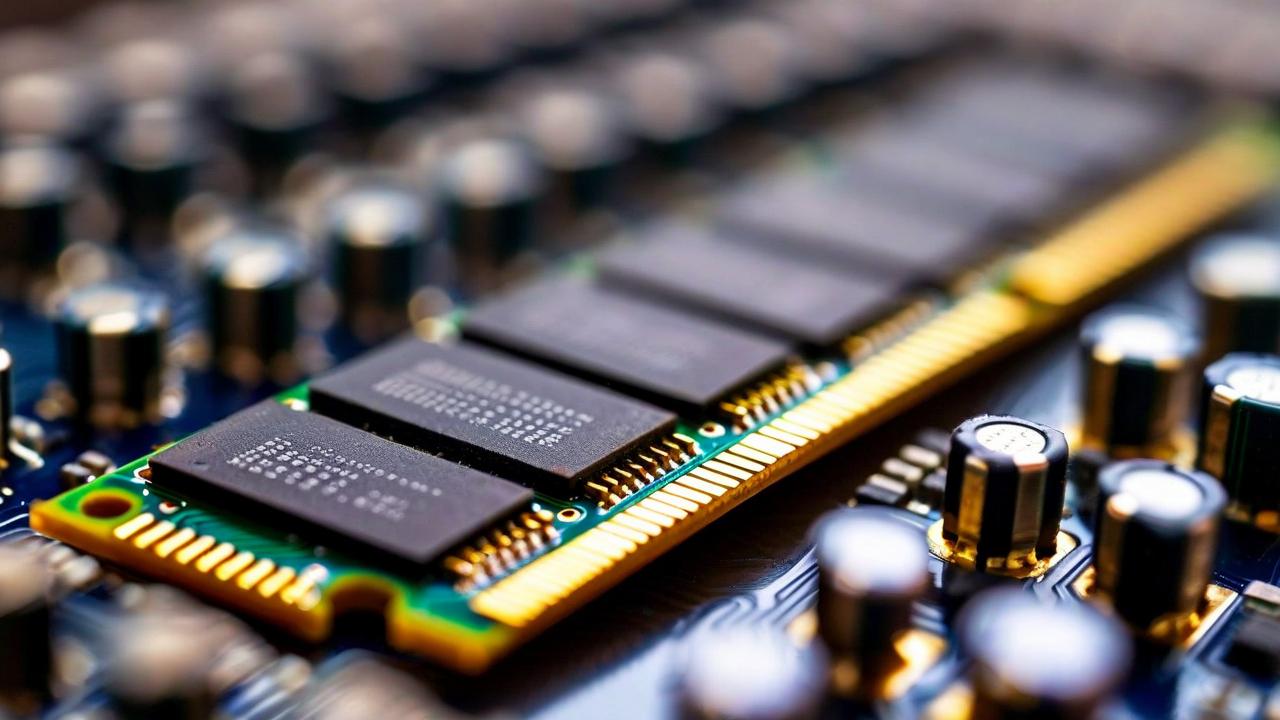

*this image is generated using AI for illustrative purposes only.
Memory chips are projected to consume 68% of the capital expenditure for the world's nine largest cloud service providers in 2027. This represents a significant increase from the 47% share recorded in 2024, according to market research firm TrendForce.
The total addressable market for this spending is expanding rapidly. TrendForce estimates combined spending by these providers at $272 billion in 2024, rising to $466 billion in 2025, $922 billion in 2026, and $1.383 trillion in 2027.
Price Drivers Behind the Shift
The increasing share of memory in total capex is driven by rising component prices rather than just volume growth. Server DRAM contract prices rose a cumulative 64% in the second half of 2025. TrendForce expects a further 270% increase across 2026.
Enterprise solid-state drive prices, representing the NAND flash segment, rose about 35% in the second half of 2025 and are projected to gain 235% in 2026. High-bandwidth memory (HBM), critical for AI accelerators, could see price increases of 70% to 140% in 2027.
What the Numbers Show
Applying the projected 68% memory share to the $1.383 trillion total capex forecast for 2027 implies approximately $940 billion will be directed specifically toward memory components in that single year. This concentration highlights memory as the dominant cost center in AI infrastructure buildouts.
Market Response and Risks
As memory absorbs a larger portion of budgets, cloud providers may respond by reducing memory capacity per system, reworking RDIMM configurations, or shifting toward custom AI chips with hardwired model architectures. Higher memory costs also provide suppliers like Nvidia Corp justification to raise their own prices.
Micron Technology Inc trades 26% below its June record high. Analyst consensus remains bullish, with 27 analysts rating the stock as Buy and an average price target of $1,303. This target sits roughly 40% above the recent close of $932.97. Micron has already more than tripled this year and crossed a $1 trillion market value.
| Date | Firm | Price Target | Action | Rating |
|---|---|---|---|---|
| Aug 25, 2026 | Mizuho | $1,375 → $1,300 | PT Cut | Outperform |
| Aug 14, 2026 | New Street Research | $1,250 | Upgrade | Neutral → Buy |
| Aug 7, 2026 | Citigroup | $1,400 → $1,150 | PT Cut | Buy |
| Jul 14, 2026 | Keybanc | $1,600 → $1,750 | PT Raise | Overweight |
| Jun 29, 2026 | Cantor Fitzgerald | $1,500 → $2,000 | PT Raise | Overweight |
| Jun 25, 2026 | Barclays | $1,175 → $2,000 | PT Raise | Overweight |
Source: Benzinga Analyst Ratings

How might the projected 270% surge in server DRAM prices in 2026 force cloud providers to alter their AI infrastructure scaling strategies?
Will the rising cost of memory components lead to a consolidation of the cloud service provider market as smaller players struggle with capital intensity?
To what extent will custom AI chips with hardwired architectures mitigate the impact of soaring HBM and DRAM costs by 2027?
 17
17







 Access Market Heat-map & Insights
  Create, Save & Share your Screener
  Use 200+ Screening Filters





