

Maruti Suzuki July Total Sales Surge 33.7% YoY to 241,421 Units, Beat Estimates


Maruti Suzuki India reported record July 2026 total sales of 241,421 units, surpassing the market estimate of 205,100 units and rising 33.7% YoY from 180,526 units. Domestic PV+LCV sales reached an all-time high of 200,123 units, driven by strong growth in compact, mid-size, and utility vehicle segments. Cumulative April–July FY 2026-27 total sales stood at 924,145 units versus 708,387 units in the prior year period.



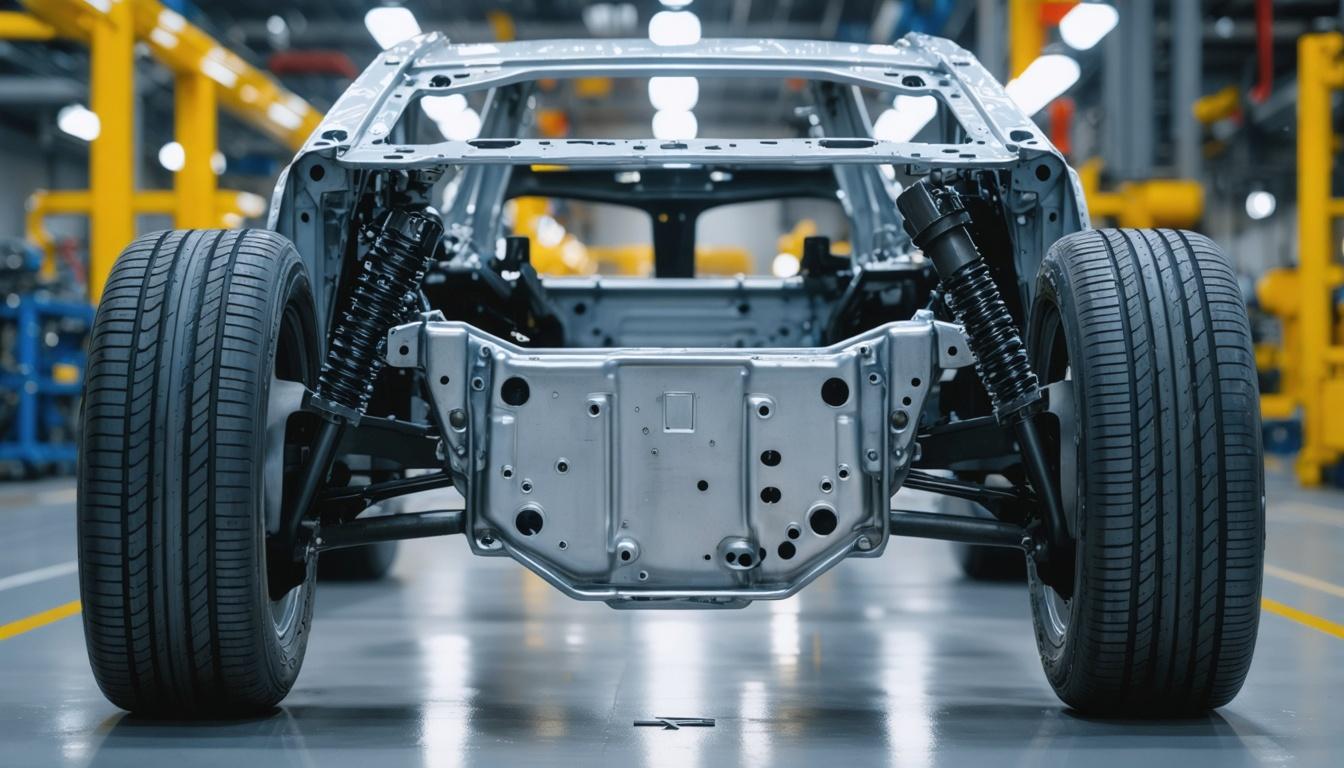
*this image is generated using AI for illustrative purposes only.
Maruti Suzuki India Limited reported total sales of 241,421 units for July 2026, surpassing the market estimate of 205,100 units and marking an all-time high in domestic sales. The company's overall sales volume surged by 33.7% compared to July 2025, when total sales stood at 180,526 units. Domestic passenger vehicle and light commercial vehicle (LCV) sales combined to reach a record 200,123 units, underscoring strong consumer demand across key segments. This performance signals sustained momentum in India's automotive sector, with broad-based growth across vehicle categories.
The press release, issued on August 1, 2026, details the breakdown of sales across categories. Domestic passenger vehicle (PV) sales totaled 196,203 units, up significantly from 137,776 units in July 2025. Sales to other original equipment manufacturers (OEMs) were recorded at 11,242 units, while export sales declined slightly to 30,056 units from 31,745 units in the previous year. The company also disclosed cumulative figures for the April–July period of FY 2026-27, showing total sales of 924,145 units against 708,387 units in the corresponding period of FY 2025-26.
Sales Performance vs. Estimates
The July 2026 results comfortably exceeded analyst expectations, as summarised below:
| Metric: | July 2026 | July 2025 | Estimate |
|---|---|---|---|
| Total Sales (Units): | 241,421 | 180,526 | 205,100 |
| Domestic PV+LCV Sales: | 200,123 | 140,570 | — |
| Export Sales: | 30,056 | 31,745 | — |
| OEM Sales: | 11,242 | — | — |
Segment-wise Performance
The growth was broad-based but led by the compact and mid-size car segment. Below is the detailed sales data for July 2026 compared to July 2025:
| Category: | Models | July 2026 Units | July 2025 Units |
|---|---|---|---|
| Mini Cars: | Alto, S-Presso | 12,634 | 6,822 |
| Compact + Mid-Size: | Baleno, Celerio, Ciaz, Dzire, Ignis, Swift, WagonR | 90,822 | 65,840 |
| Total Passenger Cars: | 103,456 | 72,662 | |
| Utility Vehicles: | Brezza, Ertiga, e Vitara, Fronx, Grand Vitara, Invicto, Jimny, Victoris, XL6 | 78,851 | 52,773 |
| Vans: | Eeco | 13,896 | 12,341 |
| Total Domestic PV: | 196,203 | 137,776 | |
| Light Commercial Vehicles: | Super Carry | 3,920 | 2,794 |
| Total Domestic Sales (PV+LCV): | 200,123 | 140,570 |
Utility vehicles contributed 78,851 units to the domestic tally, reflecting continued strength in the SUV and multi-utility vehicle space. The mini-car segment saw more than an 85% year-on-year increase, rising from 6,822 units to 12,634 units. Vans, represented by the Eeco model, grew modestly to 13,896 units from 12,341 units.
What the Numbers Show
The most striking aspect of the July 2026 data is the disproportionate growth in the compact and mid-size segment, which delivered 90,822 units — a 37.90% jump from the prior year. This segment alone accounted for nearly 45% of all domestic passenger vehicle sales, indicating a clear consumer preference for larger, feature-rich cars over entry-level models. While exports dipped slightly by 5.30%, the massive domestic surge more than compensated, highlighting Maruti Suzuki's deepening penetration in the Indian home market rather than reliance on overseas demand.
The cumulative data for the first four months of FY 2026-27 further validates this trend. Total domestic sales (including OEM) reached 769,353 units, compared to 579,670 units in the same period of FY 2025-26. Export sales for the period rose to 154,792 units from 128,717 units, suggesting that while July saw a slight dip, the broader export trajectory remains positive year-to-date.
Historical Stock Returns for Maruti Suzuki
| 1 Day | 5 Days | 1 Month | 6 Months | 1 Year | 5 Years |
|---|---|---|---|---|---|
| +1.71% | +0.30% | -9.66% | -16.04% | -28.68% | +53.70% |

Will Maruti Suzuki's record domestic sales volume translate into proportionate revenue and profit growth, or will margin pressure from competitive pricing persist?
How will the significant 85% surge in mini-car sales impact the company's average selling price (ASP) and overall profitability in the coming quarters?
Given the slight dip in July exports, are there emerging logistical challenges or tariff barriers in key international markets that could threaten the positive year-to-date export trajectory?
 19
19









 Access 50+ Readymade Screeners
  Use 200+ Custom Filters
  Get Full Market Insights





