

Mac revenue up 29% to $10.35 billion as developer warns AI hostility


- Mac revenue rose 29% YoY to $10.35 billion, beating Wall Street estimates
- Developer David Heinemeier Hansson calls Mac 'hostile' to AI agents
- Apple promotes M5 Ultra Mac Studio with up to 512GB unified memory
- Polymarket gives Nvidia 80% chance to be largest company by end of 2026

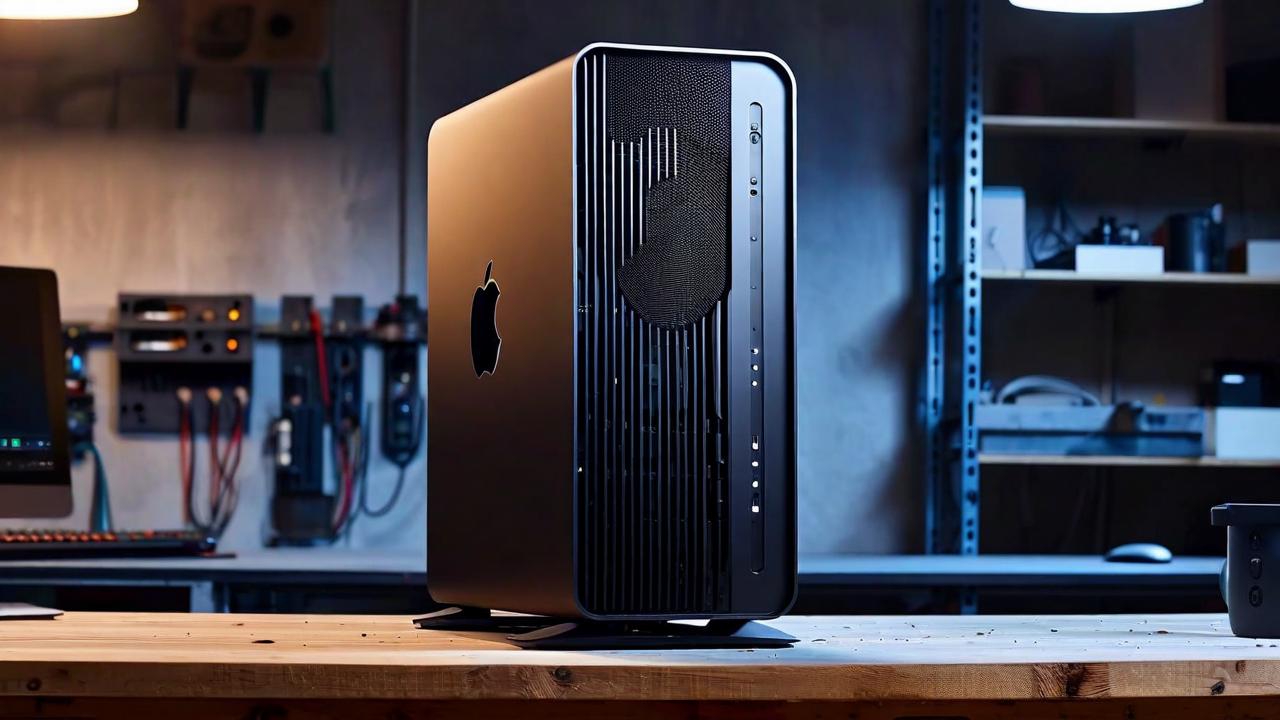

*this image is generated using AI for illustrative purposes only.
Apple Inc. (NASDAQ: AAPL) reported a 29% year-over-year increase in Mac revenue to $10.35 billion last quarter, significantly outperforming Wall Street estimates. This financial strength stands in contrast to warnings from prominent developer David Heinemeier Hansson, who argues the operating system is becoming "hostile" to autonomous AI agents.
The Developer Critique
David Heinemeier Hansson, creator of Ruby on Rails and CTO at 37signals, stated on the Lex Fridman podcast that the Mac’s tightly controlled environment is ill-suited for the emerging era of AI agents. He described Linux as the "most probable outcome" for desktop dominance in this context, arguing that command-line tools are more navigable for autonomous software than macOS’s restricted architecture.
Hansson contends that Apple’s focus on security and curation prevents agents from fully manipulating the computer system itself. While Apple has integrated AI deeper into its Xcode development tool via the February Xcode 26.3 update, allowing agents to write code and run tests, Hansson argues this does not address the need for agents to mutate the underlying operating system.
Apple’s Strategic Response
Apple continues to position its hardware as central to its AI strategy. The company recently introduced the M5 Ultra Mac Studio, marketing it as the "ultimate desktop for on-device AI" with up to 512GB of unified memory. This hardware push aims to reinforce the ecosystem moat that currently retains users through software dependency and workflow inertia.
Hansson suggests AI could weaken this lock-in by enabling users to recreate only the specific features they need from complex software suites like Microsoft Office. If AI agents can replicate these essential tools, switching costs between operating systems may decrease.
What the Numbers Show
The divergence between market performance and developer sentiment is stark. While Mac revenue surged 29% to $10.35 billion, indicating strong consumer demand, the developer community is shifting. At 37signals, the Mac ceased being the exclusive default for developers in 2024 as the firm moved toward Linux. Hansson has since created his own Linux distribution, Omarchy, reflecting this broader trend among technical users.
| Metric | Value | Context |
|---|---|---|
| Mac Revenue | $10.35 billion | Last quarter |
| YoY Growth | 29% | Ahead of estimates |
| Unified Memory | Up to 512GB | M5 Ultra Mac Studio |
Market sentiment reflects uncertainty about Apple’s long-term positioning relative to AI leaders. On Polymarket, Nvidia holds an 80% probability of being the world’s largest company by market cap at the end of 2026, compared to just 12% for Apple. However, traders assign Apple a 46% chance of finishing second, ahead of Alphabet’s 31%.

How might Apple's emphasis on on-device AI hardware with the M5 Ultra mitigate the risk of developers migrating to Linux for autonomous agent development?
Could the emergence of AI agents that replicate core software functionalities significantly erode Apple's ecosystem lock-in and reduce switching costs for enterprise users?
What specific architectural changes might Apple need to implement in macOS to balance its strict security model with the open access required by autonomous AI agents?
 20
20











 Access Market Heat-map & Insights
  Create, Save & Share your Screener
  Use 200+ Screening Filters





