Apple launches M6 Mac mini and M5 Ultra Mac Studio desktops

scanx
Reviewed by
Naman SScanX News Team
Key Highlights
  • Apple launches Mac mini with first 2nm M6 chip and Mac Studio with M5 Ultra
  • M6 Mac mini starts at $899; M5 Ultra Mac Studio priced at $5,499
  • Polishing Cloth price cut to $9 from previous $19
  • Apple stock falls 0.1% in pre-market trading to $309.60
powered bylight_fuzz_icon
49278630

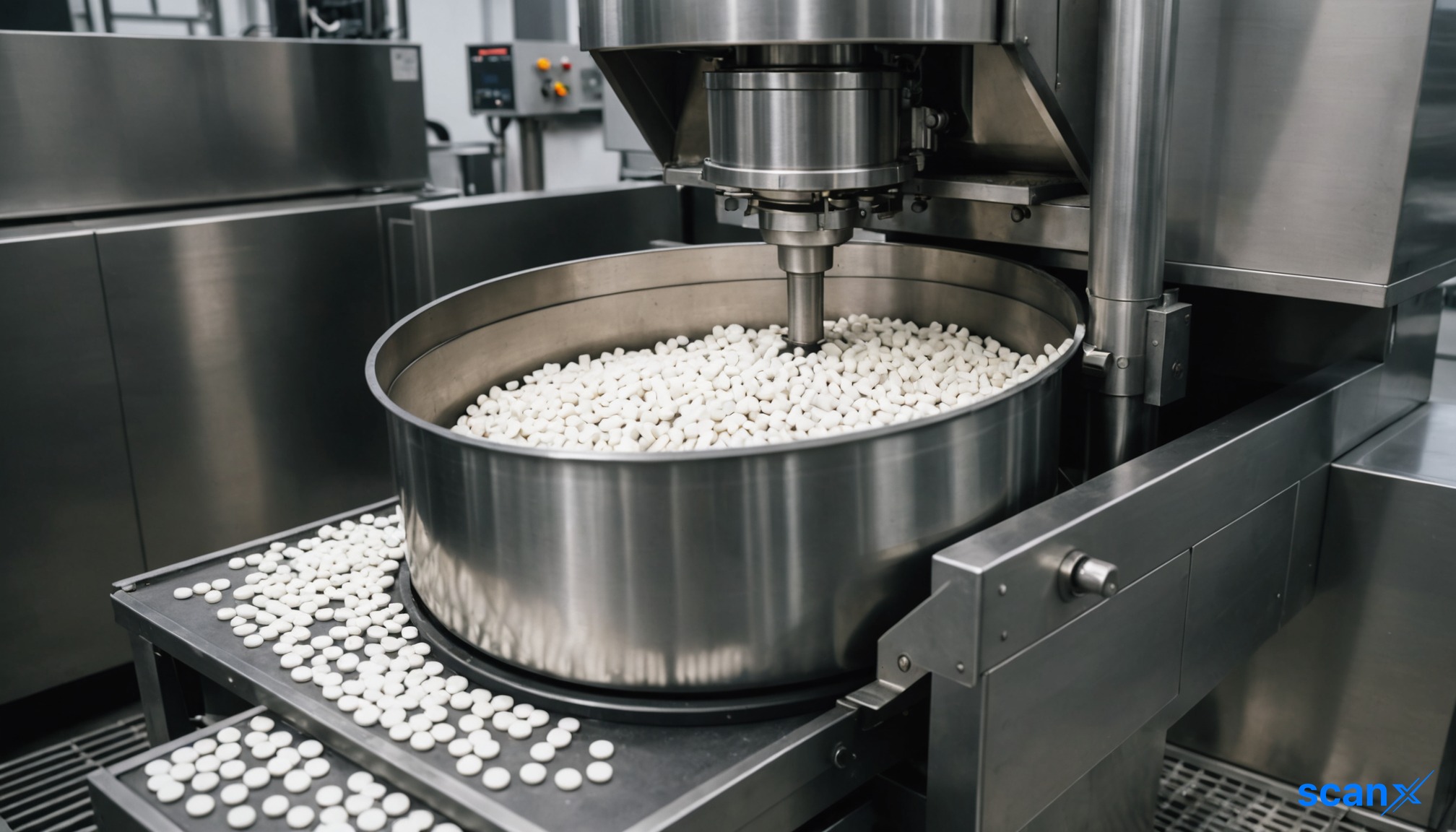
*this image is generated using AI for illustrative purposes only.

Apple Inc (NASDAQ: AAPL) has refreshed its desktop lineup with the introduction of the Mac mini featuring the new M6 chip and the Mac Studio equipped with M5 Ultra and M5 Max processors.

The launch marks Apple's entry into 2-nanometer chip manufacturing for its consumer desktops, alongside significant pricing adjustments for accessories.

Mac Mini Features First 2nm Chip

The new Mac mini retains its compact form factor but integrates the M6 chip, which is the company's first processor built on a 2-nanometer process node. This configuration includes a 12-core CPU and a 12-core GPU.

Apple states that the M6 delivers up to 40% faster CPU performance compared to the previous M4 model. Neural Accelerators in the new chip enable up to 4x faster AI performance and 2x faster graphics capabilities.

The base M6 Mac mini is priced at $899, offering 16GB of unified memory and 256GB of storage. A higher-specification model featuring the M5 Pro chip starts at $1,699. This configuration supports up to 18 CPU cores, 20 GPU cores, and 64GB of unified memory.

Pre-orders are open for both models, with deliveries scheduled to begin on Sept. 22.

Mac Studio Targets High-End Workloads

The Mac Studio lineup has been upgraded with the M5 Max and M5 Ultra chips. The M5 Ultra represents Apple's most powerful chip to date, designed for demanding AI, rendering, and video workloads.

Key specifications for the M5 Ultra include up to 36 CPU cores, an 80-core GPU, and 1.2TB/s of memory bandwidth. The M5 Max Mac Studio starts at $2,499, while the top-tier M5 Ultra model is priced at $5,499.

A configuration with 512GB of memory for the Mac Studio is expected to arrive in late October. Both the Mac mini and Mac Studio now support Wi-Fi 7 and Bluetooth 6. The Mac Studio additionally features PCIe Gen 6 storage and Thunderbolt 5 connectivity.

Accessory Pricing Adjustment

In a notable shift from previous pricing strategies, Apple has reduced the cost of its Polishing Cloth to $9, down from the initial $19 price point set in 2021. The product remains designed for safely cleaning Apple displays, including nano-texture screens.

The original $19 cloth had become a subject of public scrutiny following its debut but sold out quickly. No major functional changes to the cloth were detailed in the current release.

Market Reaction

Apple shares closed at $309.90 on Tuesday, representing a decline of 0.14%. In pre-market trading on Wednesday, the stock fell another 0.1% to $309.60.

Benzinga Edge ranks Apple stock in the 97th percentile for Quality. The stock maintains a positive medium- and long-term price trend despite a weaker short-term performance.

How might the adoption of 2nm chip manufacturing in the Mac mini impact Apple's production costs and gross margins compared to previous generations?

Will the significant AI performance boost in the M6 chip drive a new wave of enterprise adoption for on-device machine learning tasks?

How does the pricing strategy of the M5 Ultra Mac Studio position Apple against high-end PC competitors like NVIDIA and AMD in the professional workstation market?

like18
dislike

Apple global iPhone shipments rise 13% in Q2 2026

scanx
Reviewed by
Riya DScanX News Team
Key Highlights
  • Global iPhone shipments rose 13% YoY in Q2 2026, driven by the iPhone 17 series
  • China led regional growth with a 23% jump, outpacing the broader market
  • South Korea posted the strongest growth at 35%, aided by promotions
  • U.S. shipments grew 6%, supported by increased carrier trade-in subsidies
  • India saw a 0.4% slip due to persistent supply constraints
powered bylight_fuzz_icon
49284296

*this image is generated using AI for illustrative purposes only.

Apple Inc. (NASDAQ: AAPL) recorded a 13% year-over-year increase in global iPhone shipments during the second quarter of 2026, according to Counterpoint Research.

The growth was fueled by the iPhone 17 series, stable pricing, and expectations of potential price increases in the third quarter that prompted early purchases.

Regional Performance Divergence

China emerged as a key growth engine, with iPhone shipments rising 23% year-over-year. This outpaced the broader Chinese smartphone market, where Android manufacturers raised prices due to higher component costs. Apple’s decision to maintain stable pricing likely contributed to this relative strength.

Europe also delivered strong results with 22% shipment growth, similarly driven by consumers bringing forward purchases ahead of anticipated price hikes.

South Korea posted the strongest growth among major markets at 35%, supported by promotions and stronger sales in April and May against an easier prior-year comparison.

Region Shipment Growth Key Drivers
South Korea 35% Promotions, easier comparison
China 23% Stable pricing vs Android hikes
Europe 22% Early purchases before price hike
United States 6% Carrier trade-in subsidies
Japan 6% Standard model demand
India -0.4% Supply constraints

U.S. and Japan Demand

U.S. iPhone shipments rose 6%, supported by aggressive carrier promotions for the iPhone 17 Pro and Pro Max. T-Mobile U.S. Inc. (NASDAQ: TMUS) and AT&T Inc. (NYSE: T) offered trade-in subsidies of up to $1,100, an increase from $1,000 a year earlier.

Japan mirrored this performance with 6% growth, driven by demand for the standard iPhone 17 and carrier upgrade offers.

India Supply Constraints

In contrast, shipments in India slipped 0.4%. Persistent supply constraints and inventory shortages limited the availability of key iPhone models across both online and physical retail channels, hindering potential demand.

What the Numbers Show

The data reveals a clear divergence between demand drivers in mature versus emerging markets. In China and Europe, growth was primarily demand-pull, accelerated by consumer anticipation of price increases and Apple’s competitive pricing strategy against Android rivals. Conversely, India’s slight decline highlights supply-push limitations, where inventory shortages capped performance despite underlying market interest. This suggests that while pricing strategy drives volume in competitive markets, supply chain execution remains the critical bottleneck in constrained regions like India.

Stock Performance

Apple shares were trading down 0.12% at $309.51 during premarket trading on Wednesday. The stock trades 0.6% below its 20-day simple moving average of $311.50 and 0.4% below its 50-day SMA of $310.88.

However, the longer-term trend remains positive. Apple trades 3.8% above its 100-day SMA of $298.18 and 9.8% above its 200-day SMA of $281.90. The relative strength index stands at 47.95, indicating neutral momentum. The golden cross formed in September 2025 remains intact, with the 20-day SMA above the 50-day SMA.

Key resistance sits at $335. Support stands near $300.50. The 100-day SMA could provide additional support near $298.18.

How will Apple's anticipated Q3 price increases impact consumer adoption rates in Europe and China, where early buying already front-loaded demand?

What specific supply chain adjustments is Apple implementing to resolve the inventory shortages currently stifling growth in the Indian market?

Will the aggressive carrier subsidies in the U.S. and Japan sustain iPhone market share against Android competitors, or will they erode long-term profit margins?

like20
dislike

More News on Apple Inc