

Leading Edge advances Norra Kärr processing with funding


Leading Edge Materials Corp. advances its Norra Kärr project with Swedish government funding for hydrometallurgical research and pilot plant preparations. The company secured SEK 1.5 million for the SHLENK project and is sampling to produce high-grade eudialyte concentrate. This supports the development of the EU's first heavy rare earth elements mine, following a 25-year mining lease granted in June 2026.

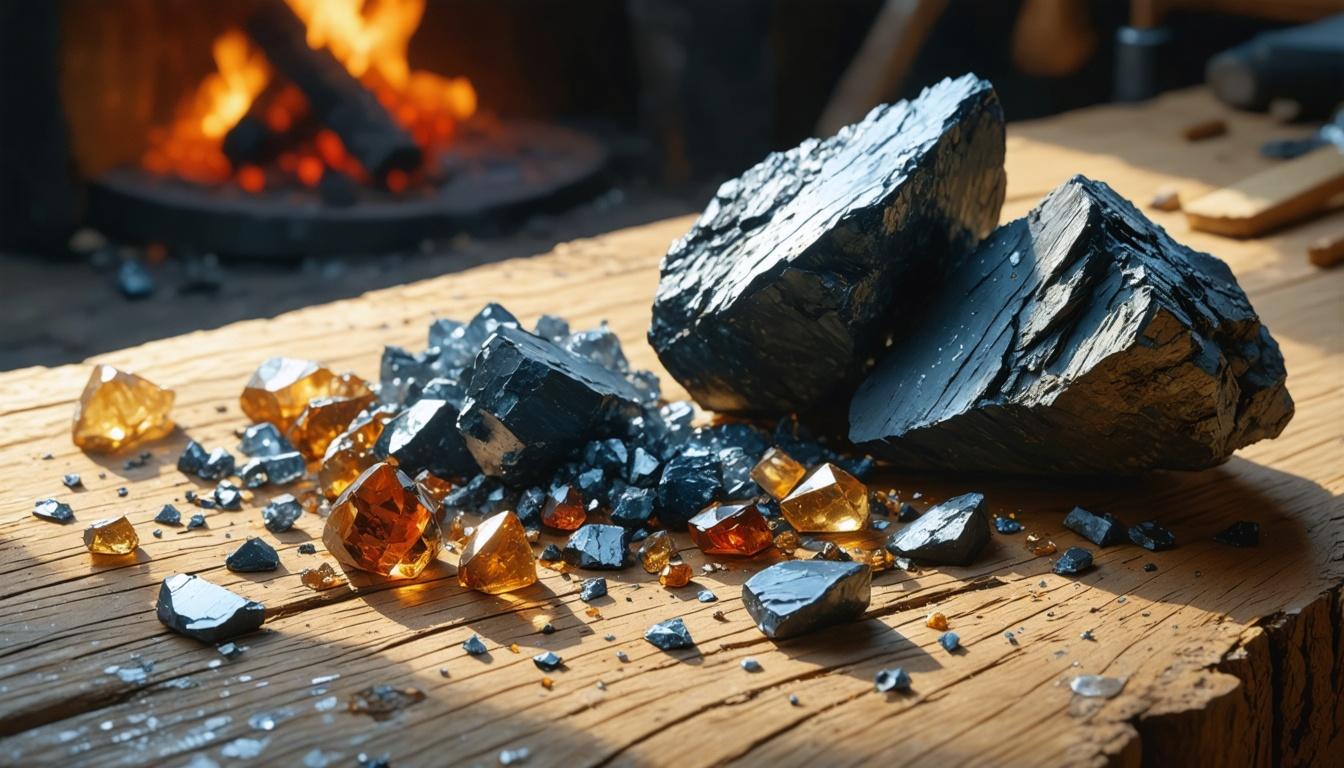

*this image is generated using AI for illustrative purposes only.
Leading Edge Materials Corp. is advancing its midstream processing strategy for the Norra Kärr Heavy Rare Earth Elements Project in Sweden, supported by funding from the Swedish government. The company is focusing on enhancing the processing flowsheet through new hydrometallurgical research and preparing for pilot-scale testing to demonstrate commercial viability. This initiative is part of a broader effort to develop the EU's first heavy rare earth elements mine, following the grant of a 25-year mining lease for Norra Kärr in June 2026.
The company has secured SEK 1.5 million (CAD 0.2 million) in funding for the SHLENK project, which researches silicate management in leaching eudialyte from Norra Kärr. This project is one of two initiatives involving Greenna Mineral AB, a wholly owned subsidiary of Leading Edge Materials, to receive funding through Vinnova, the Swedish Innovation Agency. The combined national program totals more than SEK 70 million (approximately CAD 10 million), with approximately SEK 42 million (CAD 6 million) provided by Vinnova to strengthen Sweden's metals and minerals supply chain.
Processing Strategy and Pilot Testing
Leading Edge Materials is conducting a domain sampling program using its existing drill core library to generate high-grade eudialyte concentrate. This concentrate will serve as the essential feedstock for upcoming hydrometallurgical pilot testing. The company's 2021 Preliminary Economic Assessment (PEA) outlined a pre-treatment approach to manage silicate behavior during leaching, preventing gel formation while preserving rare earth element solubility. Current workstreams focus on performance and cost optimization and upscaling studies.
Mineral processing at Norra Kärr will involve crushing, grinding, and magnetic separation. The resulting eudialyte concentrate will be transported to a midstream hydrometallurgical facility at a separate, established industrial location. This approach minimizes the footprint at the mine site and leverages existing infrastructure for chemical processing.
Strategic Importance and Funding
The funding from Vinnova underscores the strategic importance of Norra Kärr in building a resilient supply chain for critical raw materials in Sweden and the Nordics. The SHLENK project is conducted in collaboration with RISE (Research Institutes of Sweden). Another funded initiative is the NordAL (Nordic Alumina) project. These efforts are part of the Swedish Metals & Minerals joint initiative by the Swedish Energy Agency, Formas, and Vinnova under the Impact Innovation framework.
| Project | Funding Amount | Focus Area |
|---|---|---|
| SHLENK | SEK 1.5 million (CAD 0.2 million) | Silicate management in leaching |
| National Program | > SEK 70 million (~CAD 10 million) | Resilient metals and minerals supply |
| Vinnova Contribution | ~ SEK 42 million (CAD 6 million) | Innovation funding |
Kurt Budge, Chief Executive Officer of Leading Edge Materials, highlighted the progress following the grant of the 25-year mining lease. He emphasized the company's plan to de-risk and enhance the processing flowsheet, verify the pre-treatment approach, and generate data for pilot-scale operations. Budge noted that heavy rare earths like dysprosium and terbium are foundational to electrification and defense readiness, and Norra Kärr is one of the continent's richest deposits.
Norra Kärr Project Overview
Norra Kärr is a significant deposit of heavy rare earth elements hosted in an eudialyte-bearing alkaline rock body in southern Sweden. The project is noted for its high dysprosium and terbium content, which are critical inputs for permanent magnets used in electric vehicles, wind turbines, and defense applications. On June 28, 2026, the Swedish Government granted an Exploitation Concession, a 25-year mining lease, following a recommendation from the Mining Inspectorate.
The strategic value of Norra Kärr is further emphasized by external estimates. Edison Investment Research notes that current European dysprosium demand is 180-200 tonnes per annum of Dy₂O₃, while Norra Kärr's 2021 PEA discloses average annual Dy₂O₃ production of 248 tonnes, which is similar to European consumption. The project is positioned to address Europe's critical risk exposure to supply disruptions of rare earth elements.

How will the results of the SHLENK project influence the timeline for full-scale commercial production at Norra Kärr?
What are the potential market impacts on European rare earth prices if Norra Kärr successfully meets regional demand for dysprosium and terbium?
Could the success of Norra Kärr spur similar government-backed initiatives for critical mineral projects across the EU?
 16
16







 Create Custom Screeners
  Access 200+ Pre-built Filters
  Use 50+ Readymade Screener





