

Knowledge Realty Trust Submits Annual Report for Financial Year Ended March 31, 2026


Knowledge Realty Trust submitted its Annual Report for FY 2025-26 on June 17, 2026, reporting pro forma revenue of ₹45,772 million (up 16% YoY) and NOI of ₹40,484 million (up 18% YoY), with an NOI margin of 88%. The Trust distributed ₹21,019 million (₹4.74 per unit) to unitholders across three post-listing quarters, exceeding IPO projections. Committed occupancy stood at 92%, gross leasing was 3.5 msf with 26% average re-leasing spreads, and the average cost of debt was reduced by 140 bps to 7.2%, with an LTV of 18%.



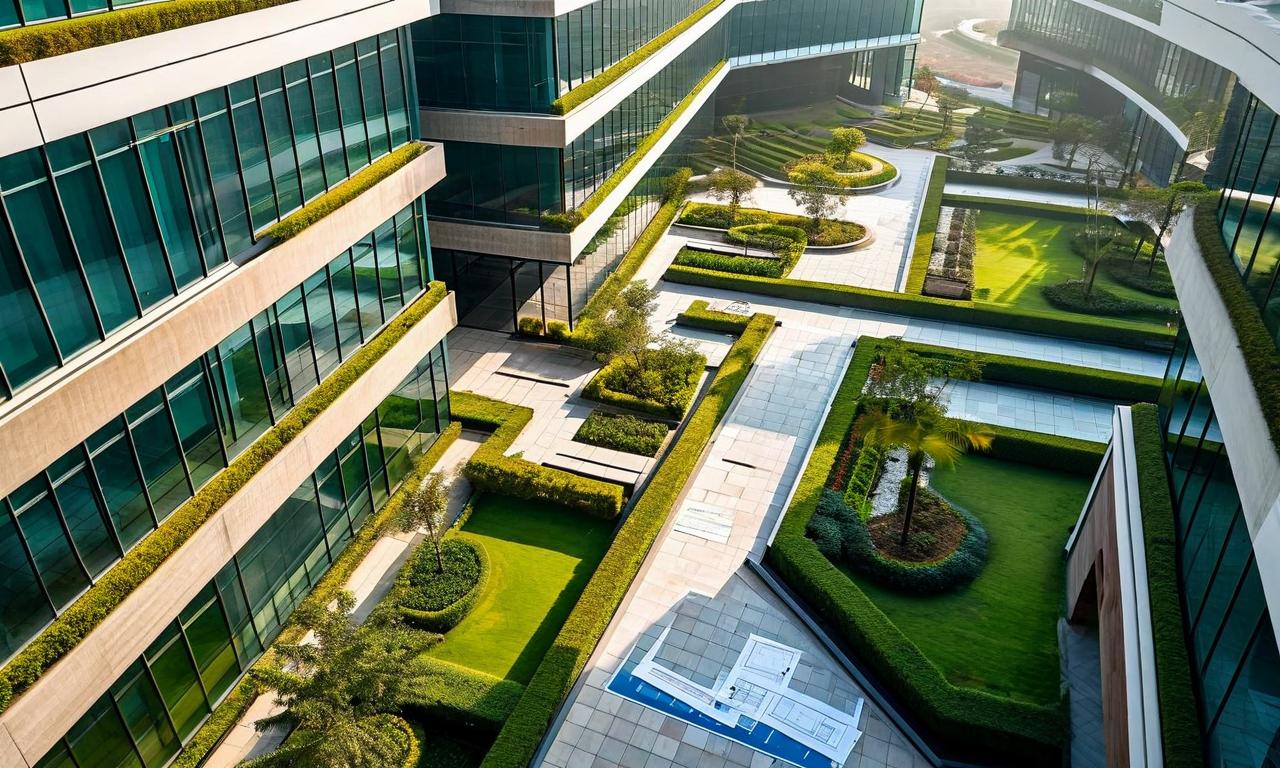
*this image is generated using AI for illustrative purposes only.
Knowledge Realty Trust has filed its Annual Report for the financial year ended March 31, 2026, with the stock exchanges on June 17, 2026, pursuant to Regulation 23(2) of the Securities and Exchange Board of India (Real Estate Investment Trusts) Regulations, 2014. The submission was made by Knowledge Realty Office Management Services Private Limited (formerly known as Trinity Office Management Services Private Limited), acting as Manager to the Trust.
Portfolio Overview and Market Position
Knowledge Realty Trust is India's largest office Real Estate Investment Trust by market capitalisation, comprising Grade A office ecosystems across six cities. The Trust was listed on BSE and NSE on August 18, 2025, at an issue price of ₹100 per unit, at 12x oversubscription. During FY 2025-26, KRT crossed a market capitalisation of ₹500 billion and was included in the FTSE EPRA Nareit Global REITs Index and the FTSE Global Equity Index Series.
| Portfolio Metric | Value |
|---|---|
| Total Assets | 29 |
| Total Leasable Area | 46.5 msf |
| Completed Area | 37.2 msf |
| Under Construction Area | 2.6 msf |
| Future Development Area | 6.6 msf |
| Cities | 6 |
| Committed Occupancy | 92% |
| Weighted Average Lease Expiry (WALE) | 8.0 years |
| Market Capitalisation (as of May 31, 2026) | ₹515 billion |
| Units Outstanding | 4,434 million |
The portfolio is strategically concentrated in Bengaluru (29% of GAV), Mumbai (32% of GAV), and Hyderabad (29% of GAV), with 95% of Gross Asset Value located in India's best-performing office markets.
Financial Performance
The Trust delivered strong financial results for FY 2025-26 on a pro forma basis. Revenue grew 16% year on year to ₹45,772 million, while Net Operating Income increased 18% to ₹40,484 million, resulting in an NOI margin of 88%. EBITDA stood at ₹38,784 million for FY 2025-26.
| Financial Metric | FY 2025-26 (Pro Forma) | FY 2024-25 |
|---|---|---|
| Revenue (₹ million) | 45,772 | 39,301 |
| NOI (₹ million) | 40,484 | 34,323 |
| EBITDA (₹ million) | 38,784 | 32,930 |
| NOI Margin (%) | 88% | 87% |
Finance costs for FY 2025-26 were ₹6,819.52 million, comprising interest expense on term loans of ₹5,522.53 million, interest expense on debentures of ₹690.30 million, and interest expense on lease deposits of ₹476.77 million. Finance costs amounted to 22% of revenue from operations. Depreciation and amortisation expenses were ₹10,504.79 million. Tax expense comprised current tax of ₹2,876.87 million, tax adjustments relating to earlier years of ₹36.32 million, and deferred tax charge of ₹1,333.93 million.
Net cash flow from operating activities for FY 2025-26 was ₹20,311.74 million. As of March 31, 2026, the Trust held cash and cash equivalents of ₹6,265.53 million, investments of ₹2,563.61 million in liquid mutual funds, and other bank balances of ₹268.78 million.
Distributions and Capital Management
KRT distributed a total of ₹21,019 million (₹4.74 per unit) to unitholders for the three quarters following its listing in FY 2025-26, exceeding IPO projections. The annualised DPU for FY 2025-26 stood at ₹6.32 per unit. The Board of Directors declared a Q4 distribution of ₹1.616 per unit, aggregating to ₹7,165.99 million, in its meeting held on May 13, 2026.
| Distribution Metric | Value |
|---|---|
| Total Distribution (FY 2025-26) | ₹21,019 million |
| Distribution per Unit (FY 2025-26) | ₹4.74 |
| Annualised DPU | ₹6.32 |
| Q4 FY 2025-26 Distribution per Unit | ₹1.616 |
The Trust actively managed its balance sheet during the year. IPO proceeds of ₹48,000 million were raised through the issuance of 480 million units at ₹100 per unit, with ₹46,400 million utilised for partial or full repayment of financial indebtedness of Asset SPVs and Investment Entities. The average cost of debt was reduced by 140 basis points to 7.2% as of March 31, 2026, from 8.6% as of March 31, 2025. The Loan-to-Value ratio stood at 18%, among the lowest in the Indian REIT sector. Gross debt was ₹124 billion and net debt was ₹120 billion. The Trust holds a CRISIL AAA/Stable and ICRA AAA/Stable credit rating.
During the year, the Trust raised ₹42,000 million through two NCD issuances and a term loan at a blended cost of 7.3%. As of March 31, 2026, floating rate borrowings stood at ₹97,621.04 million and fixed rate borrowings at ₹25,965.40 million.
Leasing and Operational Highlights
The Trust completed 3.5 msf of gross leasing during FY 2025-26, comprising 2.3 msf of new leasing and 1.2 msf of renewals. Leasing spreads averaged 26% on 2.8 msf of re-leased space, and new leases were executed at a 5% premium to prevailing market rents. Expansions by existing occupiers contributed 56% of new leasing. In-place rents grew 7% year on year to ₹97 psf per month, against prevailing market rents of approximately ₹122 psf per month.
| Leasing Metric | Value |
|---|---|
| Gross Leasing | 3.5 msf |
| New Leasing | 2.3 msf |
| Renewals | 1.2 msf |
| Average Re-leasing Spread | 26% |
| In-Place Rent | ₹97 psf pm |
| Market Rent | ~₹122 psf pm |
| Committed Occupancy | 92% |
| Expansion by Existing Occupiers (% of new leasing) | 56% |
Of the 1.8 msf of leases expiring in FY 2026-27, approximately 44% had already been addressed at healthy spreads as of the reporting period. The portfolio has approximately 5.8 msf of leases expiring between FY 2026-27 and FY 2029-30, with an estimated average mark-to-market potential of 27%.
ESG and Sustainability
Sustainability remains integral to KRT's operations. Renewable sources met nearly 74% of the Trust's total electricity needs during FY 2025-26. The portfolio's total energy consumption was 507 million kWh, of which total renewable energy consumption was 374 million kWh and total non-renewable energy consumption was 129 million kWh. The shift towards renewable energy enabled the avoidance of approximately 266,128 tCO2e emissions during FY 2025-26. The portfolio includes a total rooftop solar capacity of 1,913 kWp and 63 MW (AC) of captive solar generation capacity. Freshwater consumption was 1.7 million KL and total recycled water was 1.3 million KL. KRT achieved a Five-Star GRESB rating with a score of 95/100 for Standing Investments, ranking second among peers in India. As of the reporting period, 76% of the Trust's Gross Asset Value is green certified.
Development Pipeline and Growth Strategy
KRT's under-construction developments in Bengaluru, representing approximately 1.2 msf, were nearing completion as of the reporting period. During FY 2025-26, the Trust commenced construction of a new 1.4 msf office block at Sattva Global City. The ROFO pipeline comprised 6.7 msf across four assets in three cities as of March 31, 2026, providing a pathway for inorganic growth. The Trust's total development pipeline stands at 9.2 msf in aggregate, comprising 2.6 msf under construction and 6.6 msf of future development potential.
The Annual Report has also been made available on the Trust's website at www.knowledgerealtytrust.com .
Historical Stock Returns for Knowledge Realty Trust
| 1 Day | 5 Days | 1 Month | 6 Months | 1 Year | 5 Years |
|---|---|---|---|---|---|
| -1.13% | -1.37% | -1.12% | -1.29% | -2.81% | +5.55% |

How will the Trust manage the risk associated with the high proportion of floating rate debt (₹97,621 million) in a rising interest rate environment?
What is the expected timeline and capital requirement for monetizing the 6.7 msf ROFO pipeline to drive inorganic growth?
Can the Trust maintain the current 26% re-leasing spreads as 5.8 msf of leases expire over the next four years amidst potential market volatility?
 16
16

















 Access 50+ Readymade Screeners
  Use 200+ Custom Filters
  Get Full Market Insights





