

Jewett-Cameron Q3 sales fall 22% to $9.852 million


Jewett-Cameron Trading Company Ltd. reported a 21.84% decline in Q3 revenue to $9.852 million, driven by the discontinuation of a cedar fencing supply agreement, resulting in a net loss of $(0.23) per share. Despite the top-line contraction, gross margins expanded to 18.0% due to price increases and a favorable product mix, while the company significantly strengthened its balance sheet by reducing inventory and bank debt.

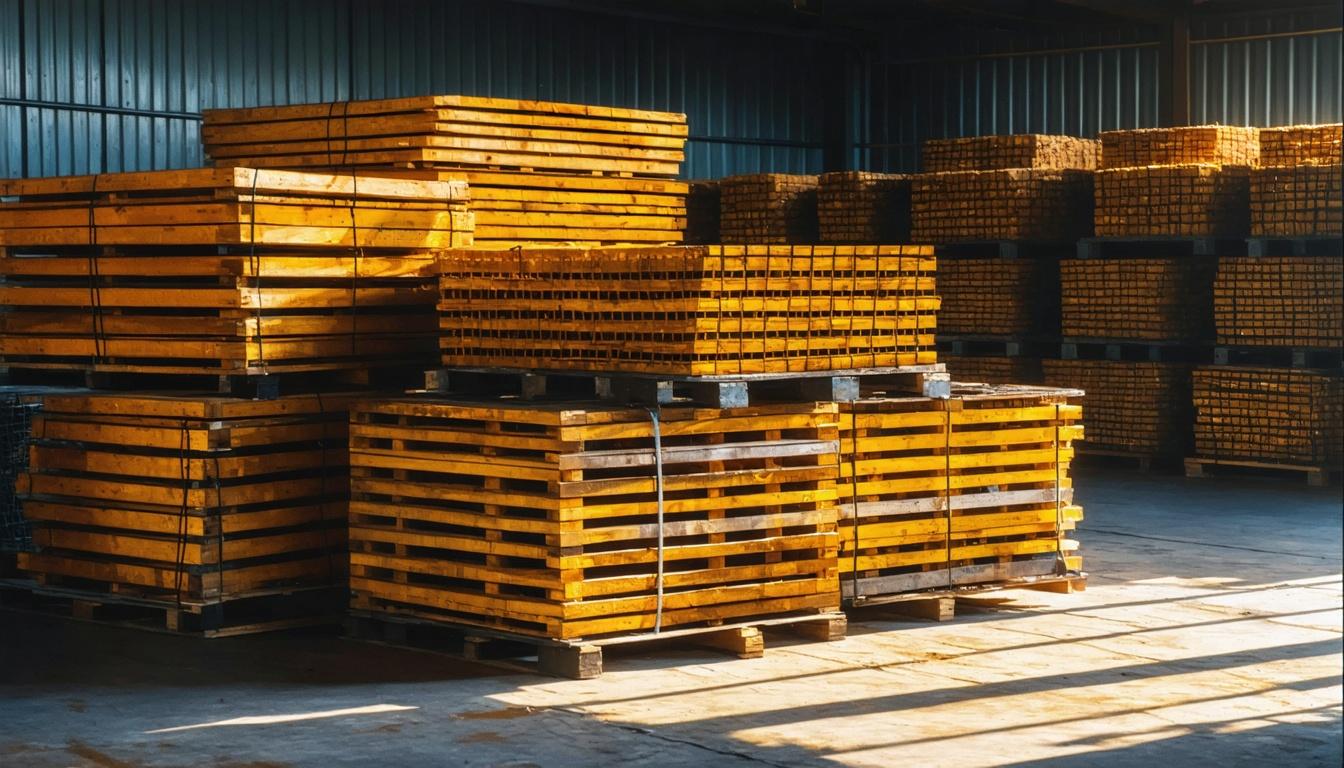

*this image is generated using AI for illustrative purposes only.
Jewett-Cameron Trading Company Ltd. reported fiscal 2026 third-quarter revenue of $9.852 million, a 21.84% decrease from $12.605 million in the prior year, as the company discontinued a low-margin cedar fencing supply agreement. The company recorded a net loss of $(0.23) per share, compared to a net loss of $(0.18) per share in the same period last year. Despite the revenue decline, the company improved its balance sheet by reducing inventory by more than $8 million and lowering bank indebtedness.
The revenue decline was primarily driven by the cancellation of a cedar fencing supply agreement, which reduced sales by over $3 million year-over-year. Sales growth in metal fencing, led by Adjust-A-Gate, Fit-Right, Lifetime Steel Post, and Perimeter Patrol, helped offset some of the decline. Greenwood revenue increased 58% to $1.1 million, driven by recovery in transit-related demand and higher sales from non-transit customers. Pet products remained soft due to pressured consumer discretionary spending.
Gross profit margins improved to 18.0% in Q3 2026 from 15.0% in Q3 2025, reflecting customer acceptance of tariff-related price increases and a higher mix of metal fencing products. However, the company continues to face margin stress from tariffs, higher raw material costs, and logistics expenses. During the quarter, the company filed claims totaling approximately $904,000 for tariff refunds under the International Emergency Economic Powers Act (IEEPA), with approximately $286,000 recorded as a receivable as of May 31, 2026.
Operating expenses for the quarter were $2.5 million, slightly down from $2.6 million in the prior year. Wages and employee benefits declined to $1.2 million from $1.5 million as the company adjusted headcount to focus on core products. Selling, General and Administrative (SG&A) expenses rose to $1.3 million from $1.0 million, primarily due to higher professional fees related to outside consultants.
The company strengthened its liquidity position during the quarter. Cash and cash equivalents increased to $1.1 million at May 31, 2026, from $547,000 at February 28, 2026. Inventory declined to $7.5 million from $15.9 million at August 31, 2025, as the company sold excess cedar fencing and liquidated older pet inventory. Bank indebtedness decreased to $1.3 million at May 31, 2026, from $4.3 million at February 28, 2026. In June 2026, the company revised and extended its borrowing agreement with Northrim Funding Services through June 30, 2027.
Financial Results Summary
| Metric | Q3 2026 | Q3 2025 | Change |
|---|---|---|---|
| Revenue | $9.852 million | $12.605 million | -21.84% |
| Gross Profit Margin | 18.0% | 15.0% | +300 bps |
| Net Loss Per Share | $(0.23) | $(0.18) | - |
| Cash and Cash Equivalents | $1.1 million | $547,000* | - |
| Inventory | $7.5 million | $15.9 million* | - |
| Bank Indebtedness | $1.3 million | $4.3 million* | - |
*Comparisons are to February 28, 2026, or August 31, 2025, as specified in the report.
Strategic Review and Outlook
Management continues to implement a strategic realignment to promote growth and profitability following a challenging fiscal 2025 and the first nine months of fiscal 2026. The company is concentrating on its core metal fencing products and optimizing sales of other categories. It aims to reduce annual operating expenses and exit fiscal 2026 with a sustainable business model. The company is also exploring strategic options, including potential divestitures of non-core assets such as its industrial lumber subsidiary, selective pet assets, wood fencing business, and certain real estate assets. No definitive agreements have been reached as of the date of the release.

What is the expected timeline for finalizing the potential divestitures of non-core assets such as the industrial lumber subsidiary and real estate?
How will the strategic shift toward core metal fencing products impact revenue growth projections for the remainder of fiscal 2026?
What are the company's plans to revive the soft pet products segment amid ongoing pressure on consumer discretionary spending?
 18
18





 Access Market Heat-map & Insights
  Create, Save & Share your Screener
  Use 200+ Screening Filters





