

Jay Bharat Maruti profit falls 8% in Q1FY27 despite revenue growth


Jay Bharat Maruti's Q1FY27 results show an 8.1% YoY net profit decline to ₹21.20 crore despite 12.6% revenue growth to ₹626.97 crore. Margin compression resulted from lower incentive income, higher wage costs, and commodity price pressures, though operational volumes improved.



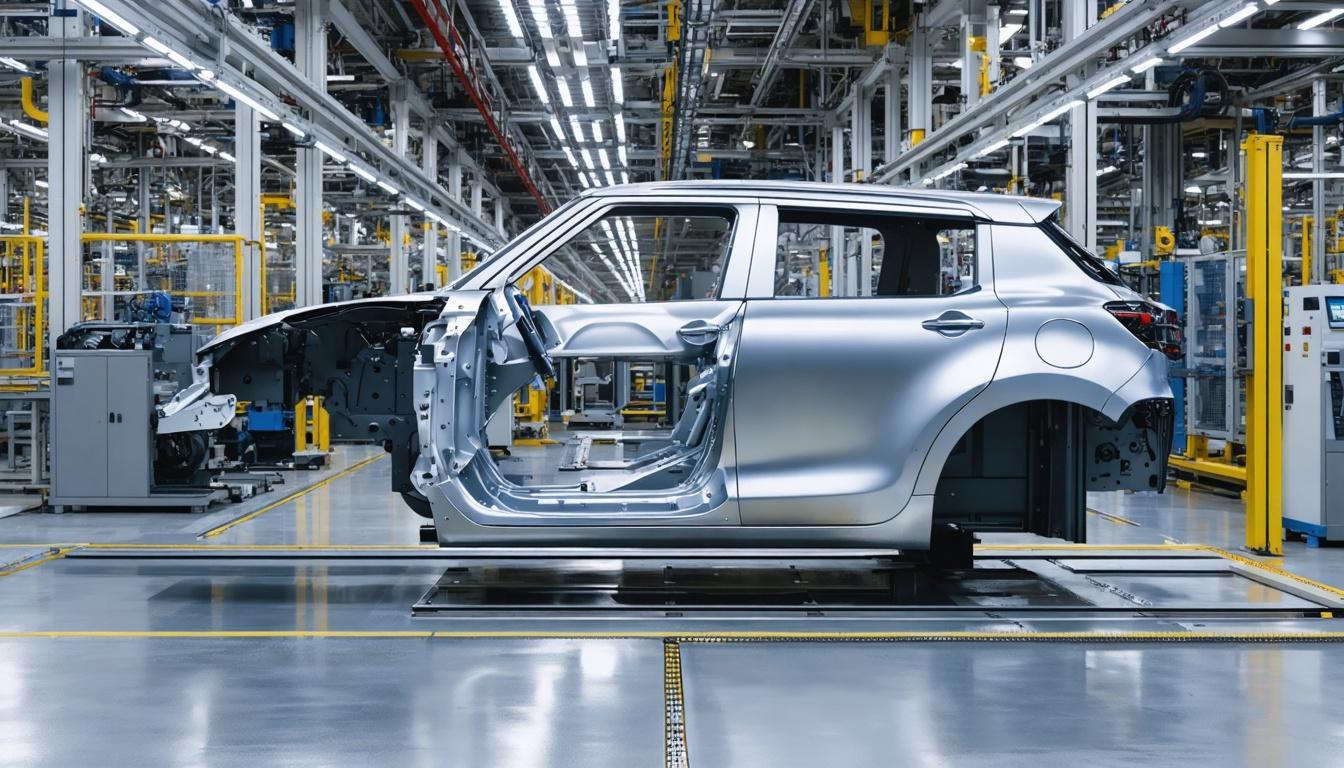
*this image is generated using AI for illustrative purposes only.
Jay Bharat Maruti Limited reported an 8.1% year-on-year decline in standalone net profit to ₹21.20 crore for the quarter ended June 30, 2026 (Q1FY27), despite revenue from operations rising 12.6% to ₹626.97 crore. The divergence between top-line growth and bottom-line contraction signals margin compression driven by reduced non-operating incentives, higher employee costs due to minimum wage hikes, and adverse commodity prices linked to the West Asia conflict. These factors impacted shareholder returns in the opening quarter of FY27, with EBITDA margins contracting by 176 basis points to 10.06%. Consolidated net profit stood at ₹218.47 lakh, down from ₹232.88 lakh in Q1FY26.
The Board of Directors approved the unaudited standalone and consolidated financial results on August 4, 2026, with statutory auditor M/s GSA & Associates LLP issuing a limited review report. Basic earnings per share (EPS) were ₹1.96 on a standalone basis and ₹2.02 on a consolidated basis, down from ₹2.13 and ₹2.15 respectively in the prior year period. The company released its investor presentation on August 5, 2026, detailing operational drivers behind the financial performance.
Financial Performance Overview
Revenue growth was primarily supported by higher volumes from Maruti Suzuki India Limited (MSIL), leading to improved capacity utilization and operating performance. However, profitability was pressured by a significant drop in incentive income. Incentive amounts totaling ₹34.26 crore were recognized in the quarter, pertaining to investments under the Industrial Policy 2015 of the Government of Gujarat and the Haryana Enterprises & Employment Policy 2020. This is a substantial decrease from ₹53.20 crore recognized in the previous year's corresponding quarter. EBITDA declined to ₹63.10 crore from ₹65.86 crore YoY, with margins contracting to 10.06% from 11.83%.
| Metric | Q1FY27 (₹ Cr) | Q1FY26 (₹ Cr) | Change (%) |
|---|---|---|---|
| Revenue from Operations | 626.97 | 556.89 | +12.58% |
| EBITDA | 63.10 | 65.86 | -4.18% |
| EBITDA Margin | 10.06% | 11.83% | -177 bps |
| Profit Before Tax | 28.37 | 35.58 | -20.27% |
| Net Profit After Tax | 21.20 | 23.07 | -8.10% |
| Net Cash Accruals | 48.95 | 51.40 | -4.76% |
Total expenses rose, outpacing revenue growth. Material costs remained stable at 72.53% of total income, slightly up from 72.43% in Q1FY26. Employee benefits expense climbed to 9.83% of total income from 9.14%, driven by the hike in Haryana Minimum Wages. Other expenses increased to 7.57% from 6.61%, partly due to high maintenance expenses described as a one-time, non-recurring impact. Finance costs decreased slightly, remaining stable despite the expansion of new plants.
Operational Drivers and Challenges
Management highlighted several positive factors contributing to operational efficiency, including improved realization due to product mix and steps taken for renewable energy to minimize energy costs. Sheet metal turnover in Q1FY27 was up by 25% compared to Q1FY26, reflecting stronger demand in this segment. However, these gains were offset by negative factors, including adverse commodity prices in the context of the West Asia conflict and lower tooling sales compared to the previous quarter. Depreciation increased due to the expansion of new plants, adding to the cost burden.
Tax Regime Impact
A significant accounting change impacted the current fiscal year's tax calculations. Jay Bharat Maruti opted for the concessional tax regime under Section 115BAA of the Income-tax Act with effect from April 1, 2026, pursuant to changes in Minimum Alternate Tax (MAT) provisions. Consequently, the applicable tax rate changed from 34.94% to 25.17%. Deferred tax assets and liabilities were remeasured using this revised rate, resulting in a one-time impact of ₹36.79 crore recognized in the Statement of Profit and Loss for the quarter ended March 31, 2026 (Q4FY26). This adjustment boosted Q4FY26 PAT significantly but does not affect the current quarter's operating performance, altering the comparative tax expense structure.
Corporate Governance Updates
Alongside the financial results, the Board reconstituted its key committees effective August 4, 2026. Ms. Pravin Tripathi serves as Chairperson of the Audit Committee, with Mr. Anand Swaroop and Mr. Shekar Viswanathan as members. Mr. Madhusudan Prasad chairs the Stakeholder Relationship Committee, while Mr. Surendra Kumar Arya leads the Corporate Social Responsibility Committee. These appointments ensure continued compliance with SEBI Listing Obligations and Disclosure Requirements Regulations, 2015.
What the Numbers Show
The primary driver of the profit decline is the sharp reduction in non-operating incentive income, which fell by nearly ₹19 crore year-on-year. While operational volumes improved, the company's ability to maintain margin stability is currently challenged by external cost pressures, particularly in commodities and labor. The transition to the concessional tax regime provides a long-term benefit to net profit margins, but the immediate impact is obscured by the one-time deferred tax reversal in the previous quarter. Investors should monitor whether the renewable energy initiatives and improved capacity utilization can offset rising input costs in subsequent quarters.
Historical Stock Returns for Jay Bharat Maruti
| 1 Day | 5 Days | 1 Month | 6 Months | 1 Year | 5 Years |
|---|---|---|---|---|---|
| -1.03% | -3.15% | +8.74% | +42.10% | +26.26% | +53.59% |

How sustainable is the 12.6% revenue growth driven by Maruti Suzuki volumes if West Asia conflict-related commodity price pressures persist into Q2FY27?
Will the one-time reduction in non-operating incentives from state policies be a recurring trend, and how will Jay Bharat Maruti adjust its pricing strategy to protect EBITDA margins?
To what extent will the new concessional tax regime under Section 115BAA improve net profit margins in subsequent quarters once the Q4FY26 deferred tax adjustment effect normalizes?
 17
17








 Create Custom Screeners
  Access 200+ Pre-built Filters
  Use 50+ Readymade Screener





