

Jay Bharat Maruti FY26 Results: Net profit surges 333% YoY to ₹137.86 crore


Jay Bharat Maruti Limited delivered a strong financial performance in FY26, with standalone net profit soaring 333.52% to ₹137.86 crore, aided by ₹159.70 crore in government incentives. Revenue grew 11.38% to ₹2,553.91 crore. The Board proposed a ₹0.70 per share dividend and seeks approval for ₹4,950 crore in related party transactions and a ₹750 crore fundraising mandate.


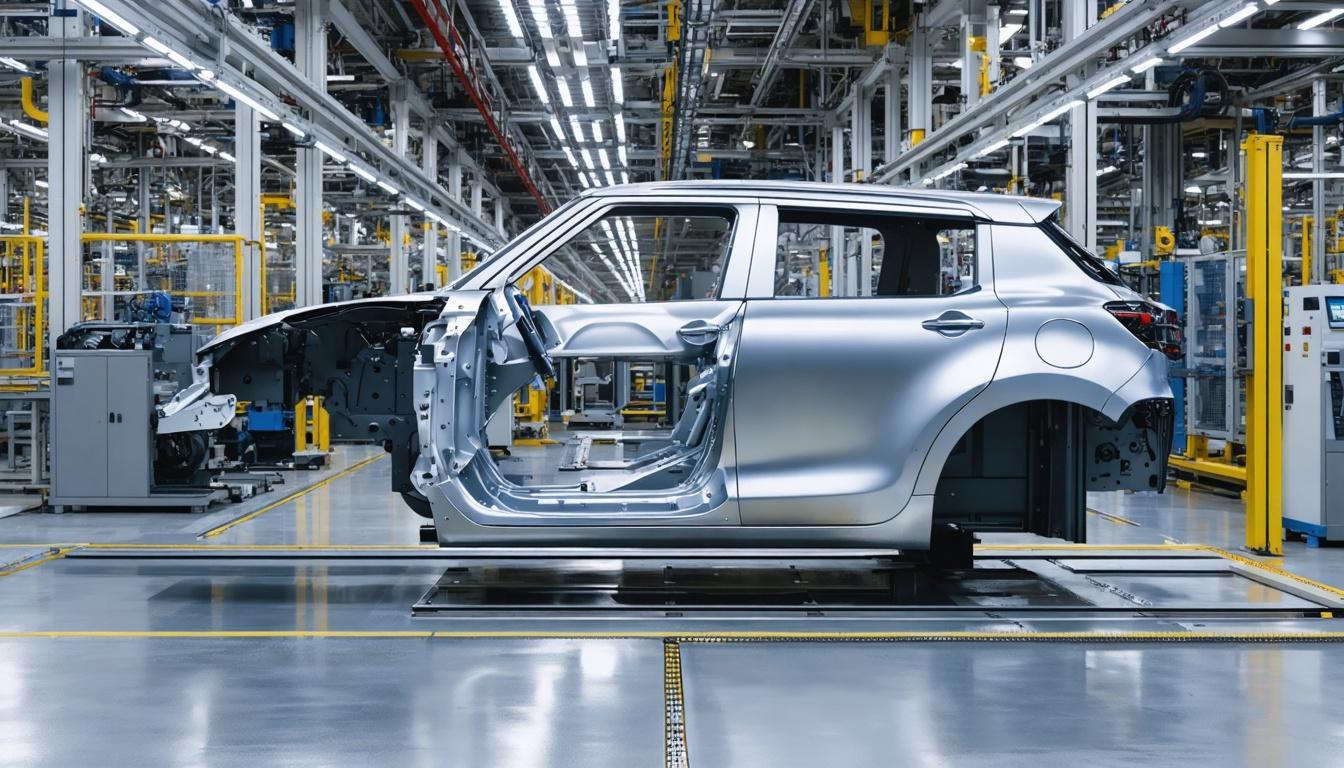
*this image is generated using AI for illustrative purposes only.
jay bharat maruti reported a standalone net profit of ₹137.86 crore for the financial year ended March 31, 2026, marking a 333.52% increase from ₹31.80 crore in FY25. Total income grew by 11.38% to ₹2,553.91 crore from ₹2,292.95 crore, supported by robust demand in the passenger vehicle segment and significant government incentives amounting to ₹159.70 crore. The company’s EBITDA expanded sharply to ₹285.53 crore from ₹167.49 crore, reflecting improved operational leverage despite higher finance costs of ₹43.66 crore.
The Board of Directors recommended a final dividend of ₹0.70 per equity share (face value ₹2), representing a 35% payout, subject to shareholder approval at the 39th Annual General Meeting (AGM) scheduled for August 26, 2026. The record date for dividend entitlement is fixed at August 19, 2026. Additionally, shareholders will vote on the re-appointment of Executive Director and CFO Anand Swaroop, who retires by rotation, and the appointment of Krishan Kumar Jalan as an Independent Director for a five-year term commencing August 1, 2026.
Financial Performance
| Metric | Standalone FY26 (₹ Cr) | Standalone FY25 (₹ Cr) | Change |
|---|---|---|---|
| Total Income | 2,553.91 | 2,292.95 | 11.38% |
| EBITDA | 285.53 | 167.49 | 70.47% |
| Profit Before Tax | 147.17 | 47.50 | 209.83% |
| Profit After Tax | 137.86 | 31.80 | 333.52% |
On a consolidated basis, profit after tax rose 324.40% to ₹139.67 crore from ₹32.91 crore. The surge in profitability was largely attributable to volume growth and the accrual of GST incentives under the Gujarat Industrial Policy 2015, which contributed ₹159.70 crore to other income compared to ₹25.48 crore in the prior year. Finance costs increased by 21.75% to ₹43.66 crore due to ongoing capacity expansion projects.
Related Party Transactions & Capital Raises
Shareholders are being asked to approve material related party transactions (RPTs) with Maruti Suzuki India Limited (MSIL) and Neel Metal Products Limited (NMPL). The aggregate value of transactions with MSIL is capped at ₹3,200 crore, while those with NMPL are limited to ₹1,750 crore for the period until the next AGM. These approvals are mandated under Regulation 23 of the SEBI LODR as the transactions exceed the materiality threshold of 10% of annual consolidated turnover.
Furthermore, the AGM will consider a special resolution to raise funds up to ₹750 crore through the issuance of equity shares, debentures, or other securities under Sections 23, 42, 62, and 71 of the Companies Act, 2013. This replaces the lapsed authorization from the previous AGM. Shareholders will also approve borrowing limits up to ₹2,000 crore and the creation of charges on assets to secure these borrowings.
What the Numbers Show
The disproportionate rise in net profit relative to revenue growth highlights the impact of non-operational income on bottom-line results. While EBITDA grew robustly by over 70%, indicating strong operational performance, the inclusion of ₹159.70 crore in government incentives significantly amplified the profit after tax figure. Excluding these incentives, the operational profit growth would have been more modest, suggesting that investors should monitor the sustainability of such fiscal benefits alongside core automotive component sales.
Historical Stock Returns for Jay Bharat Maruti
| 1 Day | 5 Days | 1 Month | 6 Months | 1 Year | 5 Years |
|---|---|---|---|---|---|
| -1.03% | -3.15% | +8.74% | +42.10% | +26.26% | +53.59% |

How sustainable is Jay Bharat Maruti's profit growth trajectory once the one-time GST incentives under the Gujarat Industrial Policy 2015 expire or diminish?
What specific capacity expansion projects are driving the 21.75% increase in finance costs, and when are these expected to yield returns on investment?
How might the proposed ₹750 crore capital raise impact existing shareholder equity and future earnings per share (EPS) dilution?
 15
15






 Access 50+ Readymade Screeners
  Use 200+ Custom Filters
  Get Full Market Insights





