

Jay Bharat Maruti records zero lost-time injuries, boosts renewable energy share in FY26


Jay Bharat Maruti Limited achieved zero lost-time injuries in FY26 while enhancing its sustainability profile. Renewable energy use rose to 6.8%, and water intensity fell to 0.49 KL per ₹ lakh turnover. The company also strengthened supply chain compliance, with 89% of suppliers evaluated against its code of conduct.


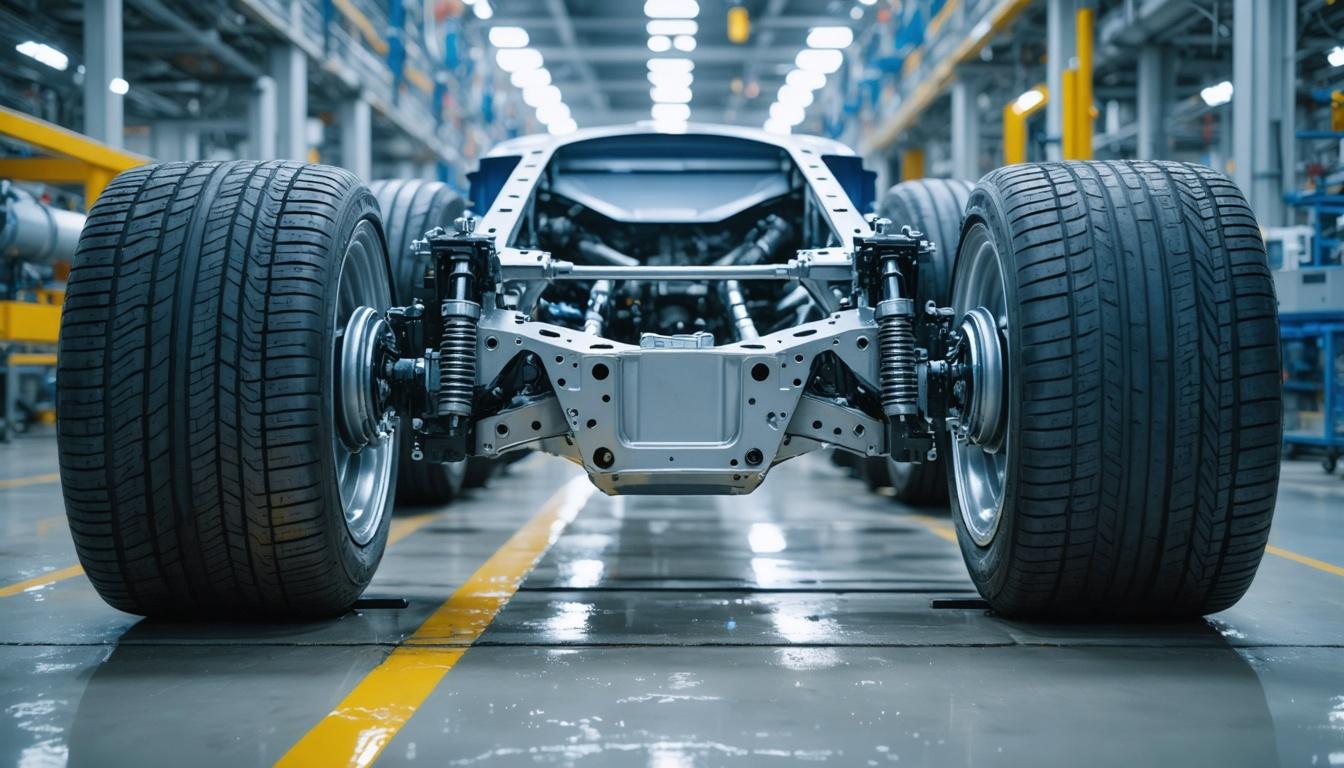
*this image is generated using AI for illustrative purposes only.
Jay Bharat Maruti Limited reported zero lost-time injuries for both employees and workers during FY26, marking a significant safety milestone in its Business Responsibility and Sustainability Report (BRSR). The Gurugram-based auto component manufacturer also highlighted improvements in environmental metrics, with renewable energy (RE) contribution rising from 1.9% to 6.8% year-on-year, while water intensity dropped from 0.87 to 0.49 kilolitres per ₹ lakh of turnover.
The disclosures, filed for the financial year ending March 31, 2026, reveal that Jay Bharat Maruti’s total energy consumption stood at 2,53,390 GJ, including 17,399 GJ from renewable electricity. This shift contributed to a reduction in Scope 1 and Scope 2 greenhouse gas (GHG) emission intensity from 0.17 to 0.16 tonnes of CO2 equivalent per ₹ lakh of turnover. Energy intensity also improved, declining from 1.01 to 0.99 GJ per ₹ lakh of turnover.
Safety and Employee Well-being
The company attributes its safety record to an ISO 45001-compliant management system, Behaviour-Based Safety (BBS) training, and real-time digital monitoring. All facilities underwent assessments for health, safety, and working conditions, with every worker receiving orientation at dedicated Dojo centres.
Jay Bharat Maruti employs 1,071 permanent and non-permanent employees and 3,954 workers as of the end of FY26. Women constitute 12.5% of the Board of Directors and 50% of Key Managerial Personnel. The company provided group personal accident insurance to 100% of its workforce and launched the “Sankalp Siddhi” initiative to promote healthy lifestyles through yoga and wellness programs.
Environmental Performance
| Metric | FY26 Value | Previous Year Value |
|---|---|---|
| Total Energy Consumption | 2,53,390 GJ | Not Disclosed |
| Renewable Energy Contribution | 6.8% | 1.9% |
| Energy Intensity | 0.99 GJ/₹ lakh turnover | 1.01 GJ/₹ lakh turnover |
| Water Intensity | 0.49 KL/₹ lakh turnover | 0.87 KL/₹ lakh turnover |
| GHG Emission Intensity (Scope 1 & 2) | 0.16 TCO2e/₹ lakh turnover | 0.17 TCO2e/₹ lakh turnover |
| Waste Intensity | 0.20 Tonnes/₹ lakh turnover | 0.20 Tonnes/₹ lakh turnover |
The company aligned its GHG reduction roadmap with national Net Zero targets, developing a long-term mitigation plan for Scope 1 and Scope 2 emissions. While Scope 3 emissions are currently under assessment, Jay Bharat Maruti has implemented LEAP projects across plants, saving 3,84,180 kWh of power and reducing CO2e by 272.7 tonnes. Waste management practices adhere to the Reduce, Reuse, and Recycle principle, with hazardous waste disposed of via authorized recyclers.
Supply Chain and Governance
Jay Bharat Maruti evaluated 89% of its suppliers based on business value against its Supplier Code, focusing on labour rights, environmental stewardship, and human rights. Approximately 88.46% of suppliers comply with ESI and PF deductions, and 92.08% are ISO 14001:2015 certified. The company’s Board oversees ESG implementation through the Risk Management and Sustainability Committee and the CSR Committee.
What the Numbers Show
The divergence between rising renewable energy contribution and stable waste intensity suggests that while Jay Bharat Maruti is successfully decarbonizing its energy mix, waste generation remains proportional to production volumes. With energy intensity improving despite increased production leading to economies of scale, the company is demonstrating operational efficiency gains that support both cost management and sustainability goals.
Historical Stock Returns for Jay Bharat Maruti
| 1 Day | 5 Days | 1 Month | 6 Months | 1 Year | 5 Years |
|---|---|---|---|---|---|
| -1.03% | -3.15% | +8.74% | +42.10% | +26.26% | +53.59% |

How might Jay Bharat Maruti's zero lost-time injury record and ISO 45001 compliance influence its attractiveness to global OEMs prioritizing ESG criteria in supplier selection?
What specific strategies will the company employ to address the currently unassessed Scope 3 emissions, and how might this impact its long-term carbon neutrality roadmap?
Could the significant year-on-year increase in renewable energy contribution from 1.9% to 6.8% lead to tangible cost savings or improved margins in FY27 despite potential infrastructure investments?
 15
15








 Access Market Heat-map & Insights
  Create, Save & Share your Screener
  Use 200+ Screening Filters





