

Jabil 15-year return turns $1000 into $20,925


Jabil stock has delivered a 22.58% annualized return over 15 years, turning a $1000 investment into $20,925.74. The company outperformed the market by 9.32% annually and currently holds a market cap of $36.47 billion.


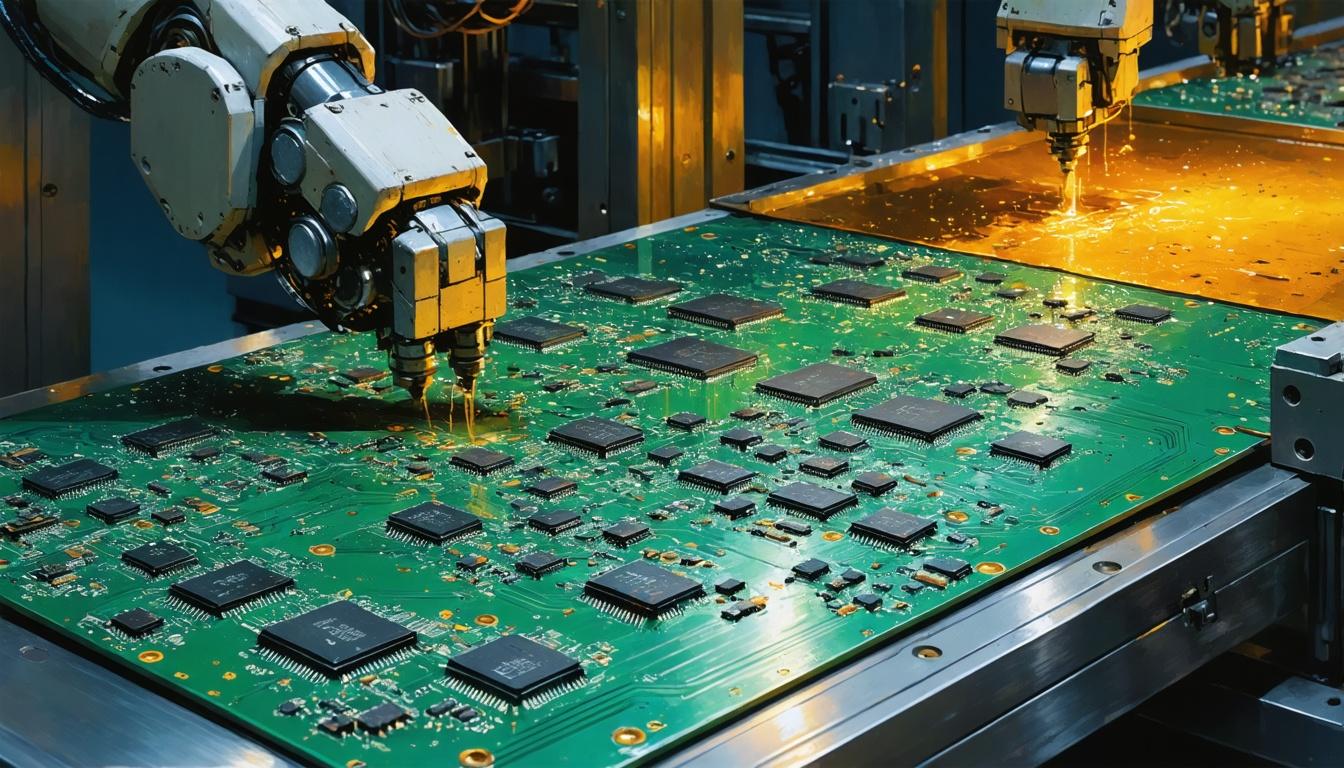
*this image is generated using AI for illustrative purposes only.
A hypothetical $1000 investment in Jabil (NYSE: JBL) made 15 years ago would be valued at $20,925.74 today, demonstrating the significant impact of long-term compounded growth for shareholders. The electronics manufacturing services provider has generated an average annual return of 22.58% over this decade-and-a-half span, significantly outpacing broader market benchmarks by 9.32% on an annualized basis.
This performance trajectory highlights how consistent equity appreciation can transform modest initial capital into substantial wealth over extended holding periods. With a current market capitalization of $36.47 billion, Jabil represents a large-cap entity that has maintained its growth momentum despite operating in a competitive global manufacturing landscape.
Investment Performance Breakdown
The calculation of the current value assumes a share price of $348.00 at the time of writing. This valuation reflects both capital appreciation and the cumulative effect of reinvested returns over the 15-year period.
| Metric | Value |
|---|---|
| Initial Investment | $1000 |
| Current Value | $20,925.74 |
| Annualized Return | 22.58% |
| Market Outperformance | 9.32% |
Market Context
Jabil’s ability to deliver returns nearly double the market average underscores the premium investors have placed on its operational execution and sector positioning. The 9.32% annualized outperformance indicates that the company’s stock price growth has consistently exceeded general market trends, providing alpha to long-term holders.
What the Numbers Show
The disparity between the initial $1000 principal and the final $20,925.74 value illustrates the exponential nature of compound interest in equity markets. While the headline annualized return of 22.58% is strong, the true material impact is visible in the total multiple achieved—approximately 21x the original investment. This suggests that sustained high-growth periods, rather than sporadic spikes, drove the majority of the value creation, rewarding patience and long-term commitment from investors who held through various market cycles.

Can Jabil sustain its historical 22.58% annualized return rate given the current saturation in the electronics manufacturing services sector?
How might shifting global supply chain dynamics and nearshoring trends impact Jabil's future margin expansion and growth trajectory?
What specific operational strategies is Jabil employing to maintain its competitive edge against larger rivals like Foxconn and Flex Ltd?
 17
17




 Create Custom Screeners
  Access 200+ Pre-built Filters
  Use 50+ Readymade Screener





