

Intel raises $15 billion via stock sale as TSMC spends $64 billion on AI expansion


Intel announced a $15 billion equity offering to fund AI-related capital expenditures, while rival TSMC increased its 2026 capital budget to $64 billion. The differing funding strategies highlight Intel's reliance on external capital versus TSMC's profit-driven expansion.



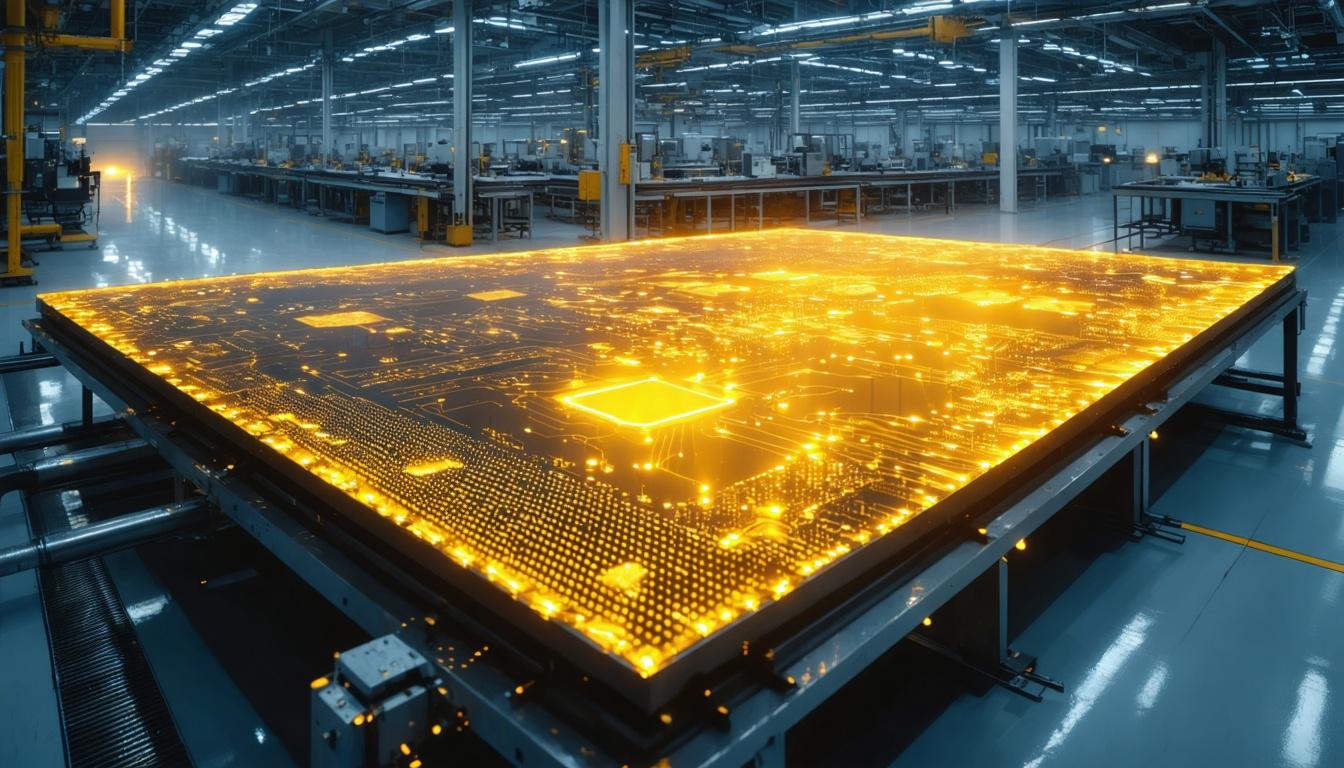
*this image is generated using AI for illustrative purposes only.
Intel Corporation announced a $15 billion underwritten public offering of common stock on Monday to fund capital expenditures and working capital, marking a strategic divergence from rival Taiwan Semiconductor Manufacturing Company Ltd. (TSMC), which raised its 2026 capital budget to $60 billion-$64 billion. While TSMC funds its expansion through robust operating cash flows generated by surging AI demand, Intel is seeking external equity financing to rebuild its manufacturing competitiveness. The market reacted negatively to Intel’s announcement, with shares falling more than 3% in premarket trading as investors weighed the dilutive impact of the issuance against the company’s long-term foundry ambitions.
The filing with the Securities and Exchange Commission (SEC) on Form S-3 details that proceeds will be used for general corporate purposes, primarily capital expenditures. J.P. Morgan Securities LLC, Goldman Sachs & Co. LLC, Morgan Stanley & Co. LLC, and Citigroup Global Markets Inc. serve as joint book-running managers. The offering includes a 30-day over-allotment option allowing underwriters to purchase up to $2.25 billion in additional shares, potentially raising the total proceeds to $17.25 billion before discounts.
Competing Capital Strategies
The contrast between the two semiconductor giants highlights different financial positions within the AI infrastructure boom. TSMC reported $40.2 billion in second-quarter revenue, a 36% year-over-year increase, with net income jumping 77%. Advanced technologies accounted for 77% of TSMC’s wafer revenue. Following this performance, TSMC reported July revenue of $14.5 billion, up 45% year-over-year.
In contrast, Intel has raised its 2026 capital spending forecast to more than $20 billion but lacks the immediate profitability to self-fund this growth at scale. The company is investing heavily in advanced packaging and external wafer manufacturing to compete directly with TSMC. Management emphasized that the equity offering aligns with a disciplined capital deployment strategy, aiming to strengthen the balance sheet without increasing leverage.
| Metric | Intel Corp | Taiwan Semiconductor Manufacturing |
|---|---|---|
| Primary Funding Source | $15 billion equity offering | Operating cash flow |
| 2026 Capital Budget | >$20 billion | $60 billion-$64 billion |
| Recent Revenue Growth | N/A | 36% YoY (Q2) |
| Strategic Focus | Foundry rebuild, AI compute | Capacity expansion, AI demand |
What the Numbers Show
The disparity in funding mechanisms underscores the competitive gap in the advanced chip manufacturing sector. TSMC’s ability to fund a $64 billion capital budget from internal profits demonstrates the maturity and profitability of its AI-driven business model. Conversely, Intel’s reliance on a $15 billion equity raise signals a transitional phase where capital intensity outpaces current operational cash generation. The inclusion of a $2.25 billion over-allotment option suggests management anticipates sufficient investor appetite to maximize the raise, which would provide significant liquidity for its aggressive expansion plans. However, the immediate share price decline reflects investor caution regarding dilution, highlighting the trade-off between securing necessary capital for AI infrastructure and maintaining shareholder value.

How might the dilutive impact of Intel's $15 billion equity offering affect its ability to attract top engineering talent compared to TSMC's cash-rich position?
Will Intel's reliance on external financing hinder its agility in responding to rapid shifts in AI chip demand compared to TSMC's self-funded model?
Could the significant gap in capital budgets ($20B vs. $64B) widen the technological lead TSMC holds in advanced node manufacturing over the next three years?
 15
15









 Access 50+ Readymade Screeners
  Use 200+ Custom Filters
  Get Full Market Insights





