

India Pesticides Ltd files FY26 BRSR report, discloses key ESG risks


India Pesticides Limited's FY26 BRSR report details a ₹1,057 crore turnover and highlights mitigation strategies for chemical and climate risks. The filing notes pending income tax assessments but zero monetary penalties. CSR efforts focused on community development and child protection, reaching over 560,000 beneficiaries.


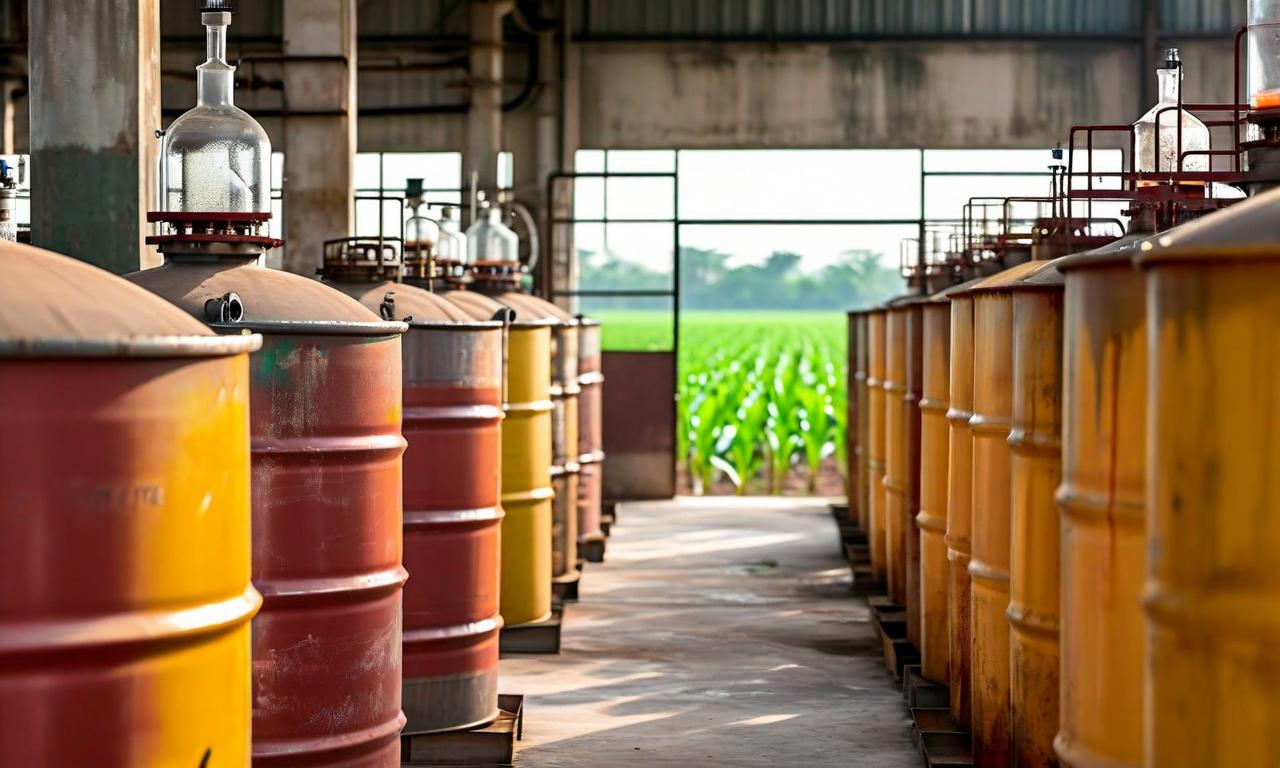
*this image is generated using AI for illustrative purposes only.
India Pesticides Limited has filed its Business Responsibility and Sustainability Report (BRSR) for the financial year 2025-26, disclosing key environmental, social, and governance (ESG) metrics alongside financial highlights. The filing, submitted under Regulation 34(2)(f) of the SEBI (Listing Obligations and Disclosure Requirements) Regulations, 2015, reveals a turnover of ₹1,057 crore and a net worth of ₹1,018 crore. The report identifies chemical management, waste management, water usage, and climate change as primary risks with negative financial implications, while positioning product innovation and sustainable supply chains as opportunities.
The company reported a workforce of 1,126 permanent employees and 1,443 non-permanent workers as of March 2026. Turnover rates for permanent employees stood at 22.49% in FY25, down from 20.91% in FY24. India Pesticides Limited confirmed that its policies cover all nine principles of the National Guidelines on Responsible Business Conduct (NGRBC), approved by the Board and extended to value chain partners. The entity holds ISO certifications for quality (9001:2015), environmental management (14001:2015), occupational health and safety (45001:2018), and customer satisfaction (10002:2018).
Material Risks and Mitigation
The BRSR outlines specific strategies to mitigate identified risks:
| Material Issue | Risk/Opportunity | Mitigation Strategy |
|---|---|---|
| Chemical Management | Risk | SOP adherence, HIRA & HAZOP studies, engineering controls |
| Waste Management | Risk | Zero Liquid Discharge (ZLD), government-certified waste disposal |
| Water Management | Risk | RO, MEE, and Spray Dryer systems for water reuse |
| Climate Change | Risk | Renewable energy adoption, biomass for steam, carbon footprint calculation |
| Energy Management | Risk/Opportunity | Energy efficiency improvements, renewable integration |
India Pesticides Limited implemented Zero Liquid Discharge (ZLD) at both manufacturing sites using Reverse Osmosis (RO), Multiple Effect Evaporator (MEE), and Spray Dryers. The company also initiated Product Carbon Footprint calculations to identify emission scopes and adopted renewable resources to reduce Scope 2 emissions.
Governance and Compliance
The report states that no monetary penalties or fines were paid during the year. However, it disclosed non-monetary regulatory interactions, including search operations by the Income Tax Department in December 2024. The company filed a return of undisclosed income for the block period April 1, 2018, to February 10, 2025, with assessment proceedings pending before the Assessing Officer. Additionally, a notice under Section 142(1) of the Income-tax Act, 1961, was received and responded to.
Employee Well-being and CSR
Spending on employee and worker well-being measures accounted for 0.18% of total revenue in FY25, compared to 0.20% in FY24. All permanent employees and non-permanent workers were covered by accident insurance. The Board of Directors comprised nine members, including one woman (11.11% representation). Key CSR initiatives included the 'Samagra Sudhar' project benefiting 11,353 individuals and the 'Chuppi Tod Halla Bol' project combating child sexual abuse, which reached 553,306 beneficiaries. The company also spent ₹1,17,83,147 on CSR activities in the Sandila Block, Hardoi District, designated as an aspiration block.
Historical Stock Returns for India Pesticides
| 1 Day | 5 Days | 1 Month | 6 Months | 1 Year | 5 Years |
|---|---|---|---|---|---|
| -0.24% | -2.34% | -4.29% | -17.22% | -35.47% | 0.0% |

How might the pending income tax assessment proceedings and undisclosed income filings impact India Pesticides Limited's future cash flow and investor confidence?
What specific financial incentives or regulatory pressures could accelerate the company's transition to renewable energy to mitigate Scope 2 emissions?
Given the rise in permanent employee turnover from 20.91% to 22.49%, what retention strategies is management planning to implement to stabilize workforce costs?
 18
18













 Access 50+ Readymade Screeners
  Use 200+ Custom Filters
  Get Full Market Insights





