

I G Petrochemicals reports lower emissions in FY26


I G Petrochemicals Limited filed its Business Responsibility and Sustainability Report for FY26, reporting a 9.79% reduction in specific power consumption and a 5.17% decrease in Scope 1 and Scope 2 emission intensity against the FY 2023-24 baseline. The Company also achieved a 10.15% reduction in waste intensity and significant cuts in NOx, SOx, and particulate matter emissions.


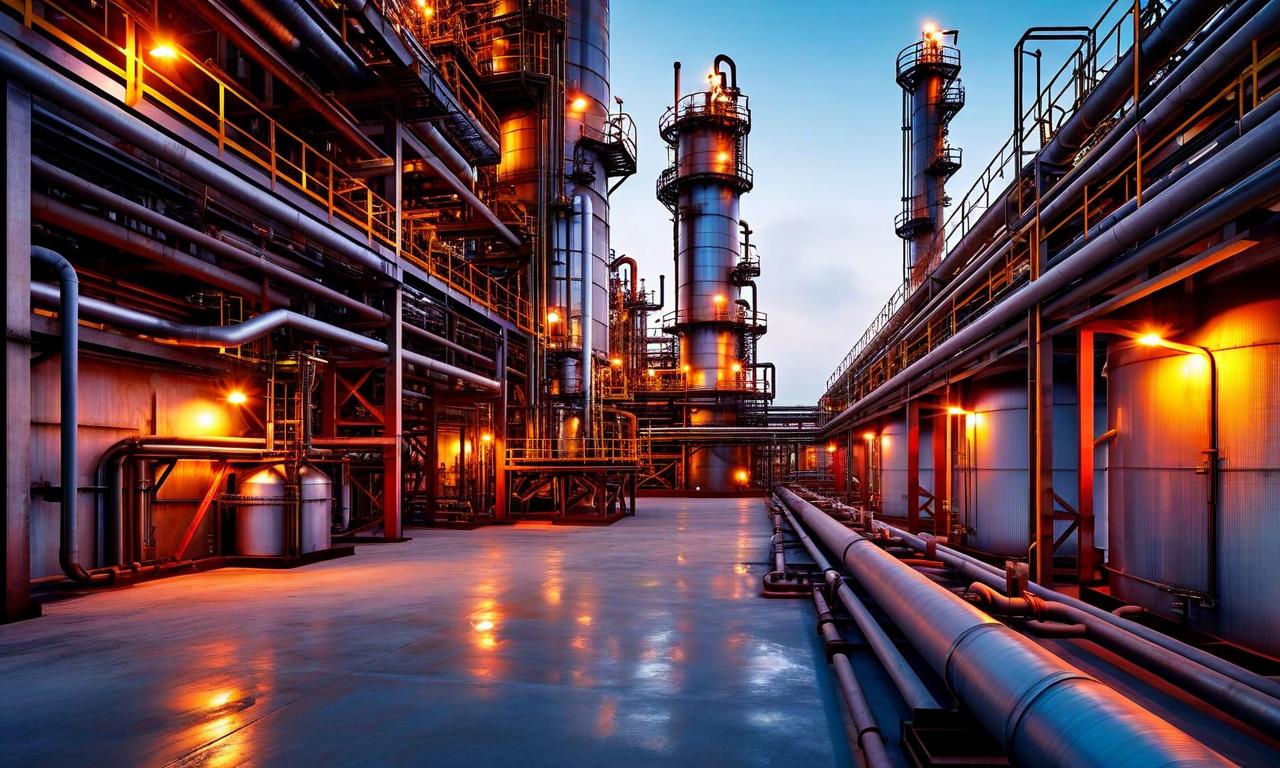
*this image is generated using AI for illustrative purposes only.
I G Petrochemicals Limited filed its Business Responsibility and Sustainability Report for the financial year 2025-26, disclosing progress against its environmental sustainability targets. The Company reported a 9.79% reduction in specific power consumption compared to the FY 2023-24 baseline, exceeding its targeted reduction of 5%. Additionally, total Scope 1 and Scope 2 emission intensity decreased by 5.17%, while overall waste intensity reduced by 10.15% during the same period.
The filing, submitted pursuant to Regulation 34(2)(f) of the SEBI (Listing Obligations and Disclosure Requirements) Regulations, 2015, details the Company's performance across nine principles of the National Guidelines on Responsible Business Conduct. I G Petrochemicals, which specializes in the manufacturing of inorganic and organic chemicals, reported that exports contributed 10.33% of its total turnover for the year.
Environmental Performance
The Company recorded substantial reductions in key air pollutants during FY 2025-26. Emissions of NOx fell by 17.05% to 56,047 kg, while SOx emissions dropped by 25.04% to 24,111 kg. Particulate matter emissions also decreased by 21.68% to 68,600 kg. However, water intensity increased by 7.72% compared to the FY 2023-24 baseline, prompting the Company to undertake focused measures to improve water efficiency and conservation.
IGPL maintained ISO 14001:2015 certification for environmental management and implemented a Zero Liquid Discharge (ZLD) mechanism. The Company reported that more than 80% of wastewater was recycled through treatment and reuse systems. Total energy consumption for the year stood at 346,892 GJ, with energy intensity per rupee of turnover recorded at 1.77 GJ/lakh.
Social and Governance Metrics
The Company’s workforce comprised 360 employees and 468 workers as of the end of the financial year. Women accounted for 3.61% of the total employee strength and 0.43% of the total workforce. The Board of Directors included one female member out of seven, representing 14.28% of the Board.
Safety performance showed improvement, with the Lost Time Injury Frequency Rate (LTIFR) for employees decreasing to 1.39 from 1.49 in the previous year. The Company reported zero fatalities and zero cases of permanent disabilities during the year. Regarding human rights, I G Petrochemicals confirmed that 100% of permanent employees were paid wages more than the minimum wage, and no complaints were reported under the Sexual Harassment of Women at Workplace (Prevention, Prohibition and Redressal) Act, 2013.
Key Sustainability Metrics FY 2025-26
| Metric | FY 2025-26 | FY 2024-25 |
|---|---|---|
| Specific Power Consumption Reduction | 9.79% | - |
| Total Scope 1 & 2 Emission Intensity Reduction | 5.17% | - |
| Waste Intensity Reduction | 10.15% | - |
| NOx Emissions (kg) | 56,047 | 65,603 |
| SOx Emissions (kg) | 24,111 | 42,405 |
| Particulate Matter Emissions (kg) | 68,600 | 95,317 |
| Water Intensity (KL/lakh) | 5.67 | 5.20 |
| Energy Intensity (GJ/lakh) | 1.77 | 1.79 |
Historical Stock Returns for IG Petrochemicals
| 1 Day | 5 Days | 1 Month | 6 Months | 1 Year | 5 Years |
|---|---|---|---|---|---|
| -0.55% | +0.33% | +3.32% | +61.52% | +37.28% | -35.60% |

What specific technologies or capital expenditures will I G Petrochemicals invest in to reverse the 7.72% increase in water intensity?
Will the company set more aggressive emission reduction targets for FY 2026-27 given that it significantly exceeded its goals for NOx and SOx this year?
How does the company plan to improve gender diversity, particularly as women currently represent only 3.61% of total employees?
 15
15





 Create Custom Screeners
  Access 200+ Pre-built Filters
  Use 50+ Readymade Screener





