

Horizon Reclaim revenue surges to ₹49.42 Cr in FY26


Horizon Reclaim (India) Limited achieved a revenue CAGR of ~55.90%, growing from ₹20.33 Cr in FY24 to ₹49.42 Cr in FY26. The company marked a strategic milestone by commencing commercial Pyrolysis Oil sales on July 20, 2026, from its new Rajkot facility. With a market capitalization of ₹280.05 Cr, the firm is expanding its installed capacity to 86,800 MTPA, supported by increased capital work in progress and reduced borrowings.

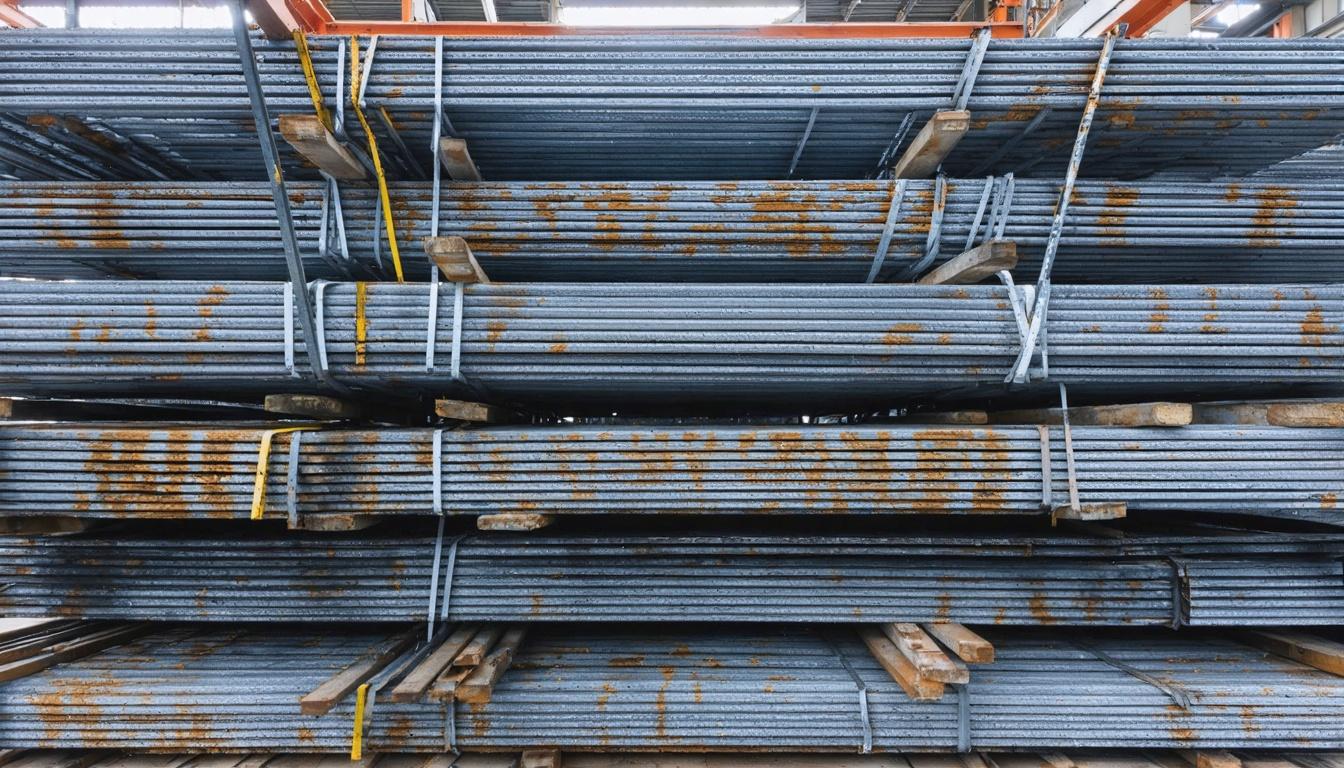

*this image is generated using AI for illustrative purposes only.
Horizon Reclaim (India) Limited reported a compound annual growth rate (CAGR) of ~55.90% for its revenue, which rose from ₹20.33 Crore in FY24 to ₹49.42 Crore in FY26. This significant growth trajectory coincides with the company's strategic expansion into the waste-to-energy segment, marked by the commencement of commercial Pyrolysis Oil sales on July 20, 2026, from its newly commissioned Rajkot facility.
The business update was submitted pursuant to Regulation 30 of the SEBI (Listing Obligations and Disclosure Requirements) Regulations, 2015. Malika Bajaj, Whole-Time Director, signed off on the disclosure. The filing highlights the successful listing on the BSE SME Platform in June 2026 and the subsequent operational readiness of Unit II in Rajkot, which produces Pyrolysis Oil, Carbon Char, and Steel Scrap from end-of-life tyres.
Financial Performance and Market Data
Horizon Reclaim’s financial results demonstrate consistent top-line growth over the last three fiscal years. As of July 31, 2026, the company’s market capitalization stood at ₹280.05 Crore, with a share price of ₹139.40. The stock traded within a 52-week range of ₹131.60 to ₹164.60.
| Fiscal Year | Revenue (₹ Cr) |
|---|---|
| FY24 | 20.33 |
| FY25 | 36.22 |
| FY26 | 49.42 |
The revenue CAGR of ~55.90% underscores the market’s acceptance of the company’s core reclaimed rubber products and its emerging waste-to-energy offerings. The face value of the shares remains at ₹10.00, with 1,95,15,400 shares outstanding as per the latest data.
Capacity Expansion and Capital Allocation
The installed capacity is set to increase significantly upon the full commissioning of expansion projects. Currently, the company operates with an installed capacity of 14,100 MTPA at Unit I. The Rajkot facility (Unit II) adds 36,000 MTPA dedicated to Pyrolysis Oil, while Unit III in Bhagwanpur contributes 9,600 MTPA. Upon full completion, total installed capacity will rise to 86,800 MTPA.
Capital expenditure has intensified to support this growth. Capital Work in Progress (CWIP) increased from ₹355.59 Lakhs in FY25 to ₹3,619.54 Lakhs in FY26. This investment reflects the development of the Rajkot and Bhagwanpur manufacturing facilities. Additionally, the company has proposed utilizing ₹9.43 Crores from its Initial Public Offering (IPO) proceeds towards investment in plant and machinery.
Product Diversification
The pyrolysis process at the Rajkot unit enables the recovery of multiple valuable resources from waste tyres, supporting the circular economy. The primary output is Pyrolysis Oil, used as an alternative industrial fuel for boilers and kilns. Secondary products include Carbon Char, utilized in rubber products and construction materials as a substitute for fossil-based carbon inputs, and Steel Scrap, which is recycled and supplied to steel manufacturers.
This diversification creates multiple revenue streams and reduces dependency on single-product lines. The company aims to leverage these integrated manufacturing capabilities to expand into international markets, supported by a stronger balance sheet achieved through the repayment of borrowings aggregating to ₹26.70 Crores.
What the Numbers Show
The sharp rise in CWIP from ₹355.59 Lakhs to ₹3,619.54 Lakhs indicates a heavy capital deployment phase, primarily driven by the Rajkot and Bhagwanpur projects. While the first commercial sale occurred in July 2026, post the Q1 reporting period, the operational readiness suggests imminent revenue contribution from the higher-margin Pyrolysis Oil segment. The reduction in borrowings by ₹26.70 Crores prior to or during this period demonstrates improved liquidity management, positioning the company to fund further expansion without excessive debt reliance.
Historical Stock Returns for Horizon Reclaim
| 1 Day | 5 Days | 1 Month | 6 Months | 1 Year | 5 Years |
|---|---|---|---|---|---|
| -0.10% | -1.58% | +24.52% | +41.75% | +41.75% | +41.75% |

How will the ramp-up of Pyrolysis Oil production at the Rajkot facility impact Horizon Reclaim's gross margins compared to its traditional reclaimed rubber business?
What specific regulatory hurdles or environmental compliance costs might affect the scalability of the waste-to-energy segment in India over the next two years?
Given the significant increase in Capital Work in Progress, what is the expected timeline for achieving full capacity utilization at Units II and III to justify the capital expenditure?
 19
19








 Access Market Heat-map & Insights
  Create, Save & Share your Screener
  Use 200+ Screening Filters





