

Hoffmann Green H1FY26 Results: Revenue up 87%, volumes double


- Revenue rose 87% YoY to €6.6 million on a 104% surge in cement volumes
- EBITDA stabilized at -€5.9 million despite doubling of production output
- Raw material savings reached €2.9 million due to economies of scale
- Cash position fell to €5.1 million as inventory built up to €6.3 million
- Company targets operational break-even by end of 2027

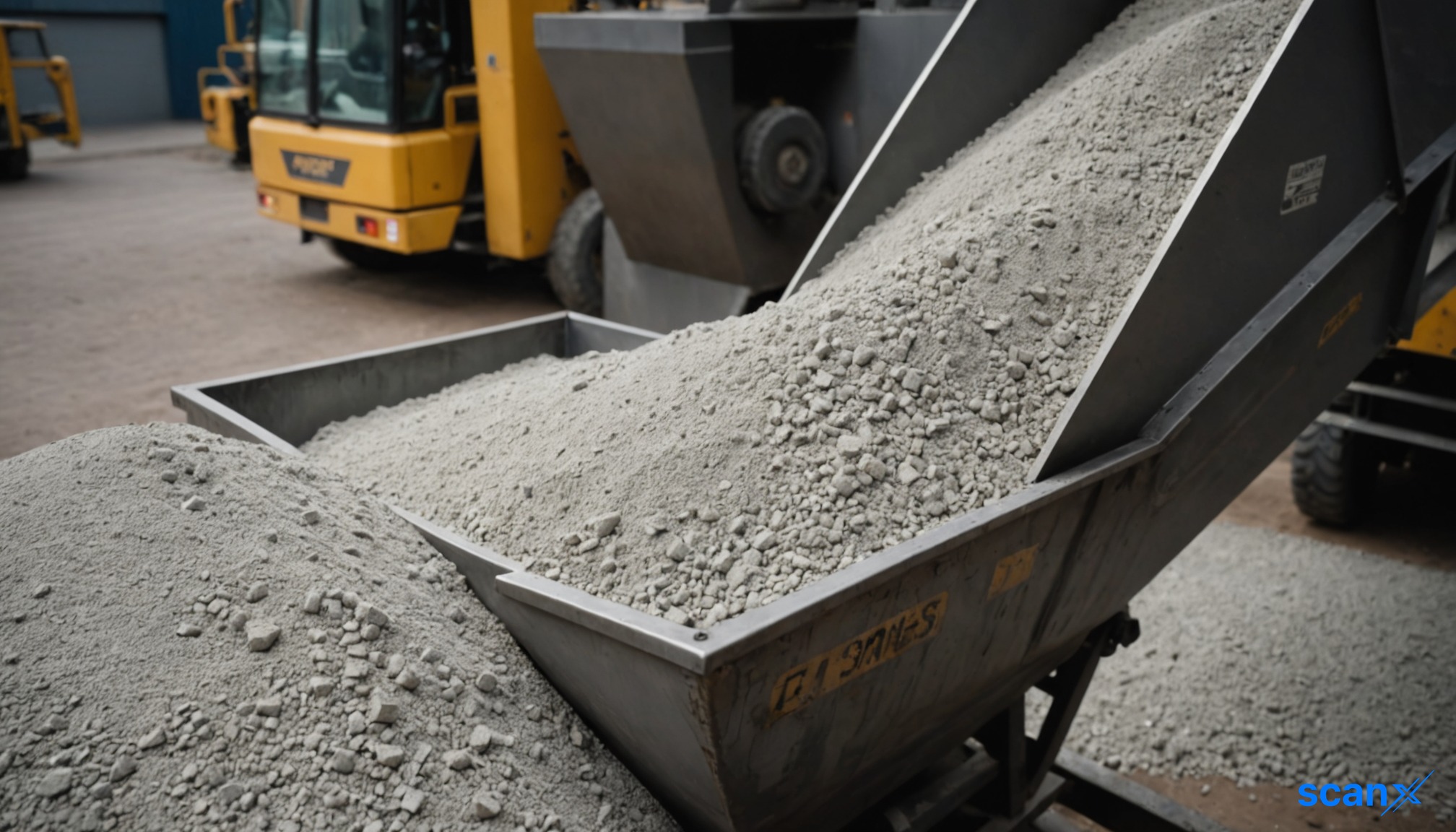

*this image is generated using AI for illustrative purposes only.
Hoffmann Green Cement Technologies (SGMX: ALHGRp) reported an 87% year-on-year revenue increase to €6.6 million for the first half of FY26. The growth was driven by a 104% rise in sales volumes of its 0% clinker cement, reaching nearly 40,000 tonnes delivered.
The company, which designs and markets innovative cold-produced cements, saw its operating loss narrow relative to top-line growth. While revenue surged, EBITDA remained virtually stable at -€5.9 million, compared to -€5.7 million in the prior period. This divergence signals early improvements in operating leverage as the firm scales production.
Financial Performance
Revenue for H1FY26 stood at €6.59 million, up from €3.53 million in H1FY25. This topline expansion was supported by significant cost optimization measures. Completed purchases rose only 13.1% to €3.83 million, despite the doubling of production volumes. The company attributed this efficiency to supplier negotiations and economies of scale, generating €2.9 million in raw material savings during the period.
| Metric | H1FY26 (€ thousand) | H1FY25 (€ thousand) | Change |
|---|---|---|---|
| Revenue | 6,589 | 3,530 | +86.7% |
| EBITDA | -5,955 | -5,653 | Stable |
| Net Loss | -9,178 | -8,400 | Widened |
Personnel expenses increased by 23.8% to €1.86 million, reflecting staffing needs for expanded operations. External expenses rose to €7.30 million from €5.01 million, driven by international certification fees and higher transport costs linked to increased delivery volumes. The net loss widened to €9.18 million from €8.40 million, primarily due to higher financial charges of €0.94 million related to convertible bond interest.
What the Numbers Show
The data reveals a distinct decoupling between volume growth and cost inflation. While sales volumes more than doubled (+104%), direct material costs grew by only 13.1%. This suggests that the company’s industrial model is successfully absorbing fixed costs and leveraging scale to suppress variable input costs per unit. However, external expenses grew at a faster rate than personnel costs, indicating that certification and logistics remain the primary drag on margin improvement as the company expands internationally.
Balance Sheet and Liquidity
As of June 30, 2026, cash and cash equivalents stood at €5.06 million, down from €6.34 million at year-end 2025. The company noted that resources were utilized to build inventory stocks, which rose from €2.9 million to €6.3 million, to support expected volume growth in the second half of the year. Shareholders’ equity remained robust at €51.2 million.
International Expansion and Outlook
Hoffmann Green accelerated its global footprint with an exclusive preliminary agreement with Bruil in the Netherlands for a licensing contract. It also completed its first US project with Marquis Inc., a renewable ethanol producer. In France, the company signed nine new partnerships in H1, including with structural works specialist Clément & Fils.
The company confirmed its 2026 production target of 100,000 tonnes of 0% clinker cement. It forecasts €7.5 million in raw material savings for the full year 2026 and aims for operational break-even by the end of 2027. Strategic ambitions for 2030 include producing approximately 1,000,000 tons annually and achieving €150 million in revenue.

How will the company manage the cash burn rate given the widening net loss and increased inventory buildup, particularly with only €5.06 million in cash on hand?
What specific regulatory hurdles or certification timelines in the US market could impact the scalability of the new partnership with Marquis Inc.?
Can Hoffmann Green maintain its 13% cost growth trajectory relative to 104% volume growth as it scales toward the 100,000-tonne annual target?
 18
18



 Access Market Heat-map & Insights
  Create, Save & Share your Screener
  Use 200+ Screening Filters





