

Hoffmann Green doubles sales volume in H1 2026


Hoffmann Green Cement Technologies reported a 104% increase in sales volume to nearly 40,000 metric tons in H1 2026 compared to H1 2025. The company secured €5 million through a private placement to fund production ramp-up and the H3 project. It confirmed a full-year target of 100,000 metric tons and signed nine new strategic partnerships.

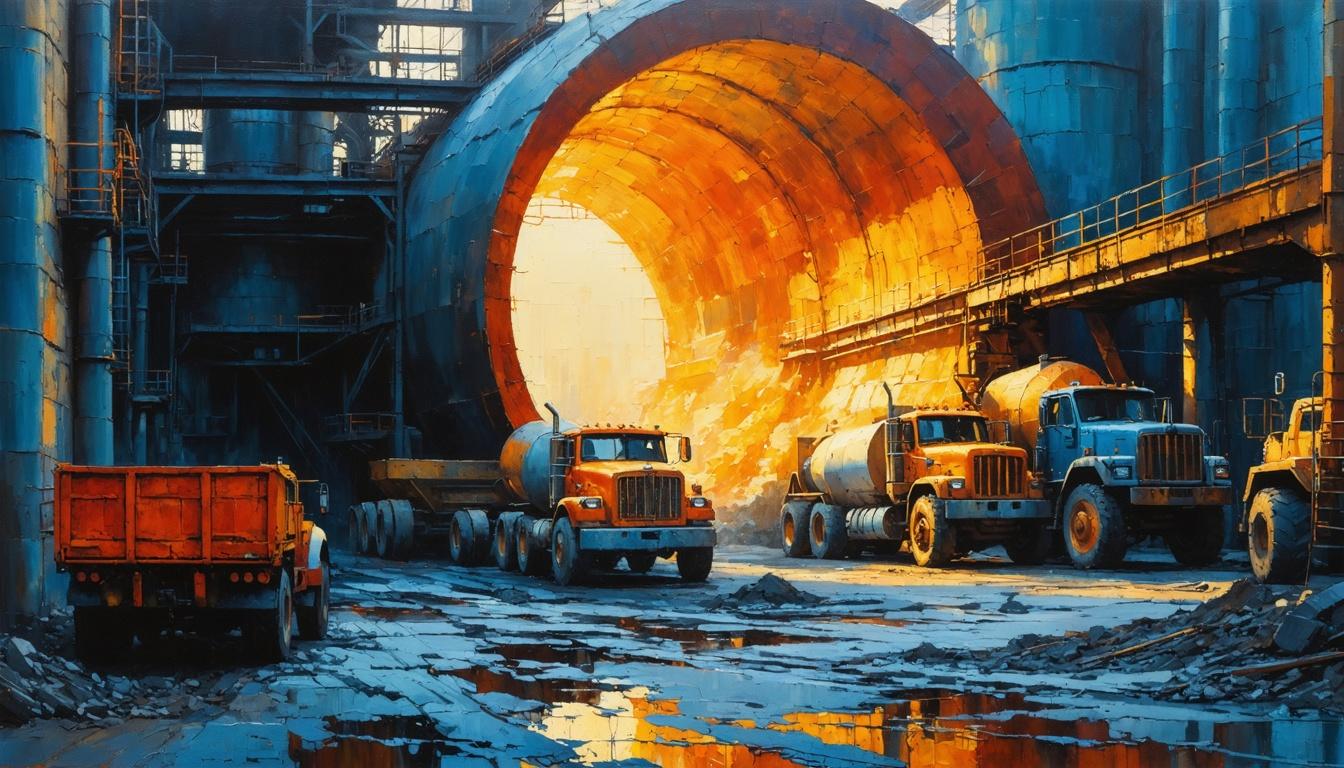

*this image is generated using AI for illustrative purposes only.
Hoffmann Green Cement Technologies sold and delivered nearly 40,000 metric tons of cement in the first half of 2026, doubling the volume achieved in the first half of 2025. This performance represents a 104% increase compared to H1 2025 and nearly five times the volume recorded in H1 2024. The company attributes this growth to the adoption of its 0% clinker cements by major players in the construction industry.
The company reached the milestone of its 1,000th production order for the H2 vertical factory. This milestone reflects the strengthening of its partner network, the ramp-up of production capacity, and the success of its market diversification strategy. Hoffmann Green confirmed its target of selling and delivering 100,000 metric tons over the full 2026 fiscal year, noting that the second half is typically stronger than the first.
Strategic Partnerships and Funding
Hoffmann Green signed nine commercial and industrial partnerships in the first half of 2026. These agreements include collaborations with GSE, Telamon, Briand, Biobuild, Ouest Réalisation, Le Coq Construction, Bruil, Groupe Angevin, and NOREE Construction. These partnerships span various sectors including general contracting, real estate development, and ready-mix concrete supply.
In June 2026, the company completed a private placement of approximately €5 million. The net proceeds are allocated to support the ramp-up in production volumes and cost optimization, accounting for approximately 60% of the funds. Approximately 25% of the net proceeds will fund the initial stages of the new H3 production site project, scheduled to come online in 2029 in the Rhône-Alpes region. The remaining 15% will continue research and development efforts.
Operational Outlook
The scaling of production is translating into significant savings on material costs, estimated at between €5 million and €8 million in 2026. The company operates two production units in Bournezeau: the 4.0 factory and the H2 vertical plant. A third factory is planned for the Rhône-Alpes region with construction scheduled for 2027-2028, aiming to bring total production capacity to around 1,000,000 tons per year.
| Metric | H1 2026 | H1 2025 | Change |
|---|---|---|---|
| Volume (metric tons) | Nearly 40,000 | N/A | +104% |
| Cost Savings (2026 est.) | €5 million - €8 million | N/A | N/A |
| Private Placement (June 2026) | €5 million | N/A | N/A |

What risks could Hoffmann Green face in meeting its target of selling 100,000 metric tons in the second half of 2026?
How will the planned H3 production site impact the company's competitive position in the Rhône-Alpes region?
What are the potential long-term effects of the €5 million private placement on Hoffmann Green's R&D capabilities?
 20
20




 Access 50+ Readymade Screeners
  Use 200+ Custom Filters
  Get Full Market Insights





