

Halliburton Q3FY26 EPS beats, CEO warns of massive oil supply shock


- Adjusted EPS of $0.60 beat consensus estimate by 3.45%
- Revenue of $5.703 billion exceeded analyst estimates by 2.36%
- CEO warns of 3 billion barrels lost in global oil supply shock
- International revenue grew 3% sequentially to $3.5 billion
- Targets 15% operating margins in 2027 without NA recovery


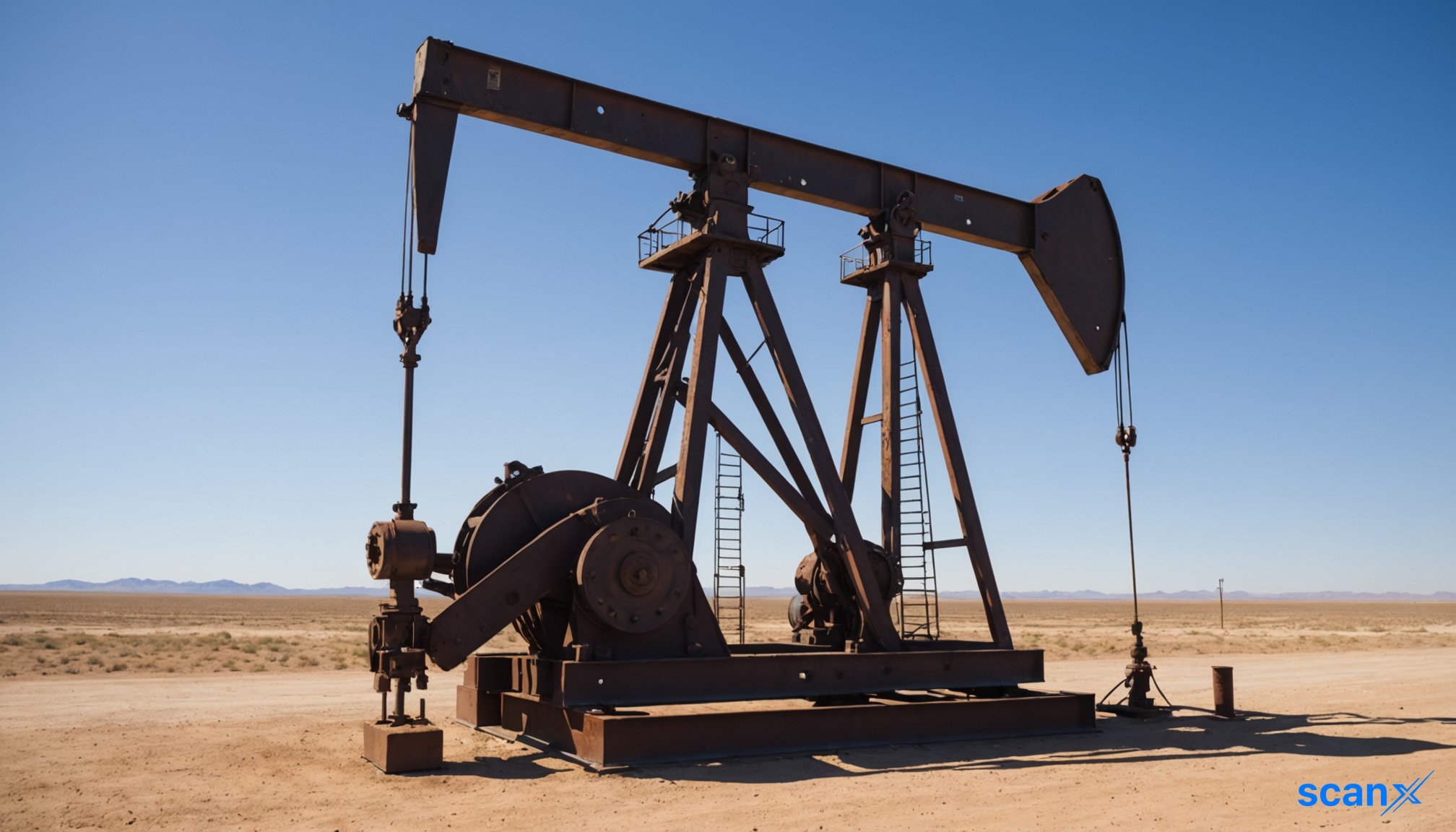
*this image is generated using AI for illustrative purposes only.
Halliburton Company reported third quarter fiscal year 2026 revenue of $5.703 billion, beating the analyst consensus estimate of $5.572 billion by 2.36%. This represents a 1.84% increase over sales of $5.600 billion in the same period last year.
Adjusted earnings per share came in at $0.60, surpassing the consensus estimate of $0.58 by 3.45%. Net income attributable to the company was $417 million, or $0.50 per diluted share, while adjusted net income reached $501 million. The company’s operating margin stood at 10.9%, with an adjusted operating margin of 12.8%.
Segment Performance
Revenue performance varied across the two primary segments. The Completion and Production segment saw a sequential decline, while the Drilling and Evaluation segment posted growth.
| Segment | Q3FY26 Revenue | Q2FY26 Revenue | Change | Q3FY26 Op Income | Q2FY26 Op Income |
|---|---|---|---|---|---|
| Completion and Production | $3.1 billion | $3.2 billion | -4% | $457 million | $474 million |
| Drilling and Evaluation | $2.6 billion | $2.5 billion | +4% | $391 million | $338 million |
Completion and Production revenue decreased by $113 million sequentially, primarily due to lower stimulation activity in the Western Hemisphere, partially offset by increased activity in the Middle East. Operating income in this segment fell by $17 million to $457 million.
Conversely, Drilling and Evaluation revenue increased by $102 million to $2.6 billion, driven by improved activity in the Middle East and Latin America. Operating income for this segment rose by $53 million to $391 million.
Geographic Trends
International revenue grew by 3% sequentially to $3.5 billion, while North America revenue declined by 5% to $2.2 billion. The decline in North America was attributed to lower pressure pumping services in U.S. Land. However, Halliburton’s Sperry Drilling Services, drill bits, and drilling fluids businesses grew 23% year over year, outpacing rig count growth.
Middle East/Asia revenue rose by 8% to $1.4 billion, supported by higher activity in Saudi Arabia and Kuwait. Latin America and Europe/Africa revenues remained flat sequentially. Management noted that recent disruptions in the Middle East have not had a material impact on operations, with rig counts holding steady.
CEO Warns of Global Supply Shock
Chairman, President and CEO Jeff Miller warned of one of the largest energy supply disruptions in history, citing estimates that nearly 3 billion barrels of oil supply have been lost since the Middle East conflict began. He added that about 1 billion barrels have been drawn from global inventories, while elevated commodity prices and geopolitical uncertainty persist.
Miller expects efforts to restore production, replenish inventories and strengthen energy security to drive multiyear demand for oilfield services. He expressed confidence that the industry is entering an upcycle, supporting Halliburton’s growth outlook for 2027. The company secured an integrated services contract from Eni for the Cronos ultra-deepwater development in Cyprus and a contract from bp for the Bumerangue appraisal campaign offshore Brazil.
Outlook and Guidance
Halliburton expects about 12% YoY growth in international revenue outside the Middle East in 2026. This projection complements CEO Jeff Miller’s earlier guidance of mid-single digit revenue growth and operating margins of about 15% for 2027, assuming a flat North America market.
Miller stated that the growth strategy does not depend on a rebound in North American hydraulic fracturing, describing any recovery there as additional upside rather than a requirement. Chief Financial Officer Eric Carre said the company expects cost reductions of $100 million to $150 million next year.
Management specifically expects Completion and Production margins to improve 75 to 125 basis points sequentially in the upcoming quarter. For Q4FY26, the company projects Completion and Production revenue to increase 3% to 5% sequentially, while Drilling and Evaluation division revenue is expected to be 3% to 5% lower sequentially. Total Q4 revenue is expected to remain approximately flat at around $5.7 billion, with earnings per share projected at $0.62 to $0.64.
Strategic Growth Engines
Halliburton’s growth engines, including production services, drilling unconventionals, and artificial lift, are projected to add $3 billion in annual revenue by 2028. Key developments include:
- Artificial Lift: Expansion into 21 countries, with new installations in UAE, offshore Congo, and Brazil. A multi-year ESP rental contract was won in Argentina.
- Unconventionals: Operations in over six countries, including Argentina, Algeria, UAE, Kuwait, Australia, and Saudi Arabia. A new Zeus fleet is scheduled to start up in Argentina in Q4.
- Offshore Wins: Significant awards including the Boomerang appraisal program for BP in Brazil and the Cronos ultra-deepwater gas development for Eni in Cyprus.
- Venezuela: The company has reopened facilities and generated revenue in multiple product lines, with expectations of solid growth as major operators return.
What the Numbers Show
A divergence exists between the top-line stagnation and bottom-line improvement. While total revenue remained flat at $5.7 billion sequentially, adjusted EBITDA increased to $1.0 billion from $948 million in the prior quarter. This indicates that profitability gains were driven by margin expansion rather than volume growth. Specifically, the Drilling and Evaluation segment’s operating margin expanded significantly, offsetting margin pressure in Completion and Production.
The beat against analyst estimates for both EPS and revenue suggests that operational efficiencies and international demand strength compensated for the softness in the North American market. The 3.45% beat on adjusted EPS highlights effective cost management despite the sequential revenue dip in key segments.
The new guidance for a 75-125 bps improvement in Completion and Production margins signals management’s confidence in reversing the recent trend of declining profitability in that division, potentially stabilizing overall operating margins as North American activity remains subdued. Additionally, the completion of the SAP S/4 migration is expected to drive structural cost reductions of $120 to $150 million annually, contributing to the targeted 200 basis point margin expansion in 2027.
Other Financial Highlights
- The company recognized a pre-tax charge of $107 million related to impairments and other charges, primarily severance costs from global workforce reductions.
- Dividends of $0.17 per share were paid.
- Capital expenditures for SAP S4 migration amounted to $42 million. Full-year 2026 capex is expected to be about $1.1 billion.
- Cash flow from operations totaled $368 million, and free cash flow was $156 million. Free cash flow is expected to be sequentially higher in Q4.
- Halliburton repurchased approximately $250 million of its common stock during the period.
- The company ended the quarter with $1.843 billion in cash and $7.072 billion in long-term debt.

How might the potential resolution of Middle East conflicts impact Halliburton's projected multiyear demand cycle and inventory replenishment strategies?
What specific operational efficiencies from the SAP S/4 migration are expected to drive the targeted $100-150 million in annual cost reductions starting next year?
To what extent will the $3 billion revenue growth from strategic engines like artificial lift and unconventionals offset the prolonged stagnation in North American hydraulic fracturing activity?












 Access 50+ Readymade Screeners
 Use 200+ Custom Filters
 Get Full Market Insights





