

Filatex India Q4 FY26 Earnings Call: EBITDA Surges 34.5%, INR 690 Crore CAPEX Underway


Filatex India reported Q4 FY26 revenue of INR 985.5 crores and PAT of INR 40.25 crores, while full-year FY26 EBITDA surged 34.5% to INR 346.50 crores and PAT rose 36.7% to INR 183.9 crores. The company is executing an INR 690 crore CAPEX program including a textile-to-textile recycling Greenfield project targeting INR 218–230 crores annual EBITDA impact, with recycling commissioning expected by end of September 2026.


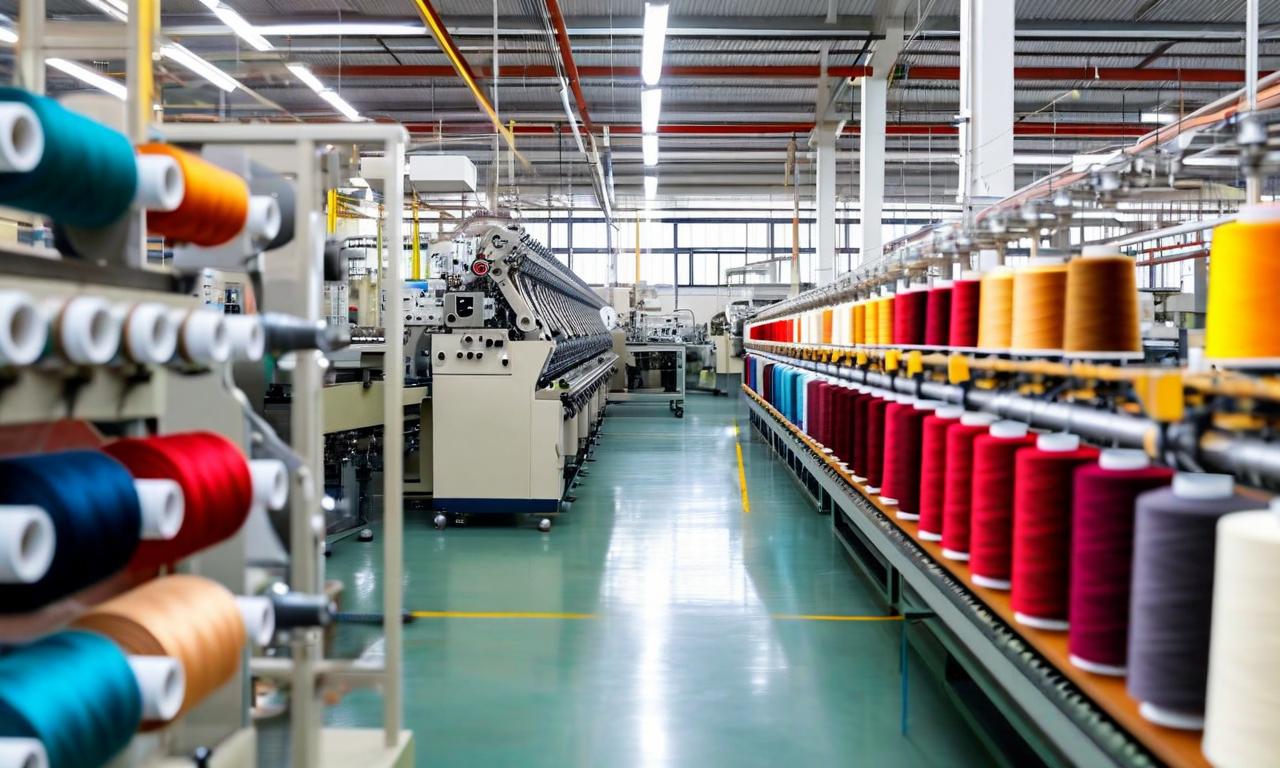
*this image is generated using AI for illustrative purposes only.
Filatex India Limited has released its earnings for the quarter and fiscal year ended March 31, 2026, alongside the transcript of its Q4 & FY26 Earnings Conference Call held on May 4, 2026. The company reported that while the external environment remained volatile due to geopolitical conflicts and crude oil price movements, it delivered strong full-year profitability growth. Management emphasized that year-on-year comparisons provide a more accurate reflection of performance than sequential quarters due to the transient shocks experienced in the recent period.
Financial Performance Overview
For Q4 FY26, the company recorded a revenue of INR 985.5 crores, compared to INR 1,080 crores in Q4 FY25. Sales volume for the quarter stood at 89,841 MT, marginally lower than the 96,561 MT reported in the same period last year. Despite the lower revenue, operational efficiency improved as EBITDA grew by 13.86% to INR 86.26 crores from INR 75.73 crores. However, PAT for the quarter decreased by 2.75% to INR 40.25 crores from INR 41.39 crores in the prior year. Management also noted a foreign exchange fluctuation charge of around INR 13 crores in Q4, which weighed on the bottom line despite improvements at the EBITDA level.
The full-year FY26 results highlighted a focus on margin expansion over volume growth. Total revenue for the fiscal year stood at INR 4,160 crores, a slight decline from INR 4,252 crores in FY25. Production and sales volumes were largely stable, with production at 3,89,027 MT and sales at 3,88,800 MT. Profitability saw a significant upswing, with EBITDA increasing by 34.5% to INR 346.50 crores and PAT rising by 36.7% to INR 183.9 crores.
Key Financial Figures
| Metric: | Q4 FY26 | Q4 FY25 | FY26 | FY25 |
|---|---|---|---|---|
| Revenue (INR crores): | 985.5 | 1,080 | 4,160 | 4,252 |
| EBITDA (INR crores): | 86.26 | 75.73 | 346.50 | 257.70 |
| PAT (INR crores): | 40.25 | 41.39 | 183.9 | 134.6 |
| Sales Volume (MT): | 89,841 | 96,561 | 3,88,800 | 3,90,200 |
Industry Landscape and Near-Term Pressures
Addressing the industry landscape during the earnings call, Chairman and Managing Director Madhu Sudhan Bhageria noted that the polyester value chain faced significant pressure from a 40-45% surge in petrochemical input costs driven by crude-linked volatility. Weak demand and cautious market sentiment limited manufacturers' ability to pass on cost increases, resulting in margin compression across yarn and fabric segments. The revocation of the Quality Control Order (QCO) in November led to a surge in imports from China, adding further margin pressure in January and February. Management noted that as of the call date, the overall industry was running at around 60% capacity utilization, while Filatex was operating at approximately 75%. For Q1 FY27, management indicated production could be lower by 20% to 25% relative to 1 lakh tons per quarter, given the dynamic market conditions. Management also noted that as of the call date, EBITDA margins were approximately neutral, similar to the situation observed in March, attributing this to the difficulty in passing on high raw material costs amid subdued demand. However, they believe the current slowdown is cyclical rather than structural, and noted some early signs of demand recovery.
On the competitive front, management clarified that Indian polyester yarn prices are currently lower than Chinese landed prices by INR 10 to INR 15 per kg, as domestic producers compete among themselves amid weak demand. Management confirmed that hedging exposure of around INR 500 crores to INR 550 crores at any given time, and that even full hedging would cost approximately INR 17.5 crores to INR 20 crores annually at a hedging cost of 3.5% to 4% per dollar. Going forward, the company stated it would adopt a more cautious hedging approach to mitigate foreign exchange risks.
Strategic Developments and CAPEX
Filatex is executing a comprehensive capital expenditure program worth INR 690 crores, of which approximately INR 335 crores will be funded through debt and the remainder through internal accruals. The CAPEX includes Brownfield expansion for PFY, FDY, and DTY capacities — with an expected top-line contribution of around INR 500 crores — as well as a Greenfield textile-to-textile recycling project expected to generate INR 350 crores to INR 400 crores in revenue. The recycling project, operated through subsidiary Ecosis, will convert end-of-life textiles into virgin-grade polymer and yarn (chip), with an initial daily capacity of 75 tons. Management stated that the end product from the recycling facility will be chip, which can then be processed into yarn using existing or new spinning facilities.
The following table summarizes the key parameters of the CAPEX program:
| Parameter: | Details |
|---|---|
| Total CAPEX: | INR 690 crores |
| Debt Component: | ~INR 335 crores |
| Equity/Internal Accruals: | Balance |
| Brownfield Revenue Target: | ~INR 500 crores |
| Greenfield (Recycling) Revenue Target: | INR 350 crores – INR 400 crores |
| Expected Annual EBITDA Impact: | INR 218 crores – INR 230 crores |
| Recycling Plant Capacity: | 75 tons per day |
| Recycling Project Commissioning: | End of September 2026 |
| Initial Capacity Utilization (Recycling): | ~65% – 70% |
Collectively, these initiatives are expected to deliver an annual EBITDA impact in the range of INR 218 crores to INR 230 crores. Management indicated that in the second half of FY27, barring the recycling project, other commissioned capacities should generate around INR 80 crores to INR 90 crores of EBITDA, implying at least INR 70 crores of additional EBITDA from new operations in FY27. The company is also implementing automation at its Dahej plant, advancing its renewable energy transition, and developing a steam distribution initiative to monetize surplus steam from its captive power plant by supplying it to nearby industries — with the steam project now expected to be online by mid-July due to a turbine delivery delay. Management guided for FY27 consolidated revenue of approximately INR 4,500 crores, rising to around INR 4,800 crores in FY28 from Filatex, with an additional INR 400 crores from subsidiary Ecosis at full capacity.
Recycling Business and Market Positioning
The textile-to-textile recycling project is central to Filatex's long-term strategy. Management confirmed that the company is currently conducting seed marketing through its pilot plant, providing samples to prospective clients — including brands like Decathlon — for product testing and approval. The approval process for large brands typically takes four to six months. Management noted that two client approvals have already been secured and efforts are underway to build a diversified customer basket ahead of commercial commissioning. The recycling project targets the European Union market, where the India-EU Free Trade Agreement, expected to come into force by end of the calendar year, is anticipated to move Indian exporters to zero customs duty from the current 10% to 12%, providing a significant competitive advantage. Management also highlighted that the recycled yarn is expected to command a significant price premium, with virgin yarn currently priced at around INR 120 per kg while recycled textile-to-textile yarn could be priced between INR 180 and INR 225 per kg. Management confirmed that beyond the current Brownfield investments, future capacity additions will be focused primarily on the recycling business rather than virgin polyester.
Domestic PTA Market and Guidance
The company highlighted upcoming structural changes in the domestic PTA market. GAIL's Mangalore plant is anticipated to commence commercial production around July 2026, followed by Indian Oil's Paradip project in December 2026. Together, both projects could add about 2.4 million tons per annum of PTA capacity. Reliance is also setting up a large capacity of 3.2 million tons, likely to go on stream by end of calendar year 2027. Management noted that savings from domestic PTA availability will materialize only once supply becomes surplus and domestic producers begin competing on price below import parity. On ROE, management noted that FY26 ROE improved to 12.96% from 10.62% in the prior year, and the company is targeting an addition of 100 to 200 basis points in the current year, subject to market conditions normalizing. For the subsidiary business, EBITDA margins are expected to be around 30%, while the base polyester business is expected to sustain double-digit EBITDA margins at steady state, with management noting that PTA localization alone could add at least 1% to 1.5% to margins once supply normalizes.
Historical Stock Returns for Filatex India
| 1 Day | 5 Days | 1 Month | 6 Months | 1 Year | 5 Years |
|---|---|---|---|---|---|
| -2.08% | -1.36% | +40.89% | +157.09% | +101.73% | +98.83% |

How quickly can Filatex ramp up the Ecosis recycling plant to full capacity, and what risks could delay securing the necessary brand approvals from major European clients beyond the typical 4-6 month timeline?
With industry capacity utilization at ~60% and Q1 FY27 production expected to drop 20-25%, how long could the current cyclical downturn persist before demand recovery meaningfully restores EBITDA margins from near-neutral levels?
How will the anticipated entry of GAIL's and Indian Oil's combined 2.4 million tons of new PTA capacity affect competitive pricing dynamics, and when could Filatex realistically begin capturing the projected 1-1.5% margin uplift from PTA localization?
 17
17



 Access Market Heat-map & Insights
  Create, Save & Share your Screener
  Use 200+ Screening Filters





