

Adani Power files BRSR for FY26 reporting 100% ash utilisation


Adani Power Limited filed its Business Responsibility and Sustainability Report for FY26, disclosing 100% ash utilisation and zero liquid discharge at hinterland plants. The company reported an operating capacity of 18,150 MW and a workforce of 25,634. Independent assessment of the report was conducted by M/s. TUV India Pvt. Ltd.

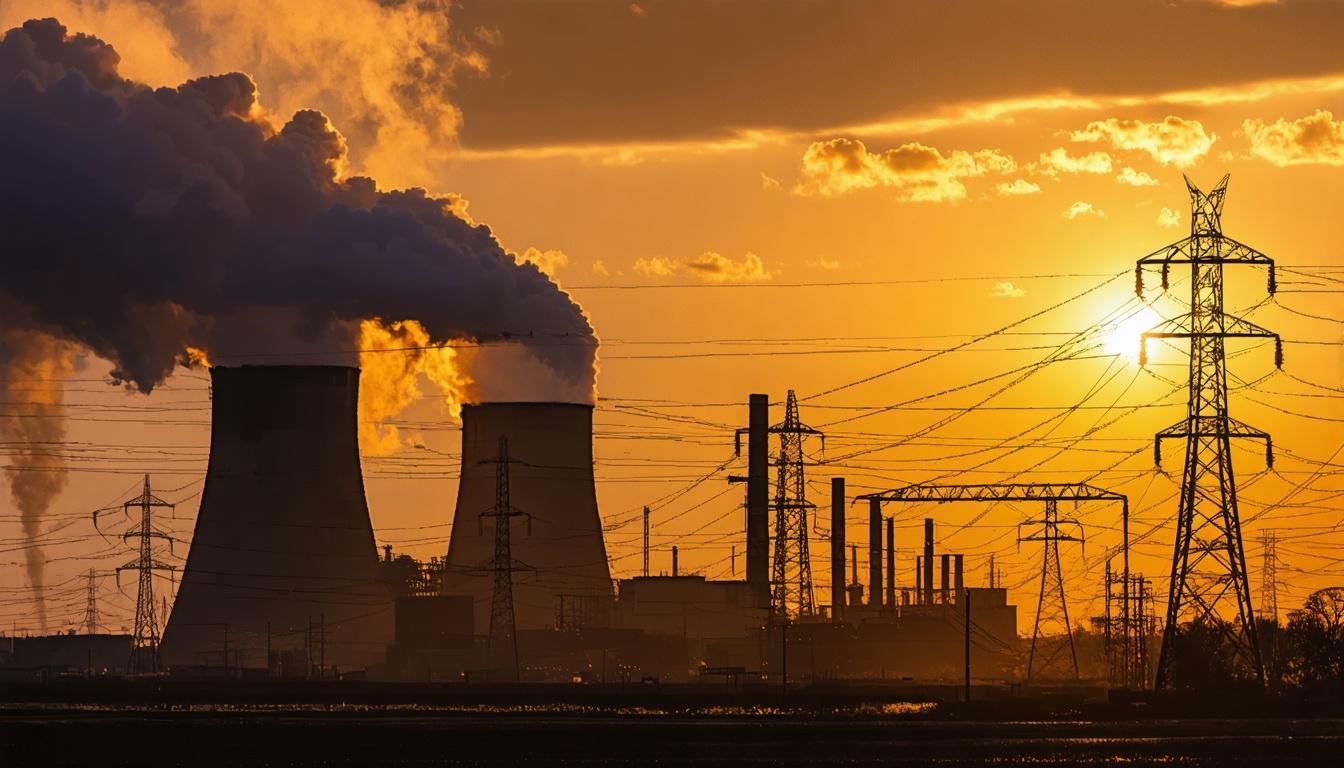

*this image is generated using AI for illustrative purposes only.
Adani Power Limited has filed its Business Responsibility and Sustainability Report (BRSR) for the financial year 2025-26 with BSE Limited and National Stock Exchange of India Limited. The filing, submitted by Company Secretary Puneet Bansal on May 29, 2026, provides a comprehensive overview of the company's environmental, social, and governance (ESG) performance on a consolidated basis.
The report highlights that the company achieved 100% utilisation of fly ash for beneficial uses, contributing to the circular economy, while all hinterland thermal power plants have attained Zero Liquid Discharge status. Adani Power exports 9.35% of its total power generation to Bangladesh, which contributes 15.59% of its total turnover, under a long-term Power Purchase Agreement with the Bangladesh Power Development Board.
ESG Performance and Materiality
Adani Power conducted a double materiality assessment in FY 2023-24, engaging with stakeholders including investors, customers, and regulators to identify material issues. The assessment followed GRI 3: Material Topics 2021 Standards and ESRS General Disclosures. Key material issues identified include air emissions, GHG emissions, water management, and occupational health and safety.
The company reported that its operating capacity stands at 18,150 MW. It has implemented management systems including ISO 9001:2015 for Quality, ISO 14001:2015 for Environment, and ISO 45001:2018 for Occupational Health and Safety. Independent assessment of the BRSR was carried out by M/s. TUV India Pvt. Ltd.
Workforce and Social Impact
The company reported a total workforce of 25,634, comprising 5,780 employees and 19,854 workers. The gender diversity among employees stands at 2.63%, while female workers constitute 2.57% of the total workforce. The turnover rate for permanent employees was 12.16% in FY 2025-26.
Adani Power invested ₹4.41 crore in training and development during the reporting period. The company reported that 100% of employees and 64% of workers were covered by health and safety training programs. Regarding safety incidents, the Lost Time Injury Frequency Rate (LTIFR) for workers was 0.07 per million person-hours worked, with one fatality reported among workers during the year.
Financial and Governance Disclosures
The report details the company's financial parameters for CSR applicability, with a turnover of ₹57,865.28 crore and a net worth of ₹66,401.92 crore. The Board of Directors has constituted a Corporate Responsibility Committee, chaired by an Independent Director, to oversee ESG strategies and policies.
Adani Power disclosed that it paid a penalty of ₹1,15,000 plus applicable GST to each of the stock exchanges regarding the delayed appointment of an Independent Director. The company stated that no appeal has been preferred against this penalty. The report also confirms that the company has an Anti-Corruption and Anti-Bribery policy in place.
Key Financial and Operational Metrics
| Metric | Value |
|---|---|
| Paid-up Capital | ₹3,856.94 Cr |
| Turnover | ₹57,865.28 Cr |
| Net Worth | ₹66,401.92 Cr |
| Total Employees | 5,780 |
| Total Workers | 19,854 |
| Female Employees | 2.63% |
| Female Workers | 2.57% |
| Export Contribution to Turnover | 15.59% |
The Integrated Annual Report and the BRSR have been uploaded to the company's website and are available at www.adanipower.com .
Historical Stock Returns for Adani Power
| 1 Day | 5 Days | 1 Month | 6 Months | 1 Year | 5 Years |
|---|---|---|---|---|---|
| +0.53% | -3.67% | -9.31% | +11.63% | +27.03% | +830.12% |

How will Adani Power's reliance on Bangladesh for 15.59% of its turnover be impacted by potential geopolitical shifts or changes in the region's energy policies?
What specific strategies does the company plan to implement to address the low female workforce participation rate of under 3% in future hiring cycles?
Will the company set specific targets to reduce GHG emissions and air pollutants following the identification of these issues as material topics in the double materiality assessment?
 20
20







 Create Custom Screeners
  Access 200+ Pre-built Filters
  Use 50+ Readymade Screener





