

Exicom Tele-Systems revenue up 61% in Q1FY27; standalone profit returns


Exicom Tele-Systems saw consolidated revenue surge 61% to ₹331 crore in Q1FY27, while standalone operations turned profitable with ₹4.9 crore net profit. The EV segment remains loss-making at a consolidated level, but Tritium bookings doubled to $20 million. A robust ₹1,400 crore order book supports future growth visibility.


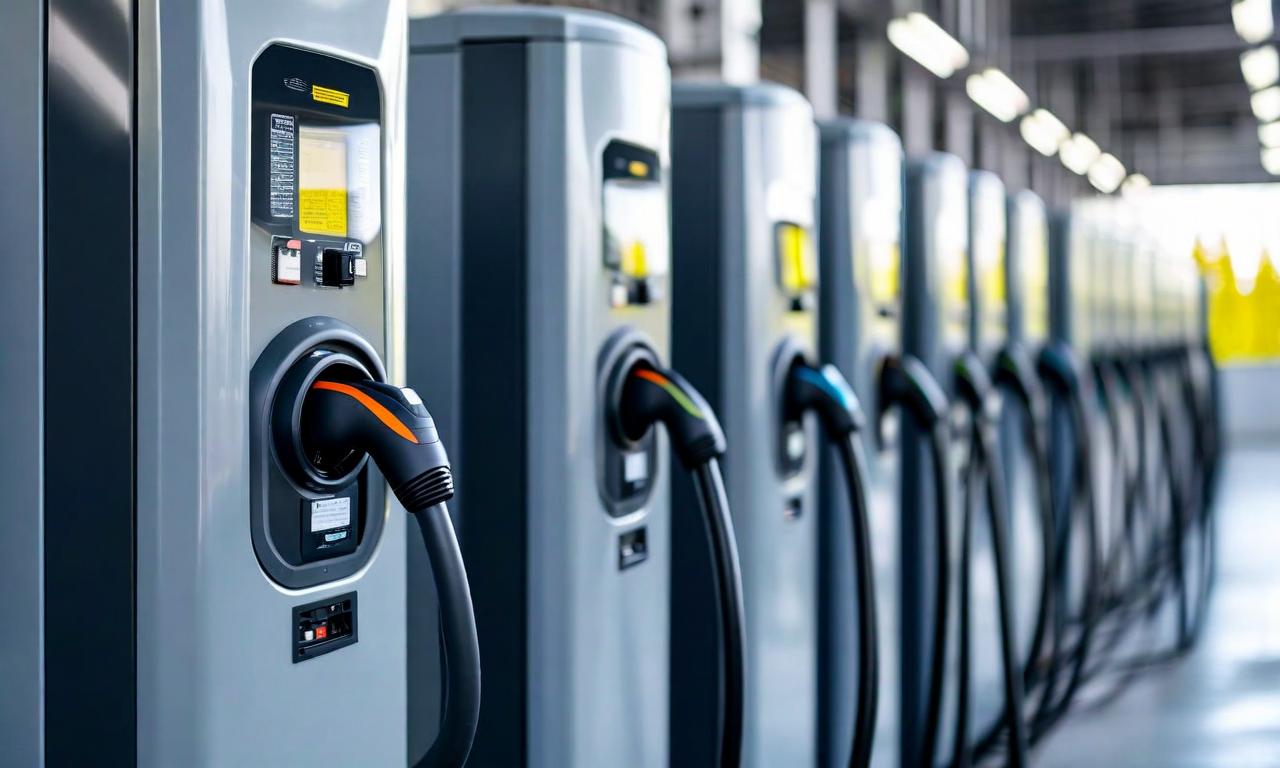
*this image is generated using AI for illustrative purposes only.
Exicom Tele-Systems reported a divergent financial performance for Q1FY27, posting a standalone net profit while recording a significant consolidated net loss. The Board of Directors approved the unaudited financial results on August 10, 2026. While the parent company returned to profitability, the consolidated group continued to incur losses primarily driven by its EV Charger segment and the US-based subsidiary Tritium.
Financial Performance
The company’s consolidated revenue from operations rose to ₹3,310.69 million in Q1FY27, up from ₹2,053.17 million in the corresponding quarter of the previous year. Despite this revenue growth, the consolidated net loss widened to ₹7,357.31 million from ₹8,313.57 million in Q1FY26. The EBITDA loss narrowed slightly to ₹7,203.53 million from ₹7,083.41 million.
In contrast, the standalone entity reported a net profit of ₹491.81 million, compared to a net loss of ₹775.20 million in Q1FY26. Standalone revenue increased to ₹2,368.29 million from ₹1,506.59 million year-on-year. Standalone EBITDA more than doubled to ₹20.9 crore (₹209 million), lifting margins to 8.8% from 5.8% in the prior year.
| Metric | Consolidated Q1FY27 | Consolidated Q1FY26 | Standalone Q1FY27 | Standalone Q1FY26 |
|---|---|---|---|---|
| Revenue (₹ Million) | 3,310.69 | 2,053.17 | 2,368.29 | 1,506.59 |
| Net Profit/(Loss) (₹ Million) | (7,357.31) | (8,313.57) | 491.81 | (775.20) |
| EBITDA (₹ Million) | (7,203.53) | (7,083.41) | 209.00 | 88.00 |
Segment Analysis
The Critical Power segment contributed ₹1,772.12 million to consolidated revenue and generated a segment result before tax and interest of ₹1,277.25 million. Conversely, the EV Charger segment, which accounted for ₹1,538.57 million in revenue, posted a substantial loss of ₹6,859.89 million before tax and interest. This divergence highlights the ongoing investment phase and operational challenges in the EV business line.
On a standalone basis, Critical Power revenue grew 80% year-on-year to ₹176 crore, while EV charger revenue grew 15% to ₹61 crore. Management noted that AC charger volumes have increased by 50% recently, but DC charger demand was pulled forward into Q4FY26 due to geopolitical risks, impacting Q1FY27 standalone EV growth.
Tritium Momentum
Tritium, the US-based DC fast-charging subsidiary, delivered its second consecutive quarter of above $10 million in revenue, reporting approximately $10.5 million in sales for Q1FY27. Bookings passed north of $20 million, doubling the previous quarterly average of $10 million. Management stated that trials for new products like TRI-FLEX and GRID-FLEX are in advanced stages, potentially unlocking large multi-million dollar orders in calendar 2027.
Capacity and Order Book
With the Hyderabad plant fully operational, Exicom has expanded its production capability. The order book stands at roughly ₹1,000 crore in Critical Power and ₹200 crore for AC/DC chargers in India, totaling over ₹1,400 crore on a consolidated basis. Management expects parallel run costs between Gurgaon and Hyderabad plants, currently adding approximately ₹8.7 crore to fixed costs, to phase out as the transition completes.
What the Numbers Show
The divergence between standalone profitability and consolidated losses underscores the heavy investment phase in Tritium. While standalone operations generated ₹491.81 million in net profit, the consolidated loss of ₹7,357.31 million reflects significant depreciation and operating expenses associated with the US subsidiary and new plant commissioning. The narrowing of the consolidated EBITDA loss from ₹7,083.41 million to ₹7,203.53 million (note: source data indicates a slight widening in absolute terms but management describes it as narrowing from previous quarters' trends or specific comparisons) alongside rising revenue suggests improving operational leverage, albeit delayed by one-time transition costs.
Corporate Governance
Khandelwal Jain & Co., the statutory auditors, issued an unmodified limited review report on both standalone and consolidated financial results. The Board also approved material related party transactions between subsidiaries, subject to shareholder approval at the ensuing Annual General Meeting, in compliance with Regulation 23 of the SEBI Listing Regulations.
Historical Stock Returns for Exicom Tele-Systems
| 1 Day | 5 Days | 1 Month | 6 Months | 1 Year | 5 Years |
|---|---|---|---|---|---|
| -3.43% | -10.53% | -18.35% | +20.01% | -5.61% | -38.27% |

How will the completion of the Hyderabad plant transition and the subsequent reduction of parallel run costs impact Exicom's consolidated EBITDA margins in Q2FY27?
What is the expected timeline for Tritium to achieve sustained profitability, and how will the upcoming trials of TRI-FLEX and GRID-FLEX influence its order book growth in calendar 2027?
Given the pull-forward of DC charger demand into Q4FY26 due to geopolitical risks, what strategies is management employing to stabilize EV charger revenue growth in the Indian market for the remainder of FY27?
 16
16









 Access Market Heat-map & Insights
  Create, Save & Share your Screener
  Use 200+ Screening Filters





