Eicher Motors delivered its strongest first-quarter performance in history during Q1 FY27, reporting a 21% year-on-year surge in consolidated profit after tax (PAT) to ₹1,462.51 crore, driven by record-breaking motorcycle sales of 332,940 units. The company’s revenue from operations reached an all-time high of ₹6,632.42 crore, while EBITDA expanded 32% to ₹1,591 crore. This financial momentum was supported by robust operational metrics across both Royal Enfield and VE Commercial Vehicles (VECV), alongside strategic initiatives including the launch of its first electric motorcycle, the Flying Flea C6, and a major greenfield expansion in Andhra Pradesh. The Board of Directors approved the results at its meeting held on July 29, 2026.
Consolidated Financial Performance
The consolidated results for Q1 FY27 reflect broad-based growth across revenue and profitability metrics. Total consolidated income stood at ₹7,098.73 crore, compared to ₹5,487.90 crore in Q1 FY26. Total consolidated expenses rose to ₹5,341.00 crore from ₹4,052.02 crore. Profit before tax came in at ₹1,925.23 crore versus ₹1,592.99 crore in the year-ago period. The share of profit from joint venture VECV contributed ₹167.50 crore to the consolidated results. Consolidated basic earnings per share (EPS) stood at ₹53.30 and diluted EPS at ₹53.22 for the quarter.
| Metric |
Q1 FY27 |
Q1 FY26 |
YoY Change |
| Revenue from Operations (₹ Cr) |
6,632.42 |
5,041.84 |
32% |
| Total Income (₹ Cr) |
7,098.73 |
5,487.90 |
— |
| Total Expenses (₹ Cr) |
5,341.00 |
4,052.02 |
— |
| Profit Before Tax (₹ Cr) |
1,925.23 |
1,592.99 |
— |
| Profit After Tax (₹ Cr) |
1,462.51 |
1,205.22 |
21% |
| Basic EPS (₹) |
53.30 |
43.95 |
— |
| Diluted EPS (₹) |
53.22 |
43.89 |
— |
| EBITDA (₹ Cr) |
1,591 |
1,203 |
32% |
| Royal Enfield Sales (Units) |
332,940 |
261,326 |
27% |
| VECV Sales (Units) |
24,815 |
21,610 |
14.8% |
Standalone Financial Performance
On a standalone basis, Eicher Motors posted revenue from operations of ₹6,213.61 crore for Q1 FY27, compared to ₹4,908.41 crore in Q1 FY26. Total standalone income rose to ₹6,940.70 crore from ₹5,567.27 crore. Standalone profit before tax was ₹1,968.04 crore versus ₹1,697.39 crore in the year-ago quarter. Standalone PAT for the quarter stood at ₹1,506.62 crore, up from ₹1,306.49 crore. Other income for the quarter included ₹272.00 crore of dividend received from VECV for FY 2025-26. Basic EPS on a standalone basis was ₹54.91 and diluted EPS was ₹54.83.
| Metric |
Q1 FY27 |
Q1 FY26 |
FY26 (Full Year) |
| Revenue from Operations (₹ Cr) |
6,213.61 |
4,908.41 |
22,699.73 |
| Total Income (₹ Cr) |
6,940.70 |
5,567.27 |
24,394.53 |
| Total Expenses (₹ Cr) |
4,972.66 |
3,869.88 |
17,702.57 |
| Profit Before Tax (₹ Cr) |
1,968.04 |
1,697.39 |
6,636.51 |
| Profit After Tax (₹ Cr) |
1,506.62 |
1,306.49 |
5,040.82 |
| Basic EPS (₹) |
54.91 |
47.65 |
183.79 |
| Diluted EPS (₹) |
54.83 |
47.58 |
183.46 |
Segment Performance and Product Updates
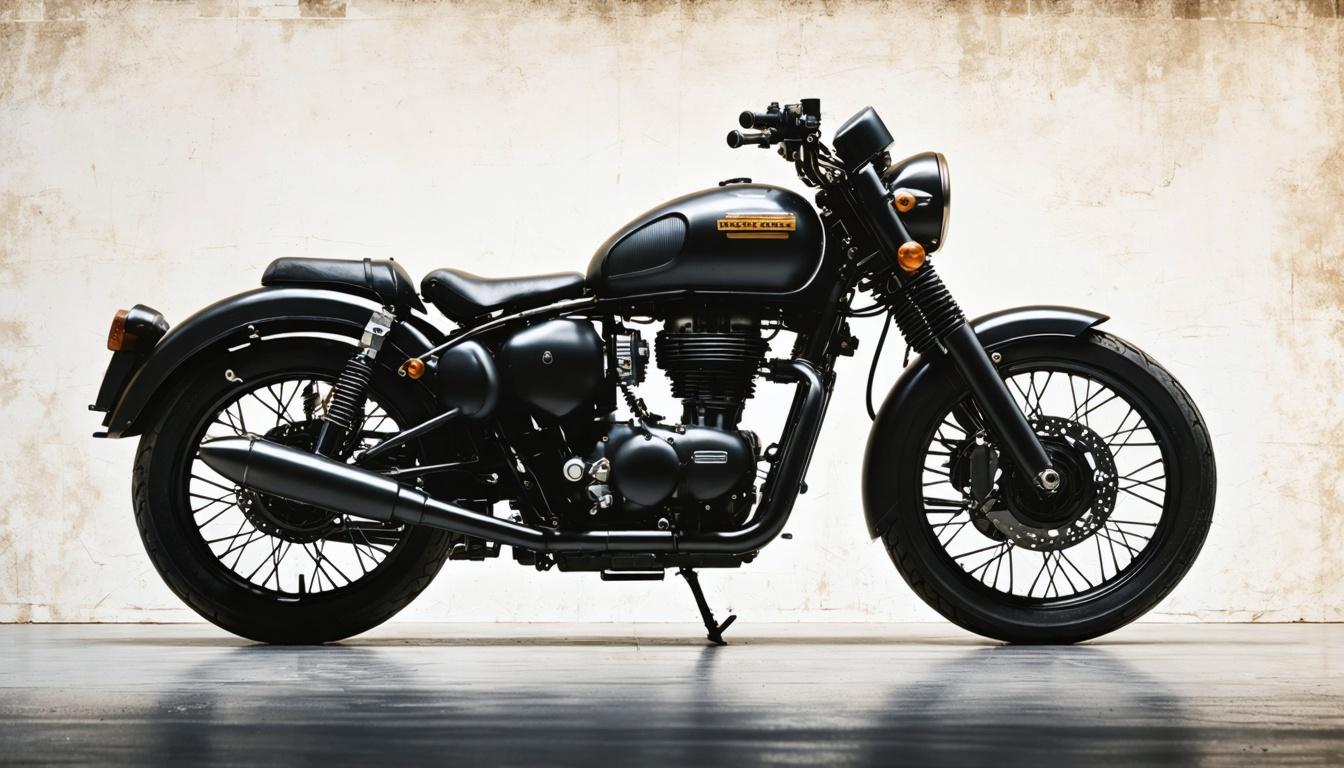
Royal Enfield’s dominance in the middleweight segment continued with a 27% year-on-year increase in sales to 332,940 motorcycles, compared to 261,326 units in Q1 FY26. The brand marked a significant milestone by commencing deliveries of the Flying Flea C6, its first electric motorcycle under the new City+ mobility brand, starting in Bengaluru. Within two months, over 100 units were delivered, accumulating nearly 29,000 kilometers. Management noted that the initial customer base skews toward ages 25–30, with strong interest from existing Royal Enfield owners. The company plans a phased city-by-city expansion, adding five more touchpoints in Bengaluru before moving to other markets.
Additionally, the launch of the Bullet 650 on the premium platform and updated variants of the Hunter 350 strengthened the portfolio. Globally, key markets responded positively to new launches, including the Goan Classic 350 in Nepal and Malaysia and the Guerrilla 450 APEX in Australia and New Zealand. International revenue crossed ₹1,000 crore for the first time, accounting for approximately 15% of total revenue. Brazil remains the largest market outside India, where Royal Enfield holds the number two position in the middleweight segment.
VECV also posted robust numbers, with revenue from operations rising 16.6% to ₹6,610 crore from ₹5,671 crore in the prior year quarter. EBITDA grew 6.1% to ₹541 crore from ₹511 crore, and PAT increased to ₹300 crore from ₹288 crore. Vehicle sales climbed 14.8% to 24,815 units from 21,610 units. B. Srinivas, Managing Director and CEO of VECV, highlighted the launch of the Volvo FMX Edge for mining productivity and the addition of 30 new service touchpoints to enhance customer uptime. The company also signed an MoU with the Ministry of Road Transport and Highways under the PARIVARTAN scheme for fleet modernization in the NCR region.
Capital Allocation and Expansion
The Board of Directors approved a strategic capital allocation of ₹1,225 crore for Phase I of a greenfield expansion in Tada, Andhra Pradesh. This investment aims to add production capacity for 4.5 lakh motorcycles per year at full utilization, with completion targeted for FY 2029-30, subject to market conditions. This expansion supports the company's long-term strategy to meet rising global demand beyond its existing Tamil Nadu facilities.
Regarding existing capacity, management clarified that the brownfield expansion at Cheyyar has reached a base capacity of 1.5 million motorcycles annually, with plans to reach 2 million by FY28. Combined with the new greenfield facility, total annual capacity will reach 2.45 million by FY30. During the quarter, production rates hit approximately 5,000 units per day, aided by three-shift operations at Oragadam and Vallam plants since April. To address lean inventory levels of 10–12 days at dealers, the company is increasing direct billing to dealers from 1.5% to nearly 4.7%, aiming to reduce transit inefficiencies by 4–5 days.
Margin Dynamics and Cost Pressures
Chief Financial Officer Vidhya Srinivasan disclosed that input cost inflation impacted gross margins by 4% to 4.5%, driven by rises in aluminum, crude oil, steel, copper, and precious metals. Partial mitigation was achieved through price hikes of 1.75% on most 350cc motorcycles in April 2026, which contributed a 1.2% benefit. Value engineering programs provided an additional 0.4% benefit. Other expenses declined by 7%, largely due to the absence of ₹20 crore in Cricket World Cup marketing spend and ₹10 crore in launch costs incurred in Q4 FY26, alongside controlled marketing expenditures.
Depreciation increased significantly due to capitalization related to the Flying Flea launch and new module installations, with the average gross block rising by approximately ₹346 crore. ASP grew by 2.8% quarter-on-quarter, supported by price increases, higher international mix (up to 15.3%), currency depreciation benefits of 0.4%, and a 0.6% contribution from allied businesses like accessories and services, which now constitute 15% of revenues.
What the Numbers Show
The divergence between VECV’s top-line growth of 16.6% and its EBITDA expansion of 6.1% indicates margin compression or higher input costs in the commercial vehicle segment, while consolidated EBITDA grew at the same pace as revenue at 32%, underscoring Royal Enfield's superior volume growth and pricing power as the primary driver of overall profitability. Furthermore, the widening gap between standalone and consolidated revenue (over ₹400 crore vs. the previous four-quarter average of ₹200 crore) highlights the accelerating contribution of international subsidiaries, particularly in Brazil and other emerging markets, validating the company’s aggressive global expansion strategy.


 19
19









 Access Market Heat-map & Insights
  Create, Save & Share your Screener
  Use 200+ Screening Filters





